admin

Novo Nordisk vs Eli Lilly Weight-Loss Drug Battle Shifts in 2026

Novo Nordisk CagriSema Misses Non-Inferiority vs Lilly Zepbound

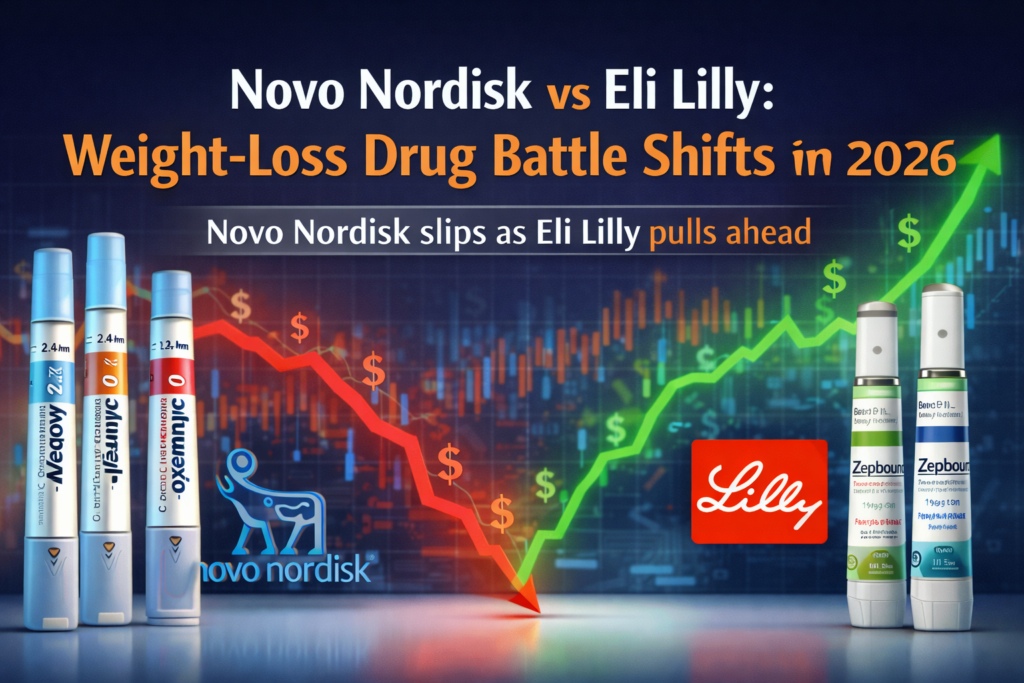
Novo Nordisk stumbles again: CagriSema trails Lilly’s Zepbound in key trial Novo said its next-gen obesity drug CagriSema hit 23% weight loss at 84 weeks, but it failed to prove non-inferiority versus Lilly’s tirzepatide (Zepbound) at 25.5%. Novo stock dropped about 15–16% on the day across reports; several outlets also cited a steep 12-month decline. Lilly raised the convenience bar by rolling out a single Zepbound pen with four doses (one month). Novo defended the result as meaningful; the company signaled more trials and awaits an FDA decision expected in late 2026. Investors and analysts talked about strategy shifts, including diversification and M&A themes, after the miss. What is the main takeaway from the CagriSema news? CagriSema lost the headline comparison on weight loss versus Zepbound. Novo reported 23% vs 25.5% at 84 weeks, and that gap mattered because the study’s primary goal was a non-inferiority claim. Next, the numbers need clear context. What did Novo actually report in the late-stage trial? Novo reported 23% average weight loss at 84 weeks for CagriSema and said it did not meet the primary endpoint versus Lilly’s tirzepatide result of 25.5% at the same time point (as described in the coverage you shared). Next, it helps to see the comparison in one view. CagriSema vs Zepbound (as reported) Item Novo Nordisk Eli Lilly Drug in the headline comparison CagriSema Tirzepatide (Zepbound) Reported weight loss 23% 25.5% Reported duration 84 weeks 84 weeks Primary trial goal mentioned Non-inferiority vs comparator Reference comparator result Next up: what “non-inferiority” means in plain English. What does “non-inferiority” mean here? Non-inferiority means Novo tried to show CagriSema is not meaningfully worse than Zepbound on weight loss. Novo said it missed that bar. That single label can change how payers, doctors, and investors rank a drug. Next: why the market reacted so hard. Why did Novo’s shares drop after the announcement? The market treated the miss as a competitive signal. When a “next-generation” candidate fails to match the leader, investors often cut expectations for future share, pricing power, and growth. Reports you shared cited a ~15–16% one-day drop. Next: Lilly’s move on convenience. What changed with Lilly’s new Zepbound pen? Lilly said Zepbound is now available as one pen containing four doses. Coverage framed it as a simpler monthly routine because patients use fewer devices. Convenience can influence adherence and preference, even when efficacy headlines dominate. Next: Novo’s response. How did Novo frame a 23% weight-loss result? Novo called 23% “significant” and said it was pleased with the outcome. In the coverage, Novo’s chief scientific officer highlighted the clinical meaning of the loss even without winning the direct comparison. Next: a key design detail raised in the reporting. Did the trial design matter in how people read the results? Yes. The coverage described the study as open-label. An open-label design means participants know which treatment they receive, which can introduce bias risks in comparisons. That nuance can affect how confidently people interpret a small gap. Next: what this means for the broader GLP-1 race. Why does this matter in the Novo vs Lilly GLP-1 rivalry? GLP-1 obesity drugs are one of pharma’s most valuable battlegrounds. Novo built early dominance with semaglutide brands like Wegovy and Ozempic. The reporting said Lilly has pulled ahead in prescriptions and market share in the U.S. Next: the extra headwinds Novo is managing. What other pressures are hitting Novo, according to the reports? The coverage linked the setback to broader strain: competition intensifies, U.S. pricing faces pressure, and some markets approach exclusivity changes for legacy brands. The reporting also discussed copycat compounding and regulatory scrutiny around replicas. Next: what investors are pushing Novo to do. What are investors and analysts asking Novo to do now? Some investors want a pivot and more diversification. The Bloomberg excerpt you shared described calls for Novo’s CEO to broaden beyond diabetes and obesity dependence. The CNBC excerpt cited an analyst talk about M&A needs and large potential spend figures. Next: what Novo can do with CagriSema from here. What can Novo do next with CagriSema? Novo can still compete by expanding evidence and sharpening positioning. Run additional trials (including higher-dose combinations mentioned in the coverage). Complete FDA review (an FDA decision was described as expected late 2026). Differentiate on profile if later data show advantages beyond average weight loss (example: usability, tolerability, specific patient segments). References: https://www.cnbc.com/2026/02/23/novo-nordisk-stock-cagrisema-trial-fails-weight-loss.html https://www.bloomberg.com/news/articles/2026-02-23/novo-s-latest-obesity-flop-prompts-investors-to-call-for-a-pivot https://www.axios.com/2026/02/23/ozempic-novo-nordisk-eli-lilly-zepbound  

Novo Nordisk CagriSema Misses Non-Inferiority vs Lilly Zepbound Read More »

5 Minutes of Exercise a Day Could Help You Live Longer, Study Finds

Just 5 Minutes of Exercise a Day Could Help You Live Longer For years, public health advice around exercise has focused on clear targets: 10,000 steps a day, 30 minutes of activity, or at least 150 minutes of exercise each week. While these recommendations are backed by strong science, they can feel intimidating — especially for people who are inactive, busy, older, or managing health conditions. But what if improving your health did not require a full workout or major lifestyle overhaul? Emerging research suggests that even five extra minutes of movement per day may be enough to make a meaningful difference — particularly for people who spend much of their day sitting. Instead of asking whether people hit ideal exercise benchmarks, scientists are now examining what happens when individuals make small, realistic changes to how much they move. The results are encouraging, practical, and empowering. Why Traditional Exercise Goals Can Feel Out of Reach? Exercise guidelines are designed to optimize health outcomes at a population level. For example, many health authorities recommend at least 150 minutes per week of moderate-intensity activity, such as brisk walking or cycling. These thresholds are associated with a lower risk of heart disease, diabetes, and premature death. However, there is a problem with how these goals are often perceived. For people who are already active, these targets may feel achievable or even modest. But for individuals who are largely sedentary, it can feel overwhelming. When goals feel unattainable, many people give up before they start — assuming that anything short of the ideal “doesn’t count.” This mindset may unintentionally discourage the very groups who stand to benefit the most from moving more. What New Research Reveals About Small Changes? A recent large-scale analysis published in The Lancet took a different approach to studying physical activity. Instead of focusing on whether people met established exercise guidelines, researchers asked a simpler question: What might happen if people moved just a little more each day or sat a little less? To answer this, scientists combined data from multiple long-term studies involving tens of thousands of adults across several countries. They examined levels of moderate-to-vigorous physical activity — movements that raise heart rate and breathing — as well as total time spent sitting. Rather than studying extreme changes, the researchers modeled modest, realistic shifts, such as: Adding five or ten minutes of activity per day Reducing daily sitting time by 30 to 60 minutes The goal was to estimate how these small adjustments might influence longevity when applied across large populations. Why Five Minutes Can Make a Difference? One of the most striking findings was how impactful small changes could be, especially for people who were least active to begin with. When researchers modeled a scenario where sedentary individuals added just five minutes of moderate-to-vigorous activity per day, the potential reduction in premature deaths was substantial. When similar small changes were applied across broader segments of the population, the estimated benefit grew even larger. This does not mean that five minutes of exercise magically prevents disease. Rather, it highlights an important principle: the relationship between movement and health is not all-or-nothing. Health benefits begin at very low levels of activity and increase gradually as movement increases. For someone who rarely exercises, five minutes represents a meaningful step forward — not a trivial one. The Hidden Risk of Sitting Too Much Another key insight from this research is the growing recognition that sedentary time itself is an independent health risk. Even people who meet weekly exercise guidelines may still spend large portions of their day sitting at desks, in cars, or in front of screens. Prolonged sitting has been linked to a higher risk of cardiovascular disease, metabolic disorders, and early death, regardless of exercise habits. Reducing sitting time by as little as 30 minutes per day was associated with measurable health benefits in the research models. While the effects were smaller than those seen with increased activity, they were still meaningful — particularly at a population level. This reinforces the idea that health is influenced not only by workouts but also by how we move (or don’t move) throughout the day. What Experts Say About Movement and Longevity? According to Leana Wen, an emergency physician and public health expert, this research does not replace existing exercise guidelines — but it reframes how we should think about them. Rather than viewing guidelines as a strict threshold that must be met to see any benefit, they can be understood as an aspirational target along a continuum. Every step toward more movement matters, especially for people starting from a sedentary baseline. This perspective is particularly important for older adults, people with chronic conditions, caregivers, and those with limited time or access to structured exercise environments. For these groups, modest increases in daily movement may be both more realistic and more sustainable. Who Benefits Most From Small Increases in Activity? While everyone benefits from physical activity, the largest relative gains appear among people who move the least. This includes individuals who: Spend most of the day sitting Have desk-based or driving-intensive jobs Experience mobility limitations Feel intimidated by traditional fitness culture Lack access to gyms or safe outdoor spaces For these populations, adding even a few minutes of movement per day represents a significant relative improvement. From a public health perspective, helping these groups move slightly more could prevent more disease and premature death than pushing already-active individuals to do even more. Small changes are also more likely to stick. When behaviors feel manageable, people are more likely to repeat them consistently — and consistency is what drives long-term health benefits. Rethinking Exercise as “Movement” One of the most practical takeaways from this research is a shift in mindset. Instead of thinking in terms of “exercise,” it may be more helpful to think in terms of movement. Movement does not require special equipment, gym memberships, or long time blocks. It can include: Walking briskly for a few minutes Taking the stairs

5 Minutes of Exercise a Day Could Help You Live Longer, Study Finds Read More »

Butter for Babies What Parents Should Know About the Viral Feeding Trend

Butter for Babies: Is the Viral Trend Safe? Pediatric Experts Explain

Butter for Babies: What Parents Should Know About the Viral Feeding Trend In recent months, a surprising trend has gained traction on social media platforms, especially TikTok: parents feeding babies spoonfuls of butter, sometimes even before bedtime. Supporters of the trend claim butter helps infants sleep longer, stay full after meals, and support healthy development. Critics, on the other hand, warn that it looks excessive, unhealthy, and potentially dangerous. So what is the truth? Is butter actually beneficial for babies, or is this another viral parenting hack that oversimplifies child nutrition? Health experts say the answer lies somewhere in the middle. Babies do need fat for growth and brain development, but how that fat is introduced — and in what form — matters far more than social media trends suggest. This article breaks down what science and pediatric nutrition experts really say, what parents should avoid, and how to safely incorporate fats into a baby’s diet without risking long-term health issues. Why Fat Is Essential for Babies Under Two Infancy is a period of rapid growth unlike any other stage of life. During the first two years, a baby’s brain, nervous system, and body tissues develop at an extraordinary speed. Fat plays a critical role in supporting this process. Breast milk and infant formula naturally reflect this need. Roughly half of the calories in both come from fat, which helps fuel growth and supports brain development. This is one of the main reasons dietary fat guidelines for babies are very different from those for older children and adults. For infants between six months and two years — the period when solid foods are introduced — there is no strict upper limit on saturated fat intake. This does not mean unlimited fat is recommended, but it does mean that moderate amounts of fat are developmentally appropriate at this age. This is where some parents promoting butter are partially correct. Fat itself is not harmful to babies, and avoiding it entirely can be counterproductive. However, the type of fat, the amount, and the context in which it is offered are what truly matter. Why Butter Became a Viral Baby Food Butter has become a focal point in online parenting communities for several reasons. It is calorie-dense, easy to serve, and widely perceived as a “natural” food, especially when marketed as grass-fed or organic. Parents struggling with babies who wake frequently at night or seem constantly hungry may be drawn to butter as a quick solution. Some parents report that adding butter before bedtime helps their babies sleep longer. Others say it keeps toddlers satisfied between meals. While these experiences may feel convincing, they do not tell the whole story. Butter is filling because it is high in fat and calories, not because it contains a balanced mix of nutrients. Feeling full does not necessarily mean nutritional needs are being met. The Nutritional Limits of Butter Although butter contains small amounts of vitamins such as A and D, it is not a nutritionally complete food. It provides almost no protein, minimal micronutrients, and lacks the variety of fats that babies need for optimal development. Relying too heavily on butter can crowd out other important foods, including fruits, vegetables, proteins, and diverse fat sources. Early feeding experiences shape taste preferences and eating habits later in childhood. When a baby becomes accustomed to eating plain butter, it may reduce their interest in other textures and flavors. Nutrition experts emphasize that fats should be spread throughout meals and paired with other foods rather than offered alone. Butter can be part of a baby’s diet, but it should not become a standalone snack or meal substitute. Butter and Infant Sleep: Separating Myth from Reality One of the most popular claims behind the butter trend is that it helps babies sleep through the night. Sleep deprivation is one of the hardest challenges of early parenthood, so, understandably, parents look for solutions. However, infant sleep patterns are primarily driven by brain development, not just fullness. Babies wake at night for many reasons, including growth spurts, developmental changes, comfort needs, and learned sleep associations. While a calorie-dense food may temporarily increase satiety, it does not address the underlying neurological and developmental factors that regulate sleep. In some cases, frequent night waking may signal that a baby’s overall daytime nutrition needs adjustment — not that they need a bedtime butter snack. Pediatricians generally recommend evaluating feeding routines, sleep schedules, and developmental stages rather than relying on food “hacks” to induce sleep. Balanced Fat Sources That Support Healthy Development Instead of focusing on butter alone, experts recommend offering babies a variety of healthy fat sources alongside other nutrients. Diversity helps ensure proper growth and reduces the risk of developing narrow food preferences. Examples of developmentally appropriate fat sources include: Mashed avocado Full-fat yogurt (when age-appropriate) Nut butters thinned and served safely Olive oil or butter mixed into vegetables Fatty fish prepared in baby-safe forms Hummus or bean-based spreads When butter is used, it is best melted and mixed into purees or drizzled over cooked foods. Small amounts — such as half a teaspoon to one teaspoon per serving — can add calories and flavor without overwhelming the diet. Long-Term Habits Matter More Than Short-Term Results One concern nutrition experts raise is habit formation. Early childhood is when lifelong food preferences begin to form. Feeding patterns during infancy influence how children relate to food as they grow. If a child becomes accustomed to eating large amounts of butter regularly, it may be difficult to transition them to a more balanced diet later. After age two, dietary guidelines shift significantly, with recommendations to limit saturated fat due to its association with cardiovascular disease over the long term. Teaching moderation and variety early helps make that transition smoother and supports healthier eating patterns throughout childhood. What Parents Should Do Instead of Following Viral Trends Social media can be a helpful place for community support, but it is not a substitute for professional medical guidance.

Butter for Babies: Is the Viral Trend Safe? Pediatric Experts Explain Read More »

How to Stay Motivated to Lose Weight Every Day (Easy Steps)

How to Stay Motivated to Lose Weight Every Day

How can you actually motivate yourself to lose weight (and keep going)? Motivation isn’t just hype or willpower. Research consistently shows that internal motivation — your personal reasons, identity, and mindset — predicts long-term weight success more than any specific diet. One large behavioral review found that people who build sustainable habits and emotional resilience maintain weight loss 2–5 years longer than those relying only on strict dieting. So the real question isn’t “How do I force myself?”It’s: How do I design a system that makes motivation easier to access every day? Let’s walk through it step by step. Read More: What grocery list makes a 1,500-calorie weight loss plan easier to follow? Read More: What are the best foods for weight loss that actually work? Read More: 10 Effective Ways to Control Obesity | Proven Weight Management Tips How Can You Stay Motivated to Lose Weight? 15 Steps (Quick Summary) Define a strong personal “why” and read it daily to stay emotionally connected to your goal Set realistic expectations — slow, steady progress lasts longer Choose a plan that fits your lifestyle instead of extreme dieting Focus on process goals (daily habits) instead of only scale results Track food, exercise, and emotions in a journal for accountability Celebrate behavior changes and small wins, not just weight milestones Build social support by sharing goals with friends or partners Use positive self-talk and avoid perfectionism Plan for setbacks like stress or holidays Improve body image and treat your body with respect Do exercises you actually enjoy to boost motivation naturally Manage stress to reduce emotional eating Increase daily movement (walking, pets, routine activity) Seek professional guidance if progress stalls Remember: motivation comes from systems and habits, not willpower alone     Why do you want to lose weight in the first place? This is the foundation. If your reason isn’t emotionally strong, motivation will collapse under stress. Studies in behavioral psychology show that intrinsic motivation (doing something for personal meaning) leads to significantly higher adherence than external pressure, such as social expectations. Instead of vague goals like: “Get healthier” “Lose weight” “Look better.” Ask deeper questions: What will change in my daily life? What can I do physically that I can’t do now? How will my energy, confidence, or relationships improve? Examples: “I want to play with my kids without getting winded.” “I want to feel confident in photos.” “I want my blood work to improve.” Write these down. Read them daily. People who regularly revisit written goals are 33–42% more likely to stay consistent with behavior change, according to goal-tracking studies. What’s a realistic expectation for weight loss? Most people quit because expectations are unrealistic. Medical guidelines from major obesity research groups recommend losing 5–10% of body weight over 6 months. That range is clinically meaningful and linked to: Reduced blood pressure Lower cholesterol Improved insulin sensitivity Reduced risk of heart disease For someone weighing 180 lbs, that’s about 9–18 lbs.For someone weighing 250 lbs, that’s about 13–25 lbs. Research shows people who aim for gradual weight loss maintain results far longer than people chasing rapid transformation. Sustainable beats dramatic. How do you choose a plan you can actually follow? The best weight loss plan is the one you can live with. Repeated crash dieting predicts future weight regain — a pattern called weight cycling. Meta-analyses show that strict “all-or-nothing” dieting increases the likelihood of binge-restrict cycles. Instead of eliminating entire food groups, research supports simple behavioral adjustments: Reducing portion sizes Eating fewer ultra-processed foods Increasing fruits and vegetables Creating a modest calorie deficit Eating regularly to avoid binge triggers Flexibility is protective. Rigidity leads to burnout. Why does exercise matter for motivation, not just calories? Exercise isn’t only about burning calories. It directly affects brain chemistry. Physical activity increases dopamine and serotonin — neurotransmitters linked to motivation, mood, and reward. A large longitudinal study found that people who exercised consistently were significantly more likely to maintain weight loss for 3+ years. The key is enjoyment. You don’t need extreme workouts. Walking, cycling, swimming, dancing, or strength training all count. People who enjoy their exercise routine are up to 70% more likely to stick with it long term. Music also helps. Studies show that listening to music increases exercise duration and perceived enjoyment. How do process goals keep you from losing motivation? Outcome goals focus on the finish line: “I want to lose 40 lbs.” Process goals focus on actions: “I’ll walk 30 minutes daily.” “I’ll eat vegetables at two meals.” “I’ll strength train twice per week.” Research in behavioral science shows process goals increase adherence because they create daily wins instead of distant pressure. You can control actions.You can’t control the scale perfectly. And motivation grows from repeated small successes. Why is tracking your habits so powerful? Self-monitoring is one of the strongest predictors of weight loss success. A major review of weight management studies found that people who track their food intake lose twice as much weight as those who don’t. Tracking increases awareness. Awareness changes behavior. A weight journal can include: Meals and snacks Emotions before eating Energy levels Sleep Exercise Stress triggers Tracking emotions helps identify patterns like stress eating or boredom snacking — key factors in long-term success. Should you celebrate progress even if the scale doesn’t move? Absolutely. Weight fluctuates for many reasons: water retention, hormones, digestion, stress, and sleep. Focusing only on scale numbers leads to frustration. Behavior change deserves celebration: You cooked more meals at home You exercised consistently You handled a craving differently You improved endurance You slept better Research shows that celebrating behavioral wins reinforces motivation pathways in the brain and increases habit persistence. Reward yourself — just not with food. Think about experiences, clothing, hobbies, or relaxation. How important is social support for weight loss? Very. Studies show people with strong social support lose more weight and maintain it longer. Accountability partners increase adherence to exercise and nutrition plans. Ways to build support: Tell family and friends your

How to Stay Motivated to Lose Weight Every Day Read More »

U.S. CDC warns travelers about chikungunya outbreak in Seychelles. Learn symptoms, vaccine advice, and safety precautions.

CDC Issues Travel Advisory for Seychelles Virus Outbreak

Seychelles Travel Alert: Chikungunya Outbreak — What Travelers Must Know Quick Summary Seychelles is experiencing an active chikungunya outbreak The virus spreads through mosquito bites (Aedes mosquitoes) CDC issued a Level 2 advisory: practice enhanced precautions Symptoms include fever, severe joint pain, rash, fatigue, and headaches Vaccination is recommended for travelers visiting outbreak zones Pregnant travelers should reconsider visiting affected areas Newborns infected around delivery face higher health risks Use insect repellent and protective clothing to prevent bites Stay in screened or air-conditioned accommodations Seek medical care immediately if symptoms appear during or after travel CDC Issues Travel Advisory for Seychelles Virus Outbreak The tropical beauty of Seychelles attracts travelers worldwide — white sand beaches, turquoise waters, and untouched island landscapes. But right now, health officials are urging caution. The U.S. Centers for Disease Control and Prevention (CDC) has issued a Level 2 travel advisory due to an outbreak of chikungunya, a mosquito-borne virus that can cause intense pain and long-lasting illness. Here’s everything you need to know before packing your bags. What Is Chikungunya and Why Is It a Concern? Chikungunya is a viral infection transmitted by infected Aedes aegypti and Aedes albopictus mosquitoes. Unlike common mosquito illnesses that feel like mild flu, chikungunya is known for causing debilitating joint pain. The name itself means “bent over”, describing how sufferers often hunch from pain. The virus does not spread person-to-person through casual contact. Infection happens only through mosquito bites (blood transmission is rare). While most people recover, the illness can leave some patients with chronic joint pain lasting months or even years. Symptoms Travelers Should Watch For Symptoms usually appear 3 to 7 days after a bite from an infected mosquito. Common signs include: Sudden fever Severe joint pain Muscle aches Headaches Joint swelling Rash Fatigue Nausea Most people recover in about a week, but some experience lingering pain and stiffness. If you develop symptoms during or after travel, seek medical care immediately and mention your travel history. CDC Travel Advisory: What Level 2 Means A Level 2 advisory is not a travel ban. It means: Travelers should practice enhanced precautions. The CDC is not telling people to cancel trips — but it is urging stronger health protection measures, especially against mosquito bites. Vaccination Guidance for Travelers A chikungunya vaccine is available and recommended for travelers visiting outbreak areas. Healthcare providers advise vaccination based on: Age Health conditions Length of trip Activities planned Risk of mosquito exposure Travelers should discuss vaccination with a healthcare provider before departure. Special Warning for Pregnant Travelers Pregnancy changes the risk equation. If a mother is infected close to delivery, the virus can pass to her baby before or during birth. Newborns infected this way face a higher risk of severe illness and long-term complications. Because of this: Pregnant travelers should reconsider visiting affected areas Vaccination is usually delayed until after delivery In high-risk situations, doctors may weigh benefits vs risks This decision should always involve a medical professional. Who Faces a Higher Risk of Severe Illness? Some groups are more vulnerable: Newborns are exposed around birth Adults aged 65+ People with diabetes People with heart disease Those with weakened immune systems Deaths from chikungunya are rare, but complications can be serious. How Travelers Can Protect Themselves Mosquito prevention is your strongest defense. Use insect protection Apply EPA-approved insect repellent Reapply as directed Use permethrin-treated clothing if possible Dress strategically Wear long sleeves and long pants Choose light-colored clothing Control your environment Stay in air-conditioned spaces Use window and door screens Sleep under mosquito nets if needed Avoid peak mosquito hours Aedes mosquitoes bite mostly during daytime, especially early morning and late afternoon. Why Seychelles Remains a Popular Destination Despite the advisory, Seychelles remains one of the world’s most stunning island destinations. The archipelago includes 115 islands in the Indian Ocean, with popular areas like: Mahé Praslin La Digue Tourists visit for snorkeling, boating, hiking, and secluded beaches. The advisory is about health awareness, not a closure of tourism. Final Advice for Travelers Travel is still possible — but informed travel is safer travel. If you’re planning a trip: Talk to your doctor about vaccination Prepare mosquito protection supplies Monitor health symptoms closely Follow CDC guidance A few precautions can make the difference between a dream vacation and a painful illness. References: https://wwwnc.cdc.gov/travel/notices/level2/chikungunya-seychelles https://people.com/us-issues-travel-advisory-for-seychelles-outbreak-of-disease-11906471 https://fox8.com/news/us-issues-travel-advisory-for-these-islands-amid-virus-outbreak/

CDC Issues Travel Advisory for Seychelles Virus Outbreak Read More »

What Grocery List Supports a 1,500 Calorie Weight Loss Plan?

What grocery list makes a 1,500-calorie weight loss plan easier to follow?

What grocery list makes a 1,500-calorie weight loss plan easier to follow? A grocery list isn’t just about shopping — it’s a behavioral tool. Studies on nutrition adherence show that people who plan meals and shop intentionally consume 20–30% fewer calories and are significantly more likely to maintain weight loss long-term. When your kitchen is stocked with the right foods, decision fatigue disappears. You eat what’s available — and availability drives habits more than motivation. This list is built around high-protein, high-fiber, and minimally processed foods, which research consistently links to better appetite control and fat loss. Food Calorie Calculator Why should protein be the foundation of your grocery cart? Protein is the most powerful nutrient for weight control. A meta-analysis in The American Journal of Clinical Nutrition found that higher-protein diets improve fat loss while protecting lean muscle mass. Protein also has a thermic effect of 20–30%, meaning your body burns calories digesting it. It reduces hunger hormones and increases satiety signals. Protein staples to buy: eggs chicken breast or lean thighs salmon or white fish canned tuna lean ground turkey or beef Greek yogurt (plain) cottage cheese tofu or tempeh protein powder (optional convenience) Clinical trials show people eating more protein report up to 60% fewer cravings, especially at night. Protein is the anchor of every meal. Which vegetables add volume without adding calories? Vegetables are the secret weapon of weight loss because they increase meal size without increasing calories. CDC dietary intake data shows people with higher vegetable consumption have lower average body weight and reduced waist circumference. Vegetables high in water and fiber stretch the stomach and trigger fullness hormones. Best options: spinach or mixed greens broccoli zucchini cucumbers bell peppers carrots tomatoes onions frozen vegetable blends Frozen vegetables retain nutrients and reduce food waste, making them practical and affordable. Eating more vegetables can naturally reduce calorie intake by 200–300 calories per day. What carbohydrates support energy without sabotaging fat loss? Carbohydrates aren’t the enemy — refined carbs are. Whole-food carbs contain fiber, which slows digestion and improves blood sugar control. Harvard School of Public Health research links whole grain consumption with lower abdominal fat and improved metabolic health. Smart carb staples: oats quinoa brown rice sweet potatoes regular potatoes whole-grain bread or wraps beans and lentils berries apples bananas These foods provide steady energy for walking and workouts without triggering hunger crashes. Why do healthy fats belong on a weight loss grocery list? Healthy fats improve hormone balance and increase satiety, making calorie control easier. A large Mediterranean diet study of over 7,000 participants found that those consuming olive oil and nuts experienced better long-term weight control than low-fat dieters. Healthy fats to buy: olive oil avocado almonds or mixed nuts peanut or almond butter chia seeds flax seeds Fat is calorie-dense, so portion awareness matters — but eliminating it backfires by increasing hunger. Which low-calorie flavor boosters prevent diet boredom? Flavor variety is critical. Research on diet adherence shows monotony is one of the biggest reasons people quit. Low-calorie flavor enhancers: salsa mustard vinegar hot sauce garlic herbs and spices lemon or lime low-calorie dressings These allow meals to taste satisfying without adding excess calories. A flavorful diet is a sustainable diet. What convenience foods help maintain consistency on busy days? Consistency beats perfection. Studies show structured eating patterns reduce impulsive, high-calorie food choices. Convenience options: rotisserie chicken frozen grilled chicken strips microwave rice packets bagged salad kits pre-cut vegetables low-sugar protein bars These act as safety nets when cooking isn’t realistic. Convenience doesn’t ruin diets — poor planning does. Why does planning groceries improve long-term weight loss success? Weight loss is less about discipline and more about environmental design. Behavioral nutrition research shows people who create structured food environments maintain weight loss twice as long as those relying on willpower alone. Your grocery list shapes your habits before hunger ever appears. Good shopping decisions create automatic healthy eating.

What grocery list makes a 1,500-calorie weight loss plan easier to follow? Read More »

Best Foods for Weight Loss Backed by Science

What are the best foods for weight loss that actually work?

What are the best foods for weight loss that actually work in 2026? The best weight-loss foods aren’t trendy superfoods or expensive diet products. They’re foods that help you eat fewer calories without feeling hungry. Research consistently shows that diets high in protein, fiber, and water-rich foods lead to greater fat loss and better appetite control. A large review published in The American Journal of Clinical Nutrition found that people who increased their protein intake lost more fat and preserved more muscle than low-protein dieters. The simple formula: 👉 High protein + high fiber + low calorie density = sustainable fat loss When your meals follow that pattern, your body naturally regulates hunger. Why do low-calorie-density foods help you lose weight faster? Low-calorie-density foods let you eat larger portions while consuming fewer calories. This stretches the stomach and activates fullness hormones like GLP-1 and peptide YY. A landmark satiety study ranked foods by how full they made participants feel. Boiled potatoes scored 323% higher satiety than white bread — the highest of all tested foods. Best high-volume weight-loss foods: • leafy greens (spinach, lettuce, kale)• broccoli, zucchini, cucumbers• berries, apples, oranges• broth-based soups• potatoes (boiled or baked, not fried) People who eat more vegetables consume up to 200–300 fewer calories per day without trying, according to dietary intake data from the CDC. You’re not eating less — you’re eating smarter. How does protein accelerate fat loss scientifically? Protein is the most powerful nutrient for weight control. It increases metabolism, reduces cravings, and preserves muscle while dieting. Studies show protein has a thermic effect of 20–30%, meaning your body burns calories just digesting it. Compare that to carbs (5–10%) and fats (0–3%). Clinical trials show higher-protein diets: • reduce late-night snacking by 50%• increase daily calorie burn by 80–100 calories• improve satiety hormones• protect lean muscle during weight loss 8 Best protein foods for fat loss: Eggs Chicken breast Fish Greek yogurt Cottage cheese Tofu Lentils Lean beef What carbs support weight loss instead of causing weight gain? Carbohydrates don’t cause fat gain — refined carbs do. Fiber-rich carbohydrates digest slowly, stabilize blood sugar, and reduce hunger spikes. Research from Harvard School of Public Health shows that people eating whole grains instead of refined grains have lower body weight and waist circumference. 6 Best fat-loss carbs: oats quinoa sweet potatoes brown rice beans and lentils whole fruit These foods improve insulin sensitivity and energy stability. Refined carbs — pastries, white bread, sugary drinks — spike blood sugar and increase appetite shortly after eating. Do healthy fats help or hurt weight loss? Healthy fats help control hunger — but they’re calorie-dense, so portion size matters. A Mediterranean diet study involving 7,400 participants showed people eating more olive oil and nuts lost more weight long-term than low-fat dieters. 5 Healthy fat sources: avocado olive oil nuts and seeds fatty fish nut butters Fat doesn’t make you fat — overeating calories does. Moderation beats restriction. Which foods secretly sabotage weight loss progress? Some foods are engineered to override fullness signals. Research in Cell Metabolism found that people eating ultra-processed foods consumed 500 extra calories per day compared to whole-food diets — without realizing it. 6 Biggest hidden traps: liquid calories (soda, juice, sweet coffee) alcohol fried foods packaged snacks pastries and desserts fast food Liquid calories are especially dangerous because they don’t trigger satiety hormones. You drink calories… but still feel hungry. What does a simple weight-loss grocery list look like? The best weight-loss diet is built around simple, repeatable foods. Protein: eggs, chicken, fish, yogurt, tofu Vegetables: greens, broccoli, peppers, cucumbers Smart carbs: oats, rice, potatoes, beans, fruit Healthy fats: olive oil, avocado, nuts Flavor boosters: spices, salsa, vinegar, herbs Data shows people who cook at home eat 20–30% fewer calories than those relying on processed meals. Simple food wins.

What are the best foods for weight loss that actually work? Read More »

Can you really lose weight just by walking?

Walking for Weight Loss: Steps, Diet & Fat-Burning Guide

Can you really lose weight just by walking? Yes — and it’s more effective than most people think. Walking is one of the safest, most sustainable fat-loss tools because it burns calories without stressing joints or spiking hunger the way intense workouts can. Research published in the Journal of Exercise Nutrition & Biochemistry found that overweight women who walked 50–70 minutes three times per week for 12 weeks significantly reduced abdominal fat and body weight. Walking improves insulin sensitivity, increases daily calorie burn, and reduces cortisol — all of which influence fat storage. A simple rule: consistent walking + small calorie deficit = predictable weight loss. Most people can expect 0.5–1 kg (1–2 lb) per week when walking is paired with diet control. That pace aligns with medical guidelines for sustainable fat loss.     How many steps per day are ideal for weight loss? It depends on your starting point — but more isn’t always better. The sweet spot is progressive overload. A 2023 meta-analysis showed that adults walking 8,000–10,000 steps daily had significantly lower body fat and cardiovascular risk compared to sedentary groups. Another large cohort study tracking 78,000 adults found mortality risk dropped sharply after 7,000 steps — benefits plateaued after ~10,000. Here’s how to scale: Beginner range 5,000–7,000 stepsBurns ~200–300 caloriesIdeal for sedentary starters Fat-loss range 8,000–10,000 stepsBurns ~300–500 caloriesSupports 0.5–1 kg weekly loss Aggressive range 12,000–15,000 stepsHigher calorie burnBetter for plateaus On average, 1,000 steps burn 30–50 calories, depending on body weight. A 73 kg (160 lb) person burns ~40 calories per 1,000 steps. The key is consistency, not chasing a magic number. Does walking at certain times burn more fat? Timing matters — but consistency matters more. Morning fasted walks Studies show fasted cardio can increase fat oxidation by up to 70% during the session. This doesn’t automatically double fat loss, but it may slightly improve metabolic flexibility. Post-meal walks Short walks within 5 minutes of eating reduce blood sugar spikes by 12–22%, according to diabetes research. Lower glucose spikes mean less fat storage and better insulin control. Evening walks Walking lowers cortisol and improves sleep quality. Better sleep improves appetite hormones (leptin & ghrelin), which helps long-term weight control. Best timing rule: walk when you’ll actually stick to it. Is brisk walking better than casual walking? Yes — intensity changes results. Interval walking burns more calories and improves cardiovascular fitness faster than steady pace walking. A Japanese walking study found that interval walkers improved aerobic capacity twice as much as steady walkers over 5 months. Try this: 1–3 minutes brisk pace1–2 minutes moderate paceRepeat for 30–40 minutes You should be able to talk, but not sing. Add hills, inclines, or weighted walking (rucking 5–10 kg) to increase calorie burn by 10–20%. What does a beginner 4-week walking plan look like? Gradual progression prevents burnout and injury. Week 1 30 minutes walking, 3–4 daysMix easy + short brisk bursts Week 2 40–50 minutes walking, 4–5 daysAdd interval walking Week 3 60 minutes walking, 5 daysInclude hills or an incline treadmill Week 4 60–75 minutes walking, 5–6 daysFocus on brisk pace + intervals Add strength training 2–3x weekly to preserve muscle mass. Muscle helps burn more calories at rest. What diet works best with walking for fat loss? Walking alone helps, but nutrition controls the speed of results. A 250–500 calorie daily deficit is the most sustainable range for steady loss. Larger deficits increase hunger and muscle loss. Research shows high-protein diets improve fat loss and preserve lean tissue during calorie restriction. Target: 1.6–2.2 g protein per kg body weight25–40 g fiber daily Protein increases satiety hormones and burns more calories during digestion. Fiber slows digestion and stabilizes blood sugar. How much protein do walkers need for weight loss? Protein protects muscle while you’re in a calorie deficit. Meta-analyses show that high-protein diets lead to greater fat loss and less muscle loss than standard diets. Quick calculator: 100 lb → 73–100 g protein150 lb → 110–165 g protein200 lb → 146–200 g protein Spread protein across meals for better absorption. Good sources: eggs, chicken, fish, Greek yogurt, lentils, tofu How much fiber supports fat loss and blood sugar control? Fiber intake is strongly linked to weight regulation. People who eat 14 g more fiber per day naturally reduce calorie intake by ~10% without trying. Soluble fiber improves insulin sensitivity — important for diabetics. Targets: Women → minimum 25 gMen → minimum 38 gWeight loss range → 28–40 g Increase slowly with water to avoid bloating. Top fiber foods: beans, oats, berries, broccoli, chia seeds What should you eat before and after walking? Fueling improves consistency and recovery. Pre-walk snack Protein + fiberExample: yogurt + berriesSteady energy, stable blood sugar Post-walk snack (within 30 min) Protein focusedExample: Greek yogurt, protein shake, eggsSupports muscle recovery Whole-food meals outperform processed “diet foods.” What mistakes slow walking weight loss? Most plateaus come from predictable habits: • Walking too slowly• Not tracking food intake• Eating back all burned calories• Inconsistent step count• Ignoring strength training• Undereating protein• Sleeping poorly Walking works — but only when paired with smart habits.

Walking for Weight Loss: Steps, Diet & Fat-Burning Guide Read More »

FDA Blocks Moderna’s mRNA Flu Vaccine Review — What It Means for the Future of Vaccine Innovation

FDA Blocks Moderna mRNA Flu Vaccine Review — Policy Shock Explained

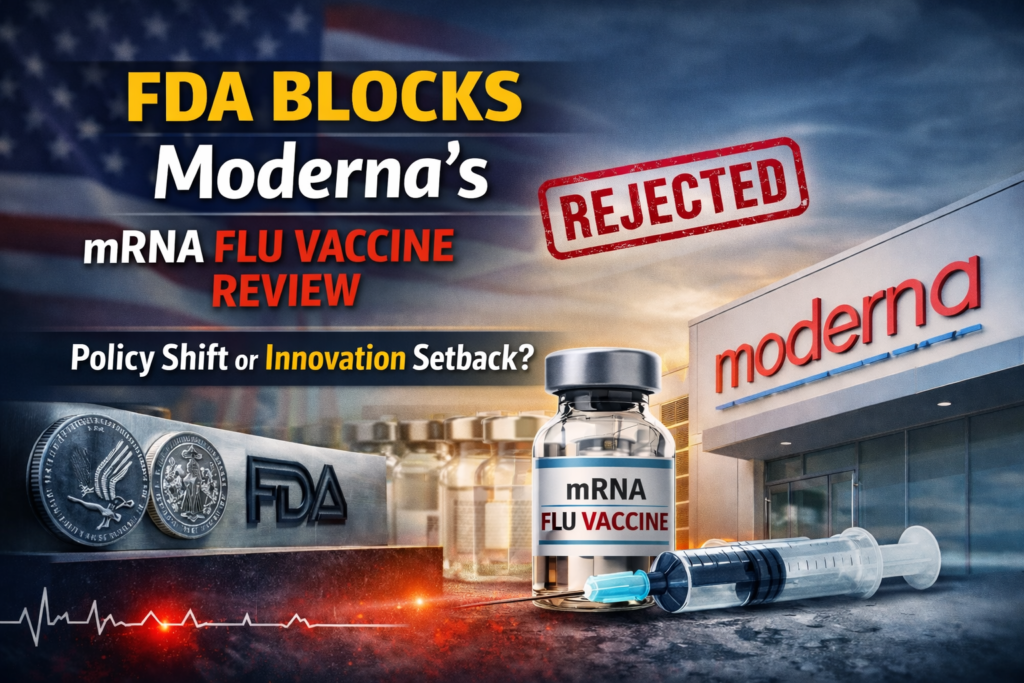
FDA Blocks Moderna’s mRNA Flu Vaccine Review — What It Means for the Future of Vaccine Innovation Quick Summary (Key Points) The FDA refused to review Moderna’s new mRNA flu vaccine application The rejection wasn’t about safety or effectiveness The agency said the clinical trial comparison wasn’t strong enough Moderna says the FDA previously approved the study design The decision reflects growing federal resistance to mRNA vaccines Health Secretary Robert F. Kennedy Jr. has cut funding for mRNA research Moderna invested hundreds of millions in the vaccine trial Other countries are still reviewing the vaccine The move could slow innovation in next-generation flu protection FDA Refuses to Review Moderna’s Flu Vaccine — A Sudden Shift in Vaccine Policy Moderna expected its mRNA flu vaccine to enter the FDA review pipeline this year. Instead, the company received a rare and abrupt rejection: the agency refused to even begin the approval process. This wasn’t a denial after evaluation. It was a refusal to file. That distinction matters. The FDA told Moderna that its clinical trial design didn’t meet what it now considers the “best available standard of care.” Specifically, the agency objected to the comparison vaccine used in the study — a licensed flu shot called Fluarix. Moderna says the agency had previously approved that approach. Now, the rules appear to have changed. What Moderna’s Vaccine Was Designed to Do The experimental vaccine uses mRNA technology — the same platform that powered the rapid development of Covid vaccines. The goal wasn’t just another flu shot. Moderna aimed to: improve protection against circulating flu strains tailor vaccines for specific regions manufacture doses faster respond more flexibly to seasonal changes potentially combine flu + Covid into one shot In a large phase 3 trial involving over 40,000 adults aged 50+, Moderna reported that its vaccine performed about 27% better than the comparison shot. Lab data also showed strong immune responses. The company maintains that safety was not questioned. The Policy Backdrop: Growing Skepticism of mRNA Technology This decision doesn’t exist in isolation. Under Health Secretary Robert F. Kennedy Jr., federal health policy has shifted sharply against mRNA-based research. The administration has: canceled hundreds of millions in mRNA research funding halted multiple vaccine development projects publicly criticized the technology’s effectiveness raised doubts about safety despite global evidence Ironically, mRNA vaccines saved millions of lives during the Covid pandemic and earned a Nobel Prize for the science behind them. But political winds have changed. And the regulatory climate is changing with them. Why This Matters for the Biotech Industry For biotech companies, regulatory consistency is everything. Drug development takes years. Companies invest billions based on guidance from agencies like the FDA. When expectations suddenly shift mid-process, the ripple effects are enormous. Moderna says the FDA had repeatedly indicated its trial design was acceptable. Only after submission did the agency refuse to review it. Industry leaders warn that unpredictable decision-making could chill innovation and investment. Some biotech investors have already raised alarms about regulatory volatility. Other Countries Are Moving Forward While the US pauses, Europe, Canada, and Australia continue reviewing Moderna’s vaccine. The company expects its first approval to come from overseas. That creates an unusual situation: A technology pioneered and funded in the US may reach global markets before it reaches American patients. What Happens Next? Moderna has requested a meeting with the FDA to clarify next steps. The company hasn’t abandoned the vaccine — but timelines are now uncertain. Meanwhile: Pfizer is developing a competing mRNA flu shot combination flu + Covid vaccines remain in development cancer vaccine research using mRNA continues The bigger question isn’t just about one product. It’s about whether the US will continue to lead in vaccine innovation — or step back. Why This Story Is Bigger Than One Vaccine This is a turning point. It highlights a tension between: scientific advancementregulatory standardspolitical prioritiespublic trust in vaccines The outcome will shape how fast new medical technologies reach patients — not just for flu, but for future pandemics, cancer treatments, and emerging diseases. Innovation depends on stable rules. When those rules shift suddenly, the entire ecosystem feels it.

FDA Blocks Moderna mRNA Flu Vaccine Review — Policy Shock Explained Read More »

What are the five signs of high cholesterol

What are the five signs of high cholesterol?

What are the five signs of high cholesterol? High cholesterol itself usually has no symptoms, and most people only find out through a blood test. When it starts to affect blood vessels, common warning signs (often due to narrowed arteries) can include: Chest pain or pressure (angina), especially with exertion. Shortness of breath or reduced exercise tolerance. Numbness, tingling, or pain in legs, hands, or feet from poor circulation (peripheral artery disease). Yellowish fatty deposits on skin or around the eyes (xanthomas/xanthelasma).​ Dizziness, weakness, or other stroke‑like symptoms occur if a vessel to the brain becomes blocked. How do you feel when cholesterol is too high? Many people feel completely normal even when cholesterol is very high. If high cholesterol has already started to narrow or block arteries, some people may feel chest pain, shortness of breath, fatigue, leg pain with walking, or brain‑fog–type symptoms, but these are effects of artery disease, not of the cholesterol number itself. Can cholesterol cause shortness of breath? Yes, indirectly: high cholesterol can cause plaque buildup in heart and lung blood vessels, which can reduce blood flow and lead to shortness of breath, especially with activity. New or worsening breathlessness can also signal a heart attack or heart failure and should be treated as an emergency if it comes with chest pain, sweating, nausea, or pain in the arm, jaw, or back. Does cholesterol cause nausea? High cholesterol alone does not usually cause nausea. However, nausea can occur during serious events related to cholesterol‑driven artery blockages, such as a heart attack, when it may appear with chest discomfort, sweating, or shortness of breath. What are the warning signs of high cholesterol in the hands and feet? Warning signs in hands and feet are generally due to poor circulation from plaque‑narrowed arteries, not the cholesterol itself. These can include: Numbness or tingling in fingers or toes. Cold hands or feet, or one limb colder than the other. Pain, cramping, or burning in legs or feet, especially when walking (claudication) or at night. Pale, shiny skin, slow‑healing sores, or color changes (e.g., blue toes) from reduced blood flow. Can high cholesterol make you pee more? High cholesterol by itself is not known to directly cause more frequent urination. If someone has both high cholesterol and increased urination, doctors usually look for other causes, such as diabetes, urinary tract problems, prostate disease, or heart failure, all of which need prompt evaluation. Take Control of Your Heart Health High cholesterol often has no obvious symptoms, but its effects on your heart and circulation can be serious if left unmanaged. If you’re experiencing any concerning symptoms — such as chest discomfort, shortness of breath, leg pain with activity, or changes in how you feel overall — it’s important to take action sooner rather than later. At Northern Arizona Medical Group, our experienced providers focus on personalized, preventive care to help you understand your cholesterol levels, assess your cardiovascular risk, and develop a customized plan that fits your health needs. Whether you need lab testing, lifestyle counseling, or ongoing management of lipids and heart health, we’re here to support you. 📍 Northern Arizona Medical Group3555 Western Ave, Kingman, AZ 86409 📞 Phone: (928) 757-8440 ✉️ Email: info@namg.us Don’t wait for symptoms to worsen. Call today to schedule your appointment or request labs to check your cholesterol and overall heart health. Your heart matters — and so does the care you receive.

What are the five signs of high cholesterol? Read More »