Normal Blood Sugar Levels by Age: Chart and Guide
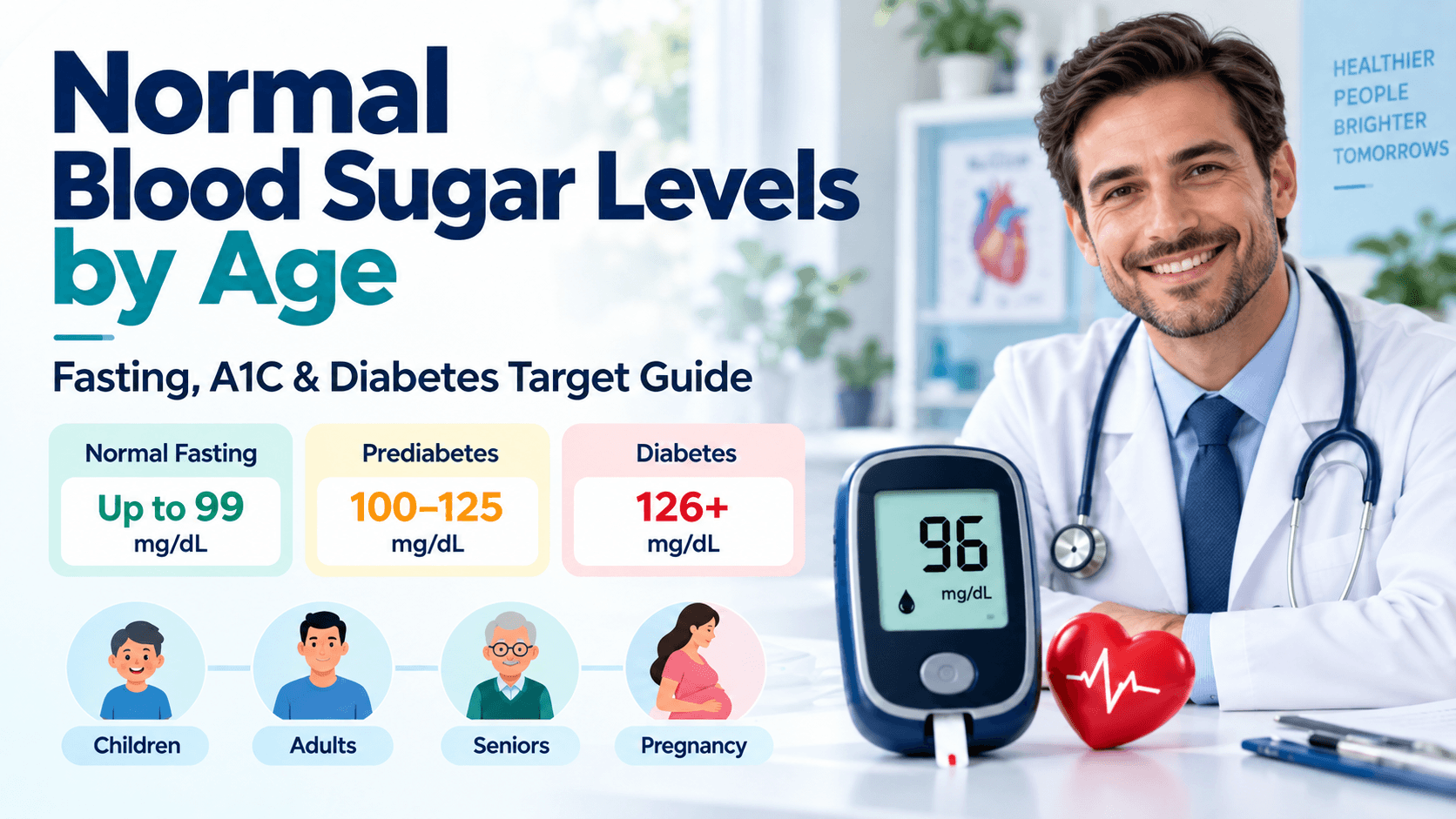
Normal blood sugar levels do not have completely different healthy ranges for every age. For most nonpregnant people without diabetes, a fasting plasma glucose of 99 mg/dL (5.5 mmol/L) or lower is considered normal.
Age becomes more important when healthcare professionals set treatment targets for people who already have diabetes, especially for children, older adults, and pregnant people.
What Are Normal Blood Sugar Levels by Age?
The chart below separates normal diagnostic ranges from diabetes treatment targets so the numbers are easier to understand.
| Group | Fasting / Before Meals | After Meals | A1C |
|---|---|---|---|
| People without diabetes | ≤99 mg/dL (≤5.5 mmol/L) | ≤139 mg/dL (≤7.7 mmol/L) on 2-hour OGTT | <5.7% |
| Adults with diabetes | 80–130 mg/dL (4.4–7.2 mmol/L) | <180 mg/dL (<10.0 mmol/L) | Usually <7% |
| Healthy older adults with diabetes | 80–130 mg/dL | Individualized | <7.0–7.5% |
| Older adults with complex health needs | 90–150 mg/dL | Individualized | <8% |
| Pregnancy with diabetes | 70–95 mg/dL | 110 to 140 mg/dL (1 hour after); 100 to 120 mg/dL (2 hours after) | Individualized |
| Children and teens with diabetes | Individualized | Individualized | Usually <7% |
Important: The rows for diabetes are treatment goals, not universal “normal” levels.
Do Normal Blood Sugar Levels Really Change With Age?
Not significantly for diagnosis.
For nonpregnant people without diabetes, the same general thresholds are used to identify normal glucose, prediabetes, and diabetes.
What changes more with age is the recommended treatment target for someone who already has diabetes.
Older adults, for example, may need less aggressive glucose targets if they have multiple health conditions, cognitive impairment, frailty, or a high risk of low blood sugar.
What Is Normal Blood Sugar for People Without Diabetes?
For people without diabetes, the main laboratory reference ranges are:
- Fasting glucose: 99 mg/dL or below
- 2-hour glucose tolerance result: 139 mg/dL or below
- A1C: below 5.7%
These values are commonly used to distinguish normal glucose from prediabetes and diabetes.
What Are Blood Sugar Targets for Adults With Diabetes?
For many nonpregnant adults with diabetes, common treatment targets are:
- Before meals: 80–130 mg/dL
- Peak after meals: below 180 mg/dL
- A1C: below 7%
These targets are individualized based on overall health, medications, hypoglycemia risk, and personal treatment goals.
What Are Blood Sugar Targets for Children and Teens With Diabetes?
Blood sugar goals for children and teenagers are individualized, but an A1C below 7% is a common general target.
Healthcare professionals may adjust goals based on:
- Age
- Hypoglycemia risk
- Type of diabetes
- Insulin use
- Monitoring technology
- Daily routine
Children should not simply be given adult targets without clinical guidance.
What Are Blood Sugar Targets for Adults Over 65?
Older adults with diabetes may need different targets depending on their health.
| Health status | Fasting / Premeal Goal | A1C Goal |
|---|---|---|
| Healthy older adult | 80–130 mg/dL | <7.0–7.5% |
| Complex/intermediate health | 90–150 mg/dL | <8.0% |
| Very complex/poor health | 100–180 mg/dL | Avoid strict A1C dependence |
The goal is to balance glucose control with safety, especially the risk of hypoglycemia.
What Are Blood Sugar Targets During Pregnancy?
Pregnancy uses different glucose targets.
Common goals for people with diabetes during pregnancy include:
- Fasting: 70–95 mg/dL
- 1 hour after meals: 110–140 mg/dL
- 2 hours after meals: 100–120 mg/dL
Pregnancy glucose management should always be guided by a healthcare professional.
What Do Fasting, After-Meal, and A1C Results Mean?
These tests measure different parts of blood sugar control.
| Test | Normal | Prediabetes | Diabetes |
|---|---|---|---|
| Fasting glucose | ≤99 mg/dL | 100–125 mg/dL | ≥126 mg/dL |
| A1C | <5.7% | 5.7–6.4% | ≥6.5% |
| 2-hour OGTT | ≤139 mg/dL | 140–199 mg/dL | ≥200 mg/dL |
A single abnormal result does not always confirm diabetes. Testing may need to be repeated.
What Is Time in Range?
Time in Range (TIR) shows how much of the day a person’s glucose stays within a target range.
For many adults with diabetes who use a continuous glucose monitor, a common target range is:
70–180 mg/dL
A common goal is to remain in this range for more than 70% of the day.
Time in Range can give a more detailed picture than A1C alone because it shows daily glucose highs and lows.
What Factors Can Affect Blood Sugar Levels?
Blood sugar can change throughout the day for many reasons.
Common factors include:
- Food and carbohydrate intake
- Exercise
- Stress
- Illness
- Sleep
- Medications
- Insulin
- Hormonal changes
- Pregnancy
- Alcohol
- Dehydration
That is why one isolated glucose reading should be interpreted in context.
When Is Blood Sugar Too Low?
Blood sugar below 70 mg/dL (3.9 mmol/L) is generally considered low for people with diabetes.
Symptoms may include:
- Shaking
- Sweating
- Hunger
- Dizziness
- Weakness
- Confusion
- Fast heartbeat
Severe hypoglycemia can cause seizures or loss of consciousness and requires urgent treatment.
When Is Blood Sugar Too High?
High blood sugar becomes more concerning when readings are repeatedly above the recommended range or are accompanied by symptoms.
Possible symptoms include:
- Excessive thirst
- Frequent urination
- Fatigue
- Blurred vision
- Headache
- Unexplained weight loss
Repeated fasting glucose of 126 mg/dL or higher falls within the diabetes range and should be medically evaluated.
When Should You Talk to a Doctor About Your Blood Sugar?
Talk to a healthcare professional if your glucose readings are repeatedly outside the normal range or if you have symptoms of high or low blood sugar.
Testing is particularly important if you have:
- Family history of diabetes
- Overweight or obesity
- High blood pressure
- Prediabetes
- Previous gestational diabetes
- Frequent thirst or urination
Home glucose meters are useful for monitoring, but they do not replace laboratory diagnosis.
Key Takeaway
Normal blood sugar levels do not change dramatically simply because someone gets older.
For most nonpregnant people without diabetes:
- Fasting glucose: ≤99 mg/dL
- A1C: <5.7%
- 2-hour OGTT: ≤139 mg/dL
Age matters more when setting individual treatment targets for people with diabetes.
Frequently Asked Questions
What is a normal blood sugar level for adults?
A fasting plasma glucose of 99 mg/dL or below is considered normal.
What is normal blood sugar for someone over 60?
For someone without diabetes, the same diagnostic thresholds generally apply. Treatment targets may differ if the person already has diabetes.
Is 100 mg/dL blood sugar normal?
If measured fasting, 100 mg/dL falls into the prediabetes range.
Is 120 mg/dL blood sugar normal?
It depends on timing. A fasting reading of 120 mg/dL is in the prediabetes range, while a post-meal reading may be interpreted differently.
What should blood sugar be before breakfast?
For someone without diabetes, fasting glucose should generally be 99 mg/dL or below.
What is a normal A1C?
An A1C below 5.7% is considered normal for diabetes screening.
Does normal blood sugar increase with age?
Not simply because of age. Diagnostic ranges stay broadly the same, but treatment goals may be relaxed for some older adults with diabetes.
What is a healthy Time in Range?
For many adults with diabetes using a CGM, the target is 70–180 mg/dL for more than 70% of the day.