Prediabetes vs Diabetes: What’s the Difference, and Why It Matters
You go in for routine blood work.
A few days later, your doctor tells you:
“Your blood sugar is higher than normal. You have prediabetes.”
For many people, that word creates immediate confusion.
Does prediabetes mean you already have diabetes?
Is it just “borderline diabetes”?
Will it definitely turn into type 2 diabetes?
And most importantly:
Can you do something about it now?
The short answer is yes.
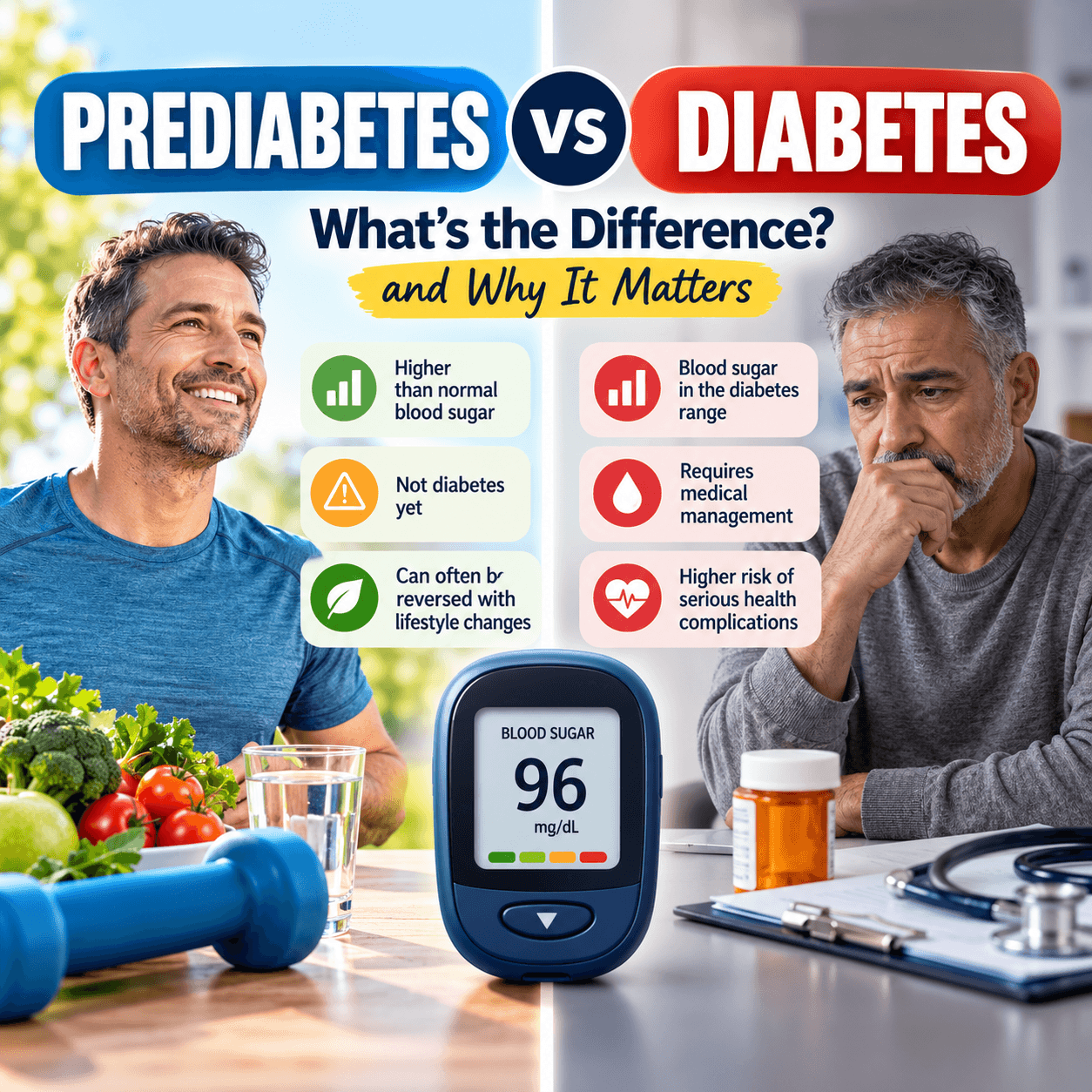
Prediabetes and diabetes are related, but they are not the same condition. Prediabetes means your blood sugar is above the normal range but has not reached the level used to diagnose diabetes. Diabetes means blood sugar has reached the diagnostic range and requires ongoing medical management. American Diabetes Association
Understanding the difference can help you know what your numbers mean and what to do next.
Prediabetes vs Diabetes at a Glance
| Test | Normal | Prediabetes | Diabetes |
|---|---|---|---|
| A1C | Below 5.7% | 5.7%–6.4% | 6.5% or higher |
| Fasting Blood Sugar | Below 100 mg/dL | 100–125 mg/dL | 126 mg/dL or higher |
| 2-Hour OGTT | Below 140 mg/dL | 140–199 mg/dL | 200 mg/dL or higher |
These ranges are used by organizations such as the American Diabetes Association and NIDDK. In many situations, an abnormal diabetes result needs confirmation with repeat testing unless there are classic symptoms and clearly elevated blood glucose. American Diabetes Association
That is why a single number should always be interpreted with your healthcare provider.
What Is Prediabetes?
Prediabetes means your blood glucose is higher than normal but not high enough to meet the diagnostic criteria for diabetes. CDC
Think of it as an early warning sign.
Your body may already be having difficulty using insulin effectively, but you have not yet crossed the diagnostic threshold for type 2 diabetes.
Prediabetes is important because it increases the risk of:
- type 2 diabetes,
- heart disease,
- and stroke. CDC
But prediabetes does not mean type 2 diabetes is inevitable.
That distinction matters.
The CDC reports that 115.2 million U.S. adults have prediabetes, and about 8 in 10 do not know they have it. CDC
So for many people, the first sign is not a symptom.
It is a blood test.
What Is Diabetes?
Diabetes is a condition in which blood glucose remains too high.
Over time, persistently elevated blood sugar can affect multiple parts of the body and increase the risk of complications involving the:
- heart,
- kidneys,
- eyes,
- nerves,
- and blood vessels. NIDDK
There are several forms of diabetes, but when people talk about prediabetes progressing to diabetes, they are usually referring to type 2 diabetes.
Type 2 diabetes occurs when the body does not use insulin effectively and eventually may not produce enough insulin to keep blood glucose within a healthy range.
Once diabetes is diagnosed, ongoing medical management is important.
That may include:
- nutrition changes,
- physical activity,
- weight management,
- medications,
- blood glucose monitoring,
- A1C testing,
- and screening for diabetes-related complications.
The Biggest Difference: Your Blood Sugar Level
The clearest difference between prediabetes and diabetes is where your blood sugar falls on diagnostic testing.
A1C
The A1C test gives an estimate of your average blood glucose over roughly the previous 2 to 3 months. American Diabetes Association
A1C ranges
Normal: below 5.7%
Prediabetes: 5.7%–6.4%
Diabetes: 6.5% or higher. American Diabetes Association
For example:
An A1C of 6.1% falls in the prediabetes range.
An A1C of 6.7% falls in the diabetes range.
But diagnosis should be made by a healthcare professional, not by reading a chart online.
What About Fasting Blood Sugar?
A fasting blood glucose test is usually performed after you have had nothing to eat or drink except water for at least eight hours.
The ADA lists:
Normal: below 100 mg/dL
Prediabetes: 100–125 mg/dL
Diabetes: 126 mg/dL or higher. American Diabetes Association
So if your fasting glucose comes back at 112 mg/dL, that falls within the prediabetes range.
That does not automatically mean you will develop diabetes.
It means your blood sugar deserves attention.
Does Prediabetes Cause Symptoms?
Usually, no.
That is one reason prediabetes can be easy to miss.
The ADA notes that prediabetes often has no clear symptoms, meaning many people discover it only through blood testing. American Diabetes Association
You can feel perfectly normal and still have prediabetes.
That is why testing is especially important if you have risk factors.
Does Diabetes Cause Symptoms?
Type 2 diabetes can also develop slowly.
Some people notice symptoms such as:
- frequent urination,
- increased thirst,
- fatigue,
- blurred vision,
- increased hunger,
- slow-healing wounds,
- or unexplained weight loss.
Others may have very mild symptoms or none that they recognize.
That is why symptoms alone are not enough to rule diabetes in or out.
Blood testing matters.
NAMG also covers this in more detail in our guide to early signs of type 2 diabetes. Namg
Does Prediabetes Always Turn Into Diabetes?
No.
This is one of the most important things to understand.
Prediabetes increases your risk of developing type 2 diabetes, but progression is not automatic.
The NIDDK specifically recommends telling patients that prediabetes is different from diabetes and that type 2 diabetes can often be prevented or delayed through appropriate lifestyle changes and, in some cases, medication. NIDDK
That is why I would avoid thinking of prediabetes as:
“I almost have diabetes, so there is nothing I can do.”
A better way to think about it is:
“My blood sugar is moving in the wrong direction, but I have an opportunity to act early.”
Can Prediabetes Be Reversed?
Many people with prediabetes can improve their blood glucose enough to return to a normal range.
That does not mean everyone will have the same result, and it is better to avoid promises such as “prediabetes can always be reversed.”
But meaningful improvement is possible.
CDC says lifestyle changes involving healthier eating, physical activity, and weight loss can significantly reduce the risk of progressing to type 2 diabetes. CDC
The ADA also cites evidence that people at high risk can reduce the likelihood of developing type 2 diabetes through modest weight loss and regular physical activity. American Diabetes Association
The right plan depends on your:
- current weight,
- medications,
- other medical conditions,
- physical ability,
- eating habits,
- and individual risk factors.
Prediabetes Is Not “Borderline Diabetes”
You may hear people say:
“My sugar is borderline.”
That can make prediabetes sound unimportant.
It is better to use the actual term prediabetes.
NIDDK specifically advises healthcare professionals not to dismiss it as “borderline diabetes” or “a touch of sugar,” because prediabetes is a meaningful health condition that deserves attention. NIDDK
That does not mean you should panic.
It means you should take it seriously enough to act.
Who Is More Likely to Develop Prediabetes or Type 2 Diabetes?
Risk can be higher if you:
- are overweight or obese,
- are physically inactive,
- have a family history of type 2 diabetes,
- previously had gestational diabetes,
- have high blood pressure,
- have abnormal cholesterol or triglycerides,
- are older,
- or already have prediabetes.
Your healthcare provider may recommend testing based on your overall risk rather than waiting for symptoms.
Why Weight, Blood Pressure, and Cholesterol Matter Too
Blood sugar does not exist in isolation.
Prediabetes and type 2 diabetes often occur alongside other metabolic and cardiovascular risk factors.
That means your healthcare provider may also look at:
- blood pressure,
- cholesterol,
- triglycerides,
- body weight,
- kidney function,
- and cardiovascular risk.
This is one reason primary care is so important.
The goal is not simply:
“Lower the A1C.”
It is to look at the whole person.
Prediabetes vs Diabetes: Treatment Is Different
With Prediabetes
The focus is usually on preventing or delaying progression.
Your plan may include:
- nutrition changes,
- increased physical activity,
- gradual weight loss if appropriate,
- regular blood sugar monitoring,
- repeat A1C testing,
- managing blood pressure and cholesterol,
- and medication in selected patients.
With Type 2 Diabetes
The goal becomes ongoing disease management.
Depending on the individual, this may include:
- lifestyle changes,
- oral medications,
- injectable medications,
- insulin,
- glucose monitoring,
- A1C testing,
- kidney monitoring,
- eye exams,
- foot care,
- cardiovascular risk management.
Not every person with type 2 diabetes needs the same treatment.
Treatment should be individualized.
Can You Have Prediabetes With a Normal Fasting Glucose?
Yes.
Different diabetes tests do not always identify the same people.
NIDDK notes that someone may have a normal fasting glucose result but an A1C that falls within the prediabetes range, or vice versa. NIDDK
This is another reason not to interpret one number without context.
Your clinician may decide whether additional or repeat testing is appropriate.
How Often Should Prediabetes Be Checked?
Testing frequency depends on your results, risk factors, age, medications, and overall health.
The ADA advises that people with prediabetes should be monitored for development of type 2 diabetes, with follow-up determined by the healthcare team. American Diabetes Association
If your numbers are changing quickly or you have multiple risk factors, your provider may recommend more frequent monitoring.
What Should You Do If Your A1C Is in the Prediabetes Range?
Suppose your A1C comes back:
5.9%
The worst response is to ignore it because:
“At least it isn’t diabetes.”
Instead:
1. Discuss the result with your healthcare provider
Ask what the number means in the context of your overall health.
2. Review your risk factors
Blood pressure, cholesterol, weight, family history, and activity level all matter.
3. Make realistic changes
You do not need to transform your entire life overnight.
Small changes you can maintain are usually more valuable than extreme plans you abandon after two weeks.
4. Agree on follow-up testing
Know when your A1C or fasting glucose should be checked again.
5. Watch the trend
A single number matters.
But the direction over time can matter even more.
Prediabetes vs Diabetes: A Simple Example
Imagine two patients.
Patient A
A1C: 6.1%
This falls within the prediabetes range.
The conversation focuses on:
- risk,
- lifestyle,
- monitoring,
- and preventing progression.
Patient B
A1C: 6.8%
This falls within the diabetes diagnostic range.
The provider considers appropriate confirmatory testing and develops a diabetes management plan based on the full clinical picture. NIDDK
The numbers are close.
But clinically, they represent different categories.
That is why understanding the threshold matters.
When Should You See a Doctor?
Consider talking with a healthcare provider if:
- your A1C is elevated,
- your fasting glucose is high,
- you have a family history of diabetes,
- you have high blood pressure or cholesterol,
- you are overweight and concerned about diabetes risk,
- you had gestational diabetes,
- or you have symptoms such as frequent urination, excessive thirst, unexplained weight loss, or blurred vision.
Seek prompt medical attention if you have severe symptoms or very high glucose readings, especially with vomiting, confusion, dehydration, difficulty breathing, or significant weakness.
Prediabetes Is an Opportunity to Act Early
Hearing that you have prediabetes can be unsettling.
But it also gives you something valuable:
time.
Time to understand your numbers.
Time to improve your habits.
Time to manage other risk factors.
Time to work with your healthcare provider before blood sugar progresses further.
CDC’s latest statistics show just how important this opportunity is: more than 115 million U.S. adults are estimated to have prediabetes, and most do not know it. CDC
Knowing your status is the first step.
Prediabetes and Diabetes Care at NAMG
At North American Medical Group (NAMG), our primary care team helps patients understand and manage blood sugar concerns as part of their overall health.
Depending on your needs, care may include:
- diabetes and prediabetes evaluation,
- A1C monitoring,
- blood glucose testing,
- medication management,
- weight management,
- blood pressure management,
- cholesterol management,
- chronic disease care,
- and ongoing follow-up.
If your lab results show elevated blood sugar—or you are concerned about your risk for type 2 diabetes—talk with your healthcare provider about what your numbers mean and what steps make sense for you.
Frequently Asked Questions
Is prediabetes the same as diabetes?
No. Prediabetes means blood glucose is above normal but below the diagnostic range for diabetes. Diabetes means your blood glucose has reached the diagnostic threshold. American Diabetes Association
What A1C is considered prediabetes?
An A1C from 5.7% to 6.4% is considered within the prediabetes range. American Diabetes Association
What A1C is considered diabetes?
An A1C of 6.5% or higher falls within the diabetes range. Diagnosis generally requires appropriate clinical confirmation unless specific exceptions apply. NIDDK
Can prediabetes go back to normal?
For some people, blood glucose can return to the normal range with appropriate lifestyle changes and medical management. Prediabetes does not automatically progress to type 2 diabetes. NIDDK
Can you have prediabetes without symptoms?
Yes. Prediabetes often has no obvious symptoms, which is why testing is important for people at risk. American Diabetes Association
Is prediabetes serious?
Yes. Prediabetes increases the risk of developing type 2 diabetes, heart disease, and stroke. But identifying it early creates an opportunity to reduce those risks. CDC
Should I worry if my A1C is 5.7%?
An A1C of 5.7% is at the beginning of the prediabetes range. It is a reason to discuss your result and risk factors with your healthcare provider, not a reason to panic. American Diabetes Association
Final Takeaway
The easiest way to remember the difference is:
Normal blood sugar: within the expected range.
Prediabetes: higher than normal, but not yet diabetes.
Diabetes: blood sugar has reached the diagnostic range and requires ongoing medical management.
Prediabetes is not something to ignore.
But it is also not a guarantee that diabetes will follow.
Think of it as an early warning—and an opportunity to act while there is still time to change the direction of your health.