Two North Carolina Adults Die After Contracting West Nile Virus
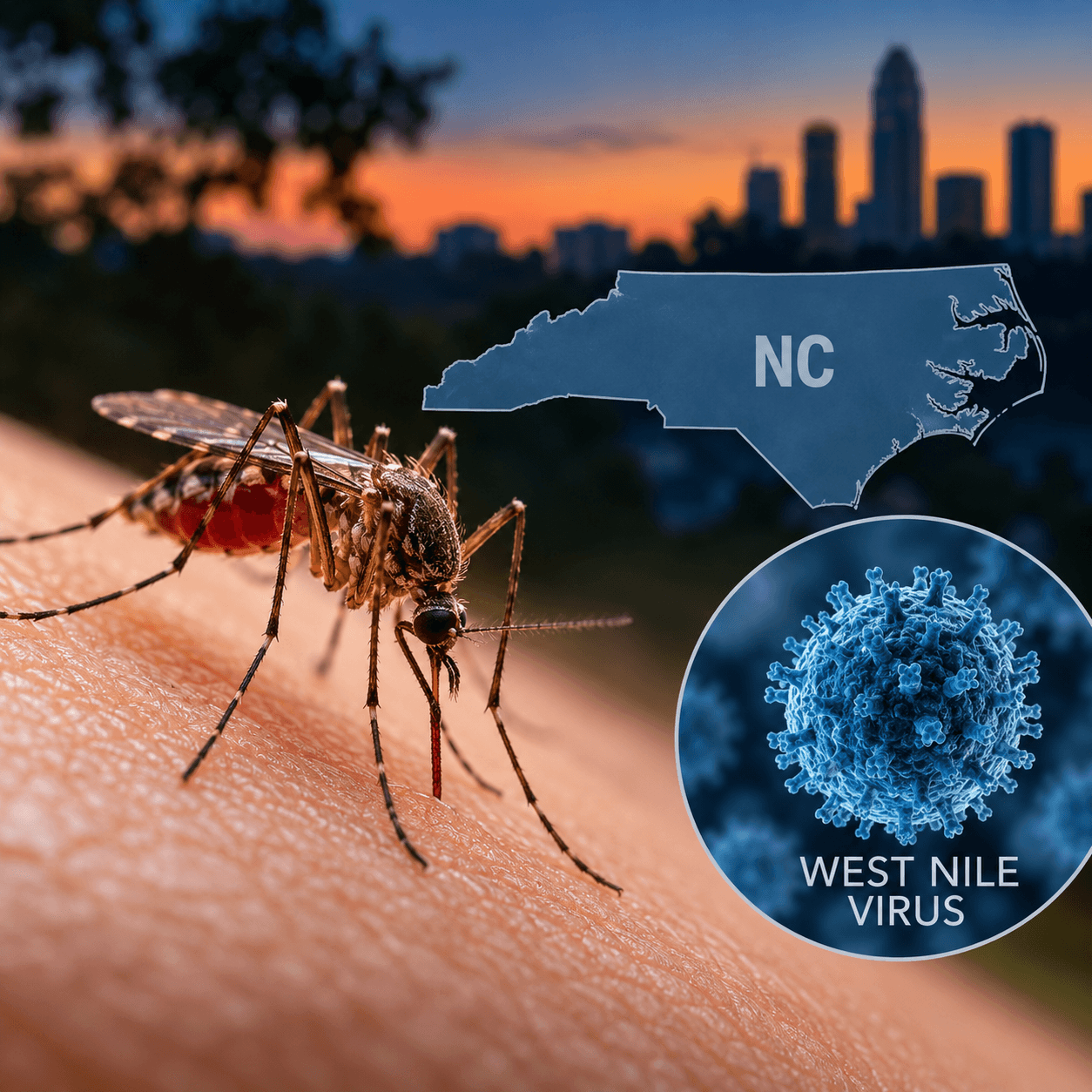
Two adults from Central North Carolina have died after contracting West Nile virus, as health officials continue to urge residents to protect themselves from mosquito bites.
The deaths were reported in October amid ongoing West Nile virus activity in North Carolina. Details about the individuals, including their identities and exact locations, have not been publicly released.
Earlier in the 2026 season, the North Carolina Department of Health and Human Services reported the state’s first West Nile virus disease case in a Gaston County resident. Health officials also identified a West Nile virus-positive blood donor in Mecklenburg County through routine screening.
West Nile virus had also been detected in mosquito samples collected in Cabarrus, Forsyth and Mecklenburg counties during July, according to state health officials.
What Is West Nile Virus?
West Nile virus is a mosquito-borne illness that is primarily transmitted to people through the bite of an infected mosquito.
Mosquitoes become infected after feeding on birds carrying the virus and can subsequently transmit the virus through their bites.
Most people infected with West Nile virus never develop symptoms. According to the Centers for Disease Control and Prevention, about 1 in 5 infected people develops a fever and other symptoms.
Symptoms can include:
- Fever
- Headache
- Body aches
- Joint pain
- Vomiting
- Diarrhea
- Rash
Symptoms generally begin several days after the bite of an infected mosquito, although the timing can vary.
When Can West Nile Virus Become Serious?
Severe West Nile illness is uncommon, but it can affect the brain and nervous system and can sometimes be fatal.
Fewer than 1% of infected people develop severe illness affecting the central nervous system, according to the CDC.
Serious symptoms can include:
- High fever
- Severe headache
- Neck stiffness
- Disorientation or confusion
- Tremors
- Muscle weakness
- Seizures
- Numbness
- Paralysis
Severe infections can cause conditions including encephalitis, which is inflammation of the brain, and meningitis, which affects the membranes surrounding the brain and spinal cord.
Older adults, people with weakened immune systems and people with certain underlying medical conditions face a greater risk of severe illness.
Anyone experiencing symptoms such as high fever, neck stiffness, confusion, muscle weakness or tremors should seek medical attention promptly.
Is There a Vaccine or Treatment for West Nile Virus?
There is currently no licensed human vaccine to prevent West Nile virus and no medication that specifically cures the infection.
People with mild illness generally recover with supportive care, while severe cases may require hospitalization for intravenous fluids, pain management and other medical support.
Preventing mosquito bites therefore remains the main way to reduce the risk of infection.
How Can North Carolina Residents Prevent West Nile Virus?
Health officials recommend reducing mosquito exposure, particularly from dusk through dawn, when mosquitoes that commonly transmit West Nile virus are most active.
Residents can lower their risk by:
- Using an EPA-registered insect repellent and following label instructions.
- Wearing loose-fitting, long-sleeved shirts and long pants outdoors.
- Using properly fitted screens on windows and doors.
- Emptying buckets, flowerpot saucers, toys, tires and other containers that collect standing water.
- Regularly changing water in birdbaths and pet bowls.
- Keeping gutters clean and maintaining proper drainage around homes.
- Draining standing water that remains on a property after rainfall.
- Using appropriate larvicides for standing water that cannot be removed.
North Carolina health officials have emphasized that mosquitoes capable of transmitting West Nile virus are found throughout the state, making mosquito-bite prevention important even when no local human cases have been announced.
The CDC also cautions that current West Nile surveillance figures are preliminary and can change as additional cases are reported by state and local health departments.