What Are the Early Signs of Type 2 Diabetes?
Type 2 diabetes often develops slowly. Some people notice clear symptoms, while others may have no obvious symptoms for years.
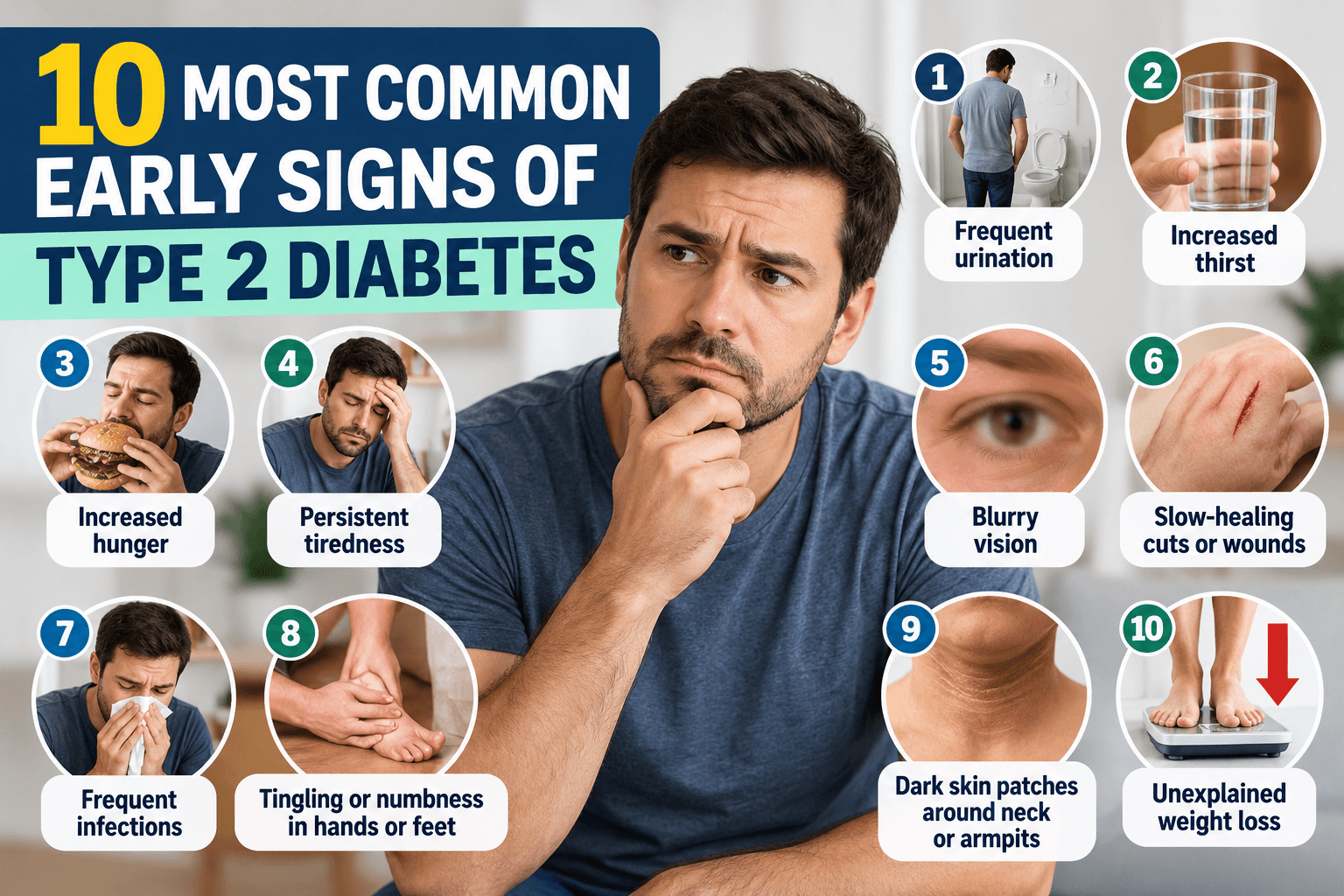
Common early signs include frequent urination, increased thirst, unusual hunger, tiredness, blurry vision, slow-healing wounds, repeated infections, and tingling or numbness in the hands or feet.
If these symptoms continue, especially if you have diabetes risk factors, a blood glucose test can help determine whether diabetes or prediabetes may be present.
10 most common early signs of type 2 diabetes
The most common early symptoms are related to rising blood sugar levels.
You may notice:
- Frequent urination
- Feeling unusually thirsty
- Increased hunger
- Persistent tiredness
- Blurry vision
- Slow-healing cuts or sores
- Frequent skin, urinary, or yeast infections
- Tingling or numbness in the hands or feet
- Dark skin patches around the neck or armpits
- Unexplained weight loss
Having one of these symptoms does not automatically mean you have diabetes. However, several symptoms appearing together may be a reason to get tested.
Why does diabetes cause frequent urination and thirst?
High blood sugar can cause the kidneys to remove more glucose through urine. This can make you urinate more often.
Losing extra fluid can then make you feel unusually thirsty.
A common pattern is:
High blood sugar → more urination → fluid loss → increased thirst
Frequent urination and constant thirst are among the most recognizable warning signs of diabetes.
Can tiredness be an early sign of type 2 diabetes?
Yes. Persistent or unexplained fatigue can be an early symptom of type 2 diabetes.
Your body normally uses glucose as an important source of energy. When insulin does not work properly, glucose may remain in the bloodstream instead of being used efficiently by your cells.
However, fatigue has many possible causes, including poor sleep, stress, anemia, and thyroid problems. Diabetes cannot be diagnosed from tiredness alone.
Can blurry vision be caused by high blood sugar?
Yes. High blood sugar can temporarily affect fluid levels in the eyes and cause blurry vision.
You may notice:
- Difficulty focusing
- Vision that changes during the day
- Periods of blurred eyesight
Persistent or sudden vision changes should always be checked by a healthcare professional.
Why do cuts and wounds heal slowly with diabetes?
High blood sugar can affect blood circulation, nerves, and the body’s ability to heal wounds properly.
You may notice that:
- Small cuts take longer to heal
- Foot sores remain open
- Skin infections return frequently
Slow-healing wounds, particularly on the feet, should not be ignored.
Can tingling or numbness be an early warning sign?
Yes. Tingling, burning, pain, or numbness in the hands or feet can occur when diabetes begins affecting the nerves.
This is often associated with diabetic nerve damage.
However, nerve symptoms can have many other causes, so persistent tingling or numbness should be medically assessed.
Can you have type 2 diabetes without symptoms?
Yes. Type 2 diabetes can develop without noticeable symptoms.
Symptoms may be mild or appear so gradually that a person does not recognize them.
This is one reason diabetes can remain undiagnosed for a long time.
According to the CDC, millions of adults with diabetes do not know they have the condition.
Because of this, people with diabetes risk factors should not rely only on symptoms.
Who is more likely to develop type 2 diabetes?
Your risk may be higher if you:
- Are overweight or obese
- Have a family history of type 2 diabetes
- Are physically inactive
- Have prediabetes
- Previously had gestational diabetes
- Are getting older
- Have certain metabolic conditions
Type 2 diabetes can also affect younger adults, teenagers, and children.
What is the difference between prediabetes and type 2 diabetes?
Prediabetes means your blood sugar is higher than normal but not yet high enough to meet the diagnostic level for diabetes.
| Test | Prediabetes | Diabetes |
|---|---|---|
| A1C | 5.7%–6.4% | 6.5% or higher |
| Fasting blood sugar | 100–125 mg/dL | 126 mg/dL or higher |
| 2-hour glucose test | 140–199 mg/dL | 200 mg/dL or higher |
Prediabetes often causes no symptoms, but it is an important warning sign.
Lifestyle changes can reduce the risk of progressing to type 2 diabetes.
How is type 2 diabetes diagnosed?
Type 2 diabetes is diagnosed with blood tests rather than symptoms alone.
Common tests include:
- A1C test: Measures average blood glucose over about three months.
- Fasting blood glucose: Measures blood sugar after fasting.
- Oral glucose tolerance test: Measures how your body processes glucose.
- Random blood glucose: May be used when diabetes symptoms are present.
A healthcare professional can determine which test is most appropriate.
When should you get tested for diabetes?
Consider discussing diabetes testing with a healthcare professional if you have symptoms such as:
- Frequent thirst and urination
- Persistent tiredness
- Blurry vision
- Slow-healing wounds
- Repeated infections
- Unexplained weight loss
Testing may also be appropriate if you have strong diabetes risk factors, even if you feel completely well.
When should you seek urgent medical care?
Most type 2 diabetes symptoms develop gradually, but severe symptoms need urgent medical attention.
Seek medical care promptly for symptoms such as:
- Severe weakness
- Confusion
- Fainting
- Persistent vomiting
- Difficulty breathing
- Severe dehydration
These symptoms may indicate dangerously high blood sugar or another serious medical problem.
What should you do if you notice possible diabetes symptoms?
Do not try to diagnose diabetes from symptoms alone.
A better approach is:
- Note which symptoms you are experiencing.
- Consider your diabetes risk factors.
- Speak with a healthcare professional.
- Get the recommended blood tests.
- Follow medical advice if your blood sugar is high.
Early diagnosis can make diabetes easier to manage and may reduce the risk of future complications.
Key Takeaway
The early signs of type 2 diabetes can include frequent urination, excessive thirst, hunger, fatigue, blurry vision, slow wound healing, repeated infections, and tingling or numbness.
But type 2 diabetes can also develop without obvious symptoms.
If you notice persistent symptoms or have diabetes risk factors, blood testing is the most reliable way to find out what is happening.
Frequently Asked Questions
What is usually the first sign of type 2 diabetes?
There is no single first symptom. Frequent urination, thirst, fatigue, hunger, and blurry vision are common early warning signs.
Can you have diabetes and feel completely normal?
Yes. Many people with type 2 diabetes have mild symptoms or no noticeable symptoms.
Does frequent urination always mean diabetes?
No. Frequent urination can have many causes. Diabetes becomes more concerning when it occurs with thirst, fatigue, hunger, or other risk factors.
Can diabetes cause weight loss?
Yes. Unexplained weight loss can occur when the body cannot use glucose properly, although it is more common with significant insulin deficiency.
What A1C level means diabetes?
An A1C level of 6.5% or higher is within the diabetes range. An A1C between 5.7% and 6.4% is considered prediabetes.
Can prediabetes turn into type 2 diabetes?
Yes, but progression is not inevitable. Healthy eating, regular physical activity, and weight management can significantly reduce the risk.
Can type 2 diabetes be prevented?
In many high-risk people, type 2 diabetes can be prevented or delayed through lifestyle changes and appropriate medical care.