What Are the Types of HTN and Other Names for Hypertension?
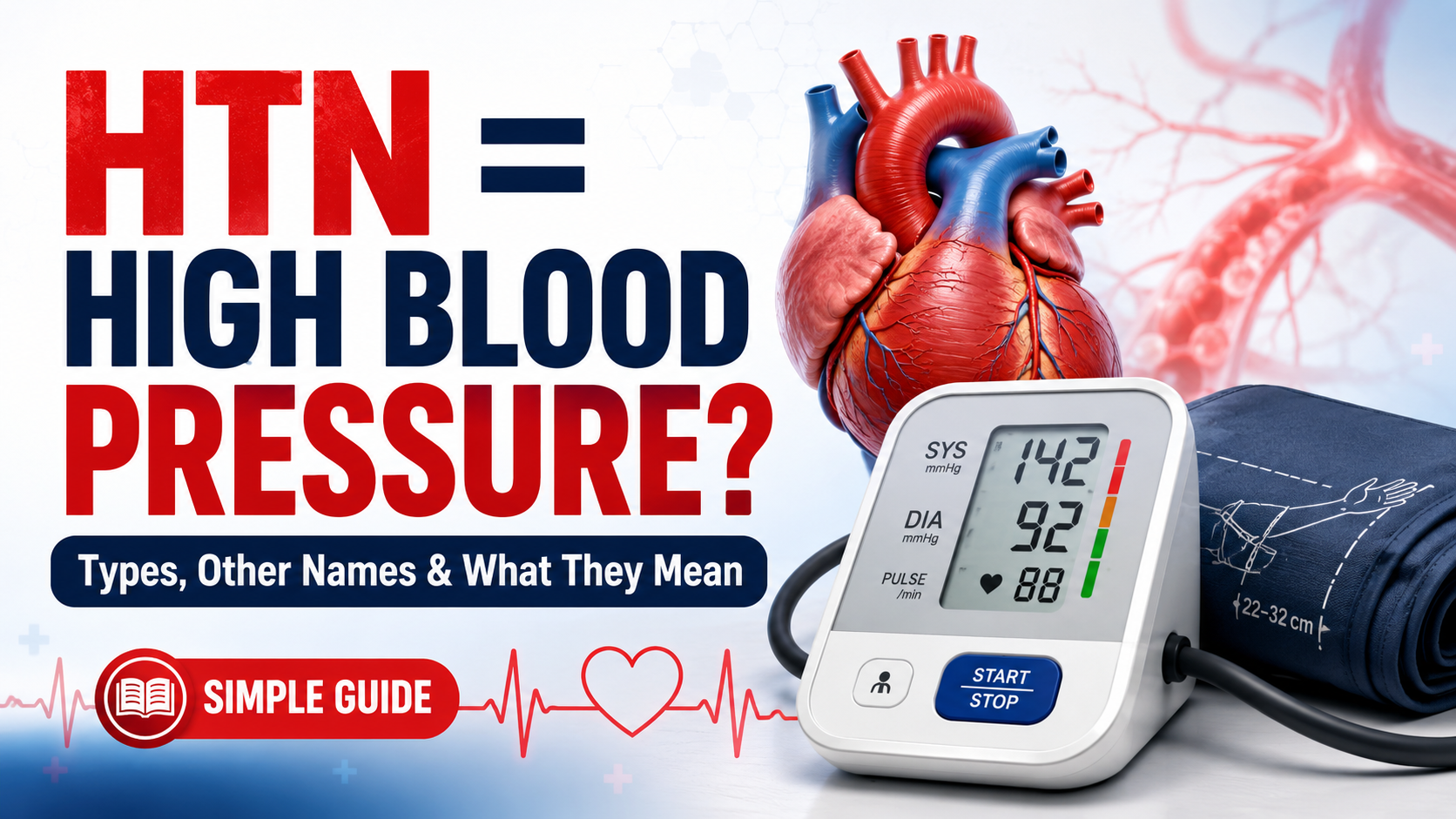
Hypertension means high blood pressure. The medical abbreviation for hypertension is HTN, and many people also call it elevated blood pressure, arterial hypertension, or simply high BP.
In most cases, when people search for “types of HTN” or “another word for hypertension,” they want two things: first, the meaning of the term; second, the different medical categories of high blood pressure. This guide explains both in simple language.
Hypertension matters because it is common, often silent, and strongly linked with heart disease, stroke, kidney disease, and other serious health problems. The World Health Organization reported that about 1.4 billion adults aged 30–79 had hypertension in 2024, and about 600 million adults with hypertension were unaware they had it.
What Does Hypertension Mean in Simple Words?
Hypertension means the pressure inside the blood vessels is consistently higher than normal. Blood pressure rises when blood pushes too strongly against artery walls over time.
Blood pressure is written as two numbers, such as 120/80 mm Hg. The first number is systolic pressure, and the second number is diastolic pressure. The CDC defines high blood pressure as blood pressure that is consistently at or above 130/80 mm Hg in the U.S. classification system.
In simple terms:
- Hypertension = high blood pressure
- HTN = abbreviation for hypertension
- BP = abbreviation for blood pressure
- Arterial hypertension = high pressure in the arteries
Hypertension is not usually diagnosed from one random reading. Blood pressure can rise temporarily because of stress, caffeine, pain, exercise, or poor sleep.
What Are Other Names for Hypertension?
Other names for hypertension include high blood pressure, elevated blood pressure, high BP, HTN, and arterial hypertension.
Common terms include:
| Term | Meaning |
|---|---|
| Hypertension | Medical term for high blood pressure |
| HTN | Common medical abbreviation for hypertension |
| High blood pressure | Every day name for hypertension |
| Elevated blood pressure | Blood pressure is above normal, but not always full hypertension |
| Arterial hypertension | High pressure in the arteries |
| Hypertensive disorder | A broad term for conditions involving high blood pressure |
| Silent killer | Informal name because hypertension often has no symptoms |
The term “silent killer” is used because many people with high blood pressure feel normal while the condition slowly damages the heart, brain, kidneys, blood vessels, and eyes. The CDC states that high blood pressure usually has no warning signs or symptoms, and measuring blood pressure is the only way to know whether it is high.
What Do Systolic and Diastolic Blood Pressure Mean?
Systolic blood pressure is the top number, and diastolic blood pressure is the bottom number. Both numbers help doctors understand how hard the cardiovascular system is working.
Systolic pressure measures pressure when the heart beats and pushes blood through the arteries. Diastolic pressure measures pressure when the heart rests between beats.
Example:
If your blood pressure is 140/90 mm Hg:
- 140 = systolic blood pressure
- 90 = diastolic blood pressure
- mm Hg = millimeters of mercury, the unit used for blood pressure
A high systolic number, a high diastolic number, or both can suggest hypertension depending on the guideline used and whether the readings are consistent.
What Are the Main Types of Hypertension?
The main types of hypertension include primary hypertension, secondary hypertension, isolated systolic hypertension, resistant hypertension, pregnancy-related hypertension, and pulmonary hypertension.
These types are not all the same. Some describe the cause, some describe the blood pressure pattern, and some describe a specific body system affected by high pressure.
What Is Primary or Essential Hypertension?
Primary hypertension, also called essential hypertension, is high blood pressure without one single identifiable cause. It is the most common form of long-term high blood pressure.
Primary hypertension usually develops gradually over years. It is often linked with several combined risk factors, such as age, genetics, excess body weight, high salt intake, physical inactivity, alcohol use, and other lifestyle or metabolic factors. WHO lists older age, genetics, overweight or obesity, physical inactivity, high-salt diet, and excess alcohol as risk factors for hypertension.
Primary hypertension is also called:
- Essential hypertension
- Idiopathic hypertension
- Usual high blood pressure
- Chronic high blood pressure in many adult cases
What Is Secondary Hypertension?
Secondary hypertension is high blood pressure caused by another medical condition. It may be related to kidney disease, artery problems, hormone disorders, heart conditions, medicines, or pregnancy-related conditions.
Mayo Clinic explains that secondary hypertension differs from primary hypertension because it has an underlying medical cause. Conditions affecting the kidneys, arteries, heart, or endocrine system can contribute to this type.
Possible causes include:
- Kidney disease
- Renal artery narrowing
- Thyroid problems
- Adrenal gland disorders
- Sleep apnea
- Certain medications
- Pregnancy-related blood pressure disorders
Secondary hypertension may appear suddenly, occur at a younger age, or be difficult to control with usual medication.
What Is Isolated Systolic Hypertension?
Isolated systolic hypertension means the top blood pressure number is high while the bottom number is not high. This pattern is common in older adults because arteries can become stiffer with age.
For example, a reading such as 150/78 mm Hg may suggest isolated systolic hypertension if confirmed by repeated measurements. The systolic number is elevated, but the diastolic number is below 80.
This type matters because high systolic pressure increases strain on the arteries and heart.
What Is Resistant Hypertension?
Resistant hypertension means blood pressure remains above goal despite the use of multiple blood pressure medicines. The American Heart Association scientific statement defines resistant hypertension as above-goal blood pressure despite three antihypertensive drug classes, usually including a calcium channel blocker, a renin-angiotensin system blocker, and a diuretic at maximum or tolerated doses. It also includes patients controlled on four or more medications.
Before labeling hypertension as resistant, clinicians usually check for:
- Incorrect blood pressure measurement
- Missed medication doses
- White-coat effect
- High salt intake
- Interfering medicines
- Kidney disease
- Sleep apnea
- Hormonal causes
Resistant hypertension needs careful medical evaluation because it may signal hidden causes or higher cardiovascular risk.
What Is Pregnancy-Related Hypertension?
Pregnancy-related hypertension means high blood pressure that occurs before, during, or after pregnancy. It includes chronic hypertension, gestational hypertension, preeclampsia, and eclampsia.
The CDC states that high blood pressure during pregnancy is generally a reading of 140/90 mm Hg or higher on two readings at least 4 hours apart. Chronic hypertension during pregnancy refers to pre-existing high blood pressure diagnosed in the first 20 weeks or blood pressure that lasts 12 weeks after birth.
Common pregnancy-related terms include:
- Chronic hypertension: High blood pressure before pregnancy or early in pregnancy.
- Gestational hypertension: New high blood pressure during pregnancy.
- Preeclampsia: High blood pressure with protein in urine or other organ-related problems after 20 weeks.
- Eclampsia: A medical emergency involving seizures in a person with preeclampsia.
What Is Pulmonary Hypertension?
Pulmonary hypertension is high blood pressure in the blood vessels of the lungs. It is different from common systemic hypertension, which usually refers to pressure in the body’s main arteries.
The CDC explains that pulmonary hypertension affects blood vessels in the lungs and can make the heart work harder to pump blood into the lungs. It may cause shortness of breath, chest pain, dizziness, and lightheadedness.
Pulmonary hypertension is not simply “regular high blood pressure.” It is a separate condition that often needs specialist care.
What Are the Blood Pressure Categories for Hypertension?
Blood pressure categories help classify readings as normal, elevated, stage 1 hypertension, stage 2 hypertension, or severe hypertension. These categories may vary by country and guideline.
The American Heart Association lists these adult blood pressure categories: normal is below 120/80 mm Hg, elevated is 120–129 and less than 80, stage 1 hypertension is 130–139 or 80–89, stage 2 hypertension is 140 or higher or 90 or higher, and severe hypertension is higher than 180 and/or 120.
| Category | Systolic | Diastolic |
|---|---|---|
| Normal | Less than 120 | Less than 80 |
| Elevated | 120–129 | Less than 80 |
| Stage 1 hypertension | 130–139 | 80–89 |
| Stage 2 hypertension | 140 or higher | 90 or higher |
| Severe hypertension | Higher than 180 | Higher than 120 |
WHO uses 140/90 mm Hg or higher as a general hypertension threshold when measured on two different days. This difference is important because readers may see different thresholds depending on whether they are reading U.S., European, WHO, or local medical guidance.
What Causes Hypertension and Who Is at Higher Risk?
Hypertension can be caused by lifestyle factors, genetics, aging, medical conditions, medications, or pregnancy-related changes. In many people, several factors work together.
Common risk factors include:
- Older age
- Family history of hypertension
- High-salt diet
- Low physical activity
- Excess body weight
- Smoking or tobacco use
- Excess alcohol use
- Diabetes
- Kidney disease
- Sleep apnea
- Chronic stress
- Certain medicines
WHO separates hypertension risk factors into modifiable factors, such as unhealthy diet, physical inactivity, tobacco, alcohol, and overweight, and non-modifiable factors, such as family history, age over 65, and coexisting diseases like diabetes or kidney disease.
What Symptoms Can Hypertension Cause?
Most people with hypertension have no symptoms. That is why blood pressure checks are important even when a person feels healthy.
Very high blood pressure may cause symptoms such as:
- Severe headache
- Chest pain
- Dizziness
- Shortness of breath
- Blurred vision
- Confusion
- Nausea or vomiting
- Nosebleeds
- Abnormal heart rhythm
WHO states that most people with hypertension do not feel symptoms, but very high blood pressure can cause headache, blurred vision, chest pain, and other symptoms. WHO also advises immediate care if high blood pressure occurs with serious symptoms.
A key mistake is waiting for symptoms before checking blood pressure. Hypertension can damage organs silently for years.
How Is Hypertension Diagnosed?
Hypertension is diagnosed by repeated blood pressure measurements, not by one isolated reading. A healthcare professional may use office readings, home blood pressure monitoring, or ambulatory blood pressure monitoring.
WHO states that hypertension is diagnosed when blood pressure is measured on two different days and systolic readings on both days are at least 140 mm Hg and/or diastolic readings are at least 90 mm Hg. In the U.S. system, CDC and NHLBI describe high blood pressure as consistently at or above 130/80 mm Hg.
Diagnosis may include:
- Correct cuff size and proper measurement technique
- Repeat readings on separate occasions
- Review of medications and health history
- Blood or urine tests when secondary causes are suspected
- Home or 24-hour ambulatory monitoring when white-coat or masked hypertension is possible
Only a qualified health professional can confirm a diagnosis and decide the best treatment plan.
How Can Hypertension Be Prevented or Managed?
Hypertension can often be prevented or managed with lifestyle changes, regular monitoring, and medication when needed. Treatment depends on blood pressure level, age, other diseases, and overall cardiovascular risk.
Helpful steps include:
- Eat more fruits, vegetables, and whole foods
- Reduce excess salt and highly processed foods
- Stay physically active
- Maintain a healthy body weight
- Avoid smoking and tobacco
- Limit alcohol
- Manage diabetes, kidney disease, and cholesterol
- Sleep well and manage stress
- Take prescribed medicines correctly
- Check blood pressure regularly
WHO recommends lifestyle changes such as eating a healthier, low-salt diet, losing weight when needed, being physically active, and quitting tobacco; some people still need medicines.
Medical treatment may include diuretics, ACE inhibitors, ARBs, calcium channel blockers, or other medicines based on the person’s condition. Never stop blood pressure medication without medical advice.
What Common Mistakes Should People Avoid About Hypertension?
The biggest mistake is thinking that hypertension is harmless because there are no symptoms. High blood pressure can still damage organs even when a person feels normal.
Common misconceptions include:
- Mistake 1: “I feel fine, so my blood pressure is fine.”
Hypertension often has no warning signs. - Mistake 2: “Only older people get hypertension.”
Younger adults can also develop high blood pressure. - Mistake 3: “One normal reading means I do not have hypertension.”
Blood pressure changes during the day and needs repeated tracking. - Mistake 4: “Medication means lifestyle changes are not needed.”
Diet, activity, weight management, and medication often work together. - Mistake 5: “Pulmonary hypertension is the same as regular hypertension.”
Pulmonary hypertension affects lung blood vessels and is a different condition.
What Are the Key Takeaways About Hypertension Terminology and Types?
Hypertension is the medical term for high blood pressure, and HTN is its common abbreviation. The main types include primary, secondary, isolated systolic, resistant, pregnancy-related, and pulmonary hypertension.
Key points:
- Another word for hypertension: high blood pressure.
- HTN meaning: abbreviation for hypertension.
- Most common type: primary or essential hypertension.
- Cause-based type: secondary hypertension.
- Pattern-based type: isolated systolic hypertension.
- Treatment-response type: resistant hypertension.
- Special body-system type: pulmonary hypertension.
- Pregnancy-related types: chronic hypertension, gestational hypertension, preeclampsia, and eclampsia.
The most important practical step is regular blood pressure checking, because hypertension often has no symptoms.
FAQs About Hypertension, HTN, and High Blood Pressure
What is another word for hypertension?
Another word for hypertension is high blood pressure. Other related terms include HTN, elevated blood pressure, arterial hypertension, and high BP.
What does HTN mean in medical terms?
HTN means hypertension. It is a common abbreviation used by doctors, nurses, and medical students.
Is hypertension the same as high blood pressure?
Yes. Hypertension is the medical term, while high blood pressure is the common everyday term.
What are the two main types of hypertension?
The two main cause-based types are primary hypertension and secondary hypertension. Primary hypertension has no single clear cause, while secondary hypertension is caused by another condition.
What is essential hypertension?
Essential hypertension is another name for primary hypertension. It means long-term high blood pressure without one specific identifiable cause.
What is secondary hypertension?
Secondary hypertension is high blood pressure caused by another medical problem, such as kidney disease, hormone disorders, artery narrowing, sleep apnea, or certain medications.
Why is hypertension called the silent killer?
Hypertension is called the silent killer because it often has no symptoms but can increase the risk of heart attack, stroke, kidney disease, and other serious problems.
What blood pressure level is considered hypertension?
In U.S. guidance, high blood pressure is commonly defined as consistently 130/80 mm Hg or higher. WHO commonly uses 140/90 mm Hg or higher measured on two different days as a hypertension threshold.