What Is Hypertension vs Hypotension? (High vs Low Blood Pressure Explained)
Hypertension and hypotension are two opposite blood pressure conditions—but both can affect your health in serious ways. Hypertension means your blood pressure is too high, while hypotension means it’s too low.
Understanding the difference helps you recognize symptoms early, manage risks, and protect your heart and overall health.
Blood pressure problems are extremely common. According to the World Health Organization, hypertension affects over 1.28 billion adults worldwide, many of whom are undiagnosed.
What is blood pressure, and what do systolic and diastolic numbers mean?
Blood pressure is the force of blood pushing against the walls of your arteries as your heart pumps.
It is measured using two numbers:
- Systolic pressure: Pressure when the heart beats
- Diastolic pressure: Pressure when the heart rests between beats
Example reading: 120/80 mmHg
- 120 = systolic
- 80 = diastolic
These numbers help determine whether your blood pressure is normal, high, or low.
What is considered normal, high, and low blood pressure?
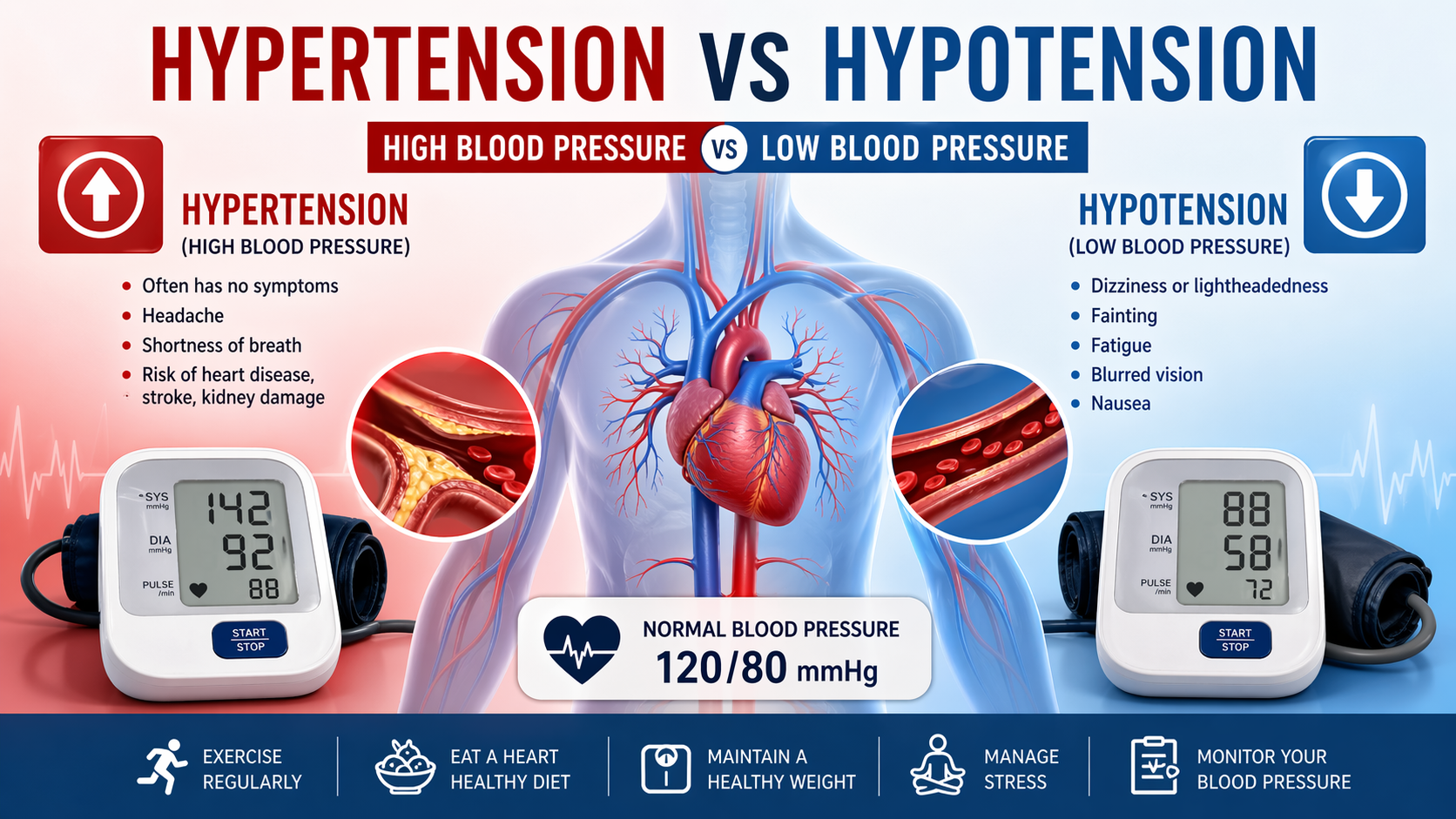
A normal blood pressure reading is around 120/80 mmHg.
Blood pressure categories:
- Normal: Less than 120/80
- Elevated: 120–129 / less than 80
- Hypertension: 130/80 or higher
- Hypotension: Generally below 90/60
According to the American Heart Association, consistent readings above 130/80 indicate high blood pressure.
What is hypertension (high blood pressure)?
Hypertension is a condition where blood pressure remains consistently elevated, putting strain on arteries and the heart.
It is often called the “silent killer” because it may not show symptoms for years.
What are the common symptoms of hypertension?
Most people have no symptoms, but when they occur, they may include:
- Headaches
- Shortness of breath
- Nosebleeds (in severe cases)
- Chest pain (in emergencies)
What causes high blood pressure?
Hypertension develops due to multiple factors:
- Lifestyle factors:
- High salt intake
- Lack of physical activity
- Obesity
- Smoking and alcohol
- Medical causes:
- Kidney disease
- Hormonal disorders
- Risk factors:
- Age
- Family history
- Stress
Over time, uncontrolled hypertension increases the risk of:
- Heart disease
- Stroke
- Kidney damage
What is hypotension (low blood pressure)?
Hypotension is a condition where blood pressure drops below normal levels, reducing blood flow to organs.
Unlike hypertension, it often causes noticeable symptoms.
What are the common symptoms of hypotension?
Low blood pressure commonly causes:
- Dizziness or lightheadedness
- Fainting (syncope)
- Blurred vision
- Fatigue
- Nausea
What causes low blood pressure?
Hypotension can be triggered by:
- Dehydration
- Blood loss
- Heart problems
- Endocrine disorders
- Medications (e.g., diuretics, antidepressants)
Types include:
- Orthostatic hypotension (on standing up)
- Post-meal hypotension
- Severe hypotension (shock)
What are the key differences between hypertension and hypotension?
Hypertension and hypotension differ in causes, symptoms, and risks.
| Feature | Hypertension (High BP) | Hypotension (Low BP) |
|---|---|---|
| Definition | BP too high | BP too low |
| Typical reading | ≥130/80 | ≤90/60 |
| Symptoms | Often none | Dizziness, fainting |
| Risk | Long-term damage | Immediate symptoms |
| Main danger | Stroke, heart disease | Falls, shock |
Which is more dangerous: high blood pressure or low blood pressure?
Hypertension is generally more dangerous long-term, while hypotension can be dangerous short-term.
- Hypertension risks:
- Silent damage over the years
- Stroke and heart attack
- Hypotension risks:
- Sudden fainting
- Injury from falls
- Shock in severe cases
Both conditions require attention depending on severity and symptoms.
How is blood pressure measured and diagnosed?
Blood pressure is measured using a cuff device called a sphygmomanometer.
Diagnosis involves:
- Multiple readings over time
- Measurements at rest
- Sometimes home or 24-hour monitoring
Doctors look for consistent patterns, not one-time readings.
How is hypertension treated and managed?
Hypertension treatment focuses on lowering blood pressure and reducing risk.
Lifestyle changes:
- Reduce salt intake
- Exercise regularly
- Maintain a healthy weight
- Quit smoking
According to the Centers for Disease Control and Prevention, lifestyle changes alone can significantly lower BP in many individuals.
How is hypotension treated and managed?
Hypotension treatment depends on the cause.
Common strategies:
- Drink more fluids
- Increase salt intake (if advised)
- Avoid sudden standing
- Wear compression stockings
Medical treatment:
- Adjust medications
- Treat underlying conditions
In severe cases, emergency care may be required.
How can you maintain healthy blood pressure levels?
Maintaining balanced blood pressure supports long-term heart health.
Healthy habits:
- Eat a balanced diet (e.g., DASH diet)
- Stay physically active
- Manage stress
- Monitor BP regularly
Regular check-ups help detect issues early.
Key takeaways: high vs low blood pressure
- Hypertension = high BP, often silent but dangerous long-term
- Hypotension = low BP, often symptomatic and immediate
- Normal BP ≈ 120/80 mmHg
- Both conditions affect cardiovascular health
- Early detection and lifestyle changes are key
FAQs about hypertension vs hypotension
What is the main difference between hypertension and hypotension?
Hypertension is high blood pressure, while hypotension is low blood pressure.
Can you have both high and low blood pressure?
Yes, some people experience fluctuations depending on conditions, medications, or time of day.
Is low blood pressure always dangerous?
Not always. It becomes dangerous when it causes symptoms like fainting or shock.
Why is hypertension called a silent killer?
Because it often has no symptoms while damaging organs over time.
What is the fastest way to raise low blood pressure?
Drinking fluids and lying down can help quickly, but treatment depends on the cause.
What foods help lower high blood pressure?
Foods rich in potassium, like bananas and leafy greens, can help.
When should I see a doctor about blood pressure?
If readings are consistently high or low, or if symptoms like dizziness or chest pain occur.
Conclusion
Hypertension and hypotension represent two extremes of blood pressure, but both matter for your health. Knowing the signs, causes, and management strategies can help you stay proactive and protect your heart.