Does Exercise Increase Blood Pressure?
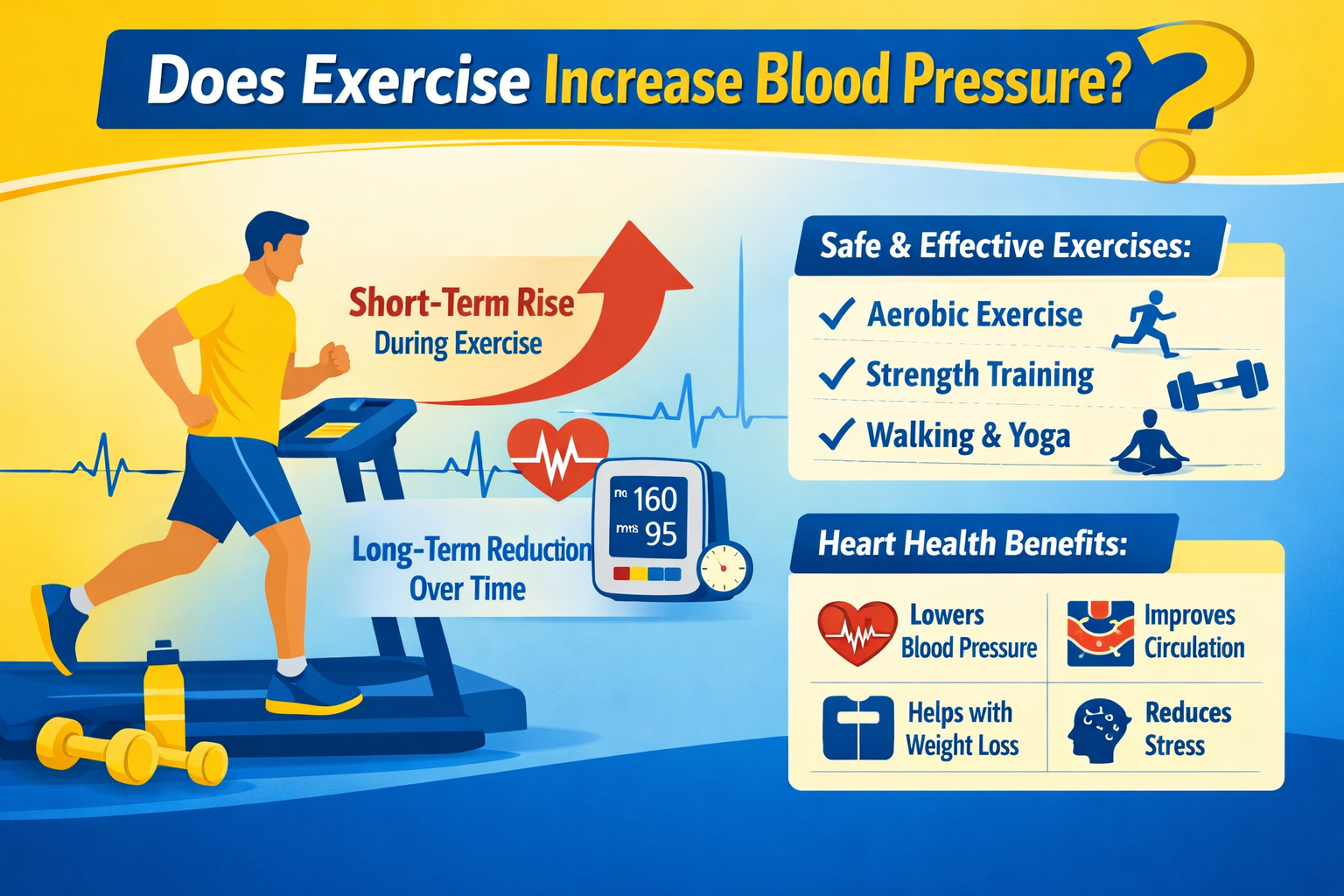
Exercise does increase blood pressure—but only temporarily. In the long run, regular physical activity actually helps lower blood pressure and improve heart health.
Understanding this balance is important, especially if you have hypertension or are starting a fitness routine. Let’s break it down clearly.
Does exercise increase blood pressure temporarily?
Yes, exercise causes a short-term rise in blood pressure, especially during moderate to intense activity.
This happens because your heart pumps more blood to supply oxygen to working muscles.
What happens during exercise:
- Systolic pressure (top number) rises significantly
- Diastolic pressure (bottom number) stays stable or changes slightly
- Heart rate increases to meet oxygen demand
Example:
During brisk walking or running, systolic pressure can rise from 120 mmHg to 160–200 mmHg. This is normal and expected.
Why does blood pressure rise during exercise?
Blood pressure rises during exercise to support increased blood flow to muscles.
Your body responds by:
- Increasing heart rate
- Pumping blood more forcefully
- Expanding blood vessels in active muscles
This is a healthy, controlled response—not a sign of danger for most people.
Does exercise lower blood pressure over time?
Yes, regular exercise lowers resting blood pressure over time.
According to the American Heart Association, consistent physical activity can reduce systolic blood pressure by about 4 to 12 mmHg in people with hypertension.
This effect is called:
Post-exercise hypotension and long-term adaptation.
How does regular exercise improve cardiovascular health?
Exercise strengthens the heart and improves blood vessel function.
Long-term benefits include:
- Lower resting blood pressure
- Improved artery flexibility
- Reduced heart disease risk
- Better weight control
- Improved insulin sensitivity
Research insight:
According to the American Heart Association, regular aerobic exercise can lower blood pressure by about 4 to 12 mmHg, depending on the individual, which significantly reduces the risk of heart disease and stroke.
You can safely replace the placeholder with either version depending on tone preference:
- More clinical/statistical: American College of Cardiology
- More general/consumer-friendly: American Heart Association
Which types of exercise affect blood pressure differently?
Different exercises influence blood pressure in different ways.
How does aerobic exercise impact blood pressure?
Aerobic exercise is the most effective type for lowering blood pressure.
Examples:
- Walking
- Cycling
- Swimming
- Jogging
Benefits:
- Reduces systolic and diastolic pressure
- Improves heart efficiency
- Supports weight management
Recommendation:
At least 150 minutes per week of moderate aerobic activity.
How does resistance training affect blood pressure?
Resistance training can temporarily increase blood pressure more sharply than aerobic exercise.
However, it still provides long-term benefits when done properly.
Key points:
- Short spikes in blood pressure during lifting
- Long-term reduction in resting blood pressure
- Helps build muscle and metabolic health
Best practice:
Use moderate weights and avoid holding your breath (Valsalva maneuver).
Which exercises are best for people with hypertension?
The safest and most effective exercises include:
- Walking (most recommended)
- Swimming
- Cycling
- Light-to-moderate strength training
- Yoga and stretching
Avoid initially:
- Heavy weightlifting
- High-intensity bursts without conditioning
Is exercise safe for people with high blood pressure?
Yes, exercise is generally safe and highly recommended for people with hypertension.
However, safety depends on your current health condition.
What precautions should you take before exercising?
Follow these simple safety steps:
- Consult a doctor if you have severe hypertension
- Start slowly and build intensity gradually
- Warm up and cool down properly
- Stay hydrated
- Monitor how you feel (dizziness, chest pain = stop)
Tip:
If your blood pressure is above 180/120 mmHg, avoid exercise until medically cleared.
What intensity of exercise is recommended for blood pressure control?
Moderate-intensity exercise is ideal for most people.
How to recognize moderate intensity:
- You can talk, but not sing
- Slight increase in breathing and heart rate
Guidelines (CDC & WHO):
- 150–300 minutes of moderate exercise weekly
- OR 75–150 minutes of vigorous exercise
When can exercise be risky for blood pressure?
Exercise can be risky in specific situations.
Higher-risk scenarios:
- Uncontrolled hypertension
- Existing heart disease
- Symptoms like chest pain or dizziness
- Extremely intense workouts without conditioning
Warning signs to stop exercising:
- Chest discomfort
- Severe shortness of breath
- Lightheadedness
What are the key benefits of exercise for heart health?
Exercise is one of the most powerful tools for improving cardiovascular health.
| Benefit | Impact on Blood Pressure |
|---|---|
| Stronger heart | Pumps blood more efficiently |
| Better circulation | Reduces resistance in arteries |
| Weight control | Lowers strain on the heart |
| Stress reduction | Prevents pressure spikes |
| Improved metabolism | Supports long-term BP control |
Key Takeaways
- Exercise raises blood pressure temporarily, which is normal
- Regular exercise lowers resting blood pressure over time
- Aerobic exercise is the most effective for hypertension
- Strength training is beneficial when done safely
- Most people with high blood pressure should exercise regularly
- Always start gradually and consult a doctor if unsure
FAQs
Does walking lower blood pressure?
Yes. Regular walking can significantly reduce blood pressure over time and is one of the safest exercises.
Is it dangerous if my blood pressure rises during exercise?
No. A temporary increase during exercise is normal and necessary for proper circulation.
Can exercise replace blood pressure medication?
In some cases, lifestyle changes reduce the need for medication, but only a doctor can decide this.
How quickly does exercise lower blood pressure?
Some effects occur immediately after exercise, but long-term reductions typically take a few weeks.
Is weightlifting safe for high blood pressure?
Yes, if done with proper technique, moderate weights, and controlled breathing.
What time of day is best to exercise for blood pressure?
Any consistent time works. Morning exercise may help regulate blood pressure throughout the day.
Conclusion
Exercise may briefly increase blood pressure, but that’s part of a healthy physiological response. Over time, regular physical activity becomes one of the most effective ways to lower blood pressure, protect your heart, and improve overall health.
If you’re unsure where to start, begin with simple activities like walking and gradually build from there.