
April 21, 2026

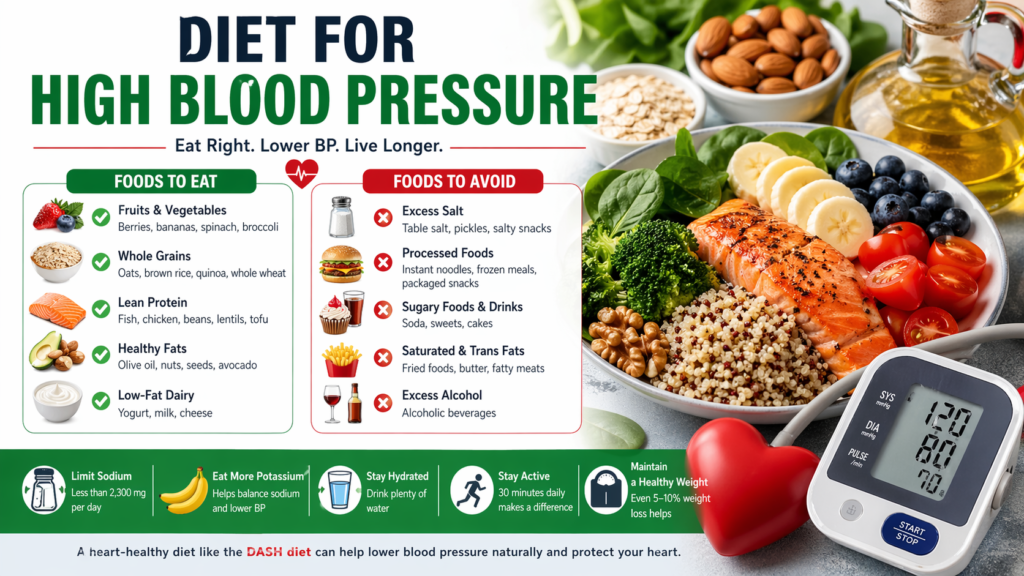
Infographic about a high blood pressure diet showing DASH-friendly foods to eat, foods to avoid, a healthy salmon and vegetable meal, and a blood pressure monitor.

Best Diet for High Blood Pressure: DASH Foods to Eat and Avoid

What Is the Best Diet for High Blood Pressure? The best diet for high blood pressure is usually the DASH diet: a heart-healthy eating pattern built around fruits, vegetables, whole grains, beans, nuts, fish, poultry, low-fat dairy, and lower sodium intake. It works best when you also cut back on packaged, processed, and restaurant foods that quietly load your day with salt. This matters because high blood pressure is common and often silent. CDC says hypertension is consistently at or above 130/80 mm Hg, and recent U.S. data found a crude adult prevalence of 47.7% during August 2021 to August 2023. The good news is that diet can move the needle fast. NHLBI’s DASH materials report that blood pressure reductions appeared within 2 weeks in the original DASH trial, and the biggest reductions happened when DASH was paired with lower sodium intake, especially around 1,500 mg per day. Quick safety note: if blood pressure is higher than 180/120 mm Hg and comes with chest pain, shortness of breath, back pain, numbness, weakness, vision change, or trouble speaking, that can be a hypertensive emergency and needs urgent care. What is the best diet for high blood pressure? The best diet for high blood pressure is the DASH eating plan, especially when it is paired with lower sodium. DASH emphasizes foods naturally rich in potassium, calcium, magnesium, fiber, and protein, while keeping saturated fat, trans fat, and sodium lower. In practical terms, DASH is not a crash diet or a supplement trick. It is a whole eating pattern that centers on vegetables, fruits, whole grains, low-fat dairy, beans, nuts, fish, poultry, and healthy oils, while cutting back on fatty processed meats, added sugars, and excess salt. For a typical 2,000-calorie DASH pattern, NHLBI lists these targets: grains 6–8 servings/day, vegetables 4–5/day, fruits 4–5/day, low-fat or fat-free dairy 2–3/day, meats/poultry/fish 6 or fewer/day, nuts/seeds/beans 4–5/week, sweets 5 or fewer/week, with sodium around 2,300 mg/day and lower if needed. Here’s the big-picture comparison: Focus Better choice for hypertension Less helpful choice Main eating pattern DASH-style whole-food meals Ultra-processed, salty convenience foods Grains Oats, brown rice, whole-wheat bread Refined salty snack foods, instant noodles Protein Beans, fish, skinless poultry, nuts Processed meats, fatty meats Dairy Low-fat or fat-free dairy Full-fat, salty processed dairy choices Flavoring Herbs, spices, lemon, vinegar Heavy reliance on salt, sauces, and gravies Drinks Water, unsweetened options Alcohol excess, sugary drinks The table matches the core guidance from NHLBI, CDC, and the American Heart Association: build meals from nutrient-dense whole foods and cut sodium, saturated fat, added sugar, and excess alcohol. Which foods should you eat more often with hypertension? The foods to eat more often with hypertension are fruits, vegetables, whole grains, beans, nuts, low-fat dairy, fish, and skinless poultry. These foods support a lower-sodium, potassium-rich, heart-healthy eating pattern. Which fruits and vegetables fit best? The best fruit and vegetable choices are the ones you can eat regularly and consistently. CDC and AHA guidance points toward produce-rich eating, and potassium-rich foods can help reduce the effects of sodium. Helpful picks include: Leafy greens Tomatoes Beans and lentils Potatoes and sweet potatoes Bananas Oranges and other citrus Berries Squash Yogurt paired with fruit, if dairy works for you CDC specifically notes that bananas, potatoes, beans, and yogurt are good potassium sources, and AHA explains that potassium helps the body lose more sodium in urine and eases tension in blood vessel walls. Which proteins, grains, and fats fit best? The best non-produce staples are whole grains, low-fat dairy, fish, skinless poultry, nuts, legumes, and non-tropical oils. These fit the core DASH pattern and help replace the foods that usually bring extra sodium, saturated fat, and added sugar. Strong everyday options include: Oatmeal Brown rice Whole-wheat bread Plain yogurt Low-fat milk Salmon or other fish Skinless chicken Chickpeas, lentils, black beans Unsalted nuts Olive or canola oil One caution: potassium is helpful for many people with high blood pressure, but it is not automatically safe for everyone. AHA says people with kidney disease, conditions that affect potassium handling, or certain medications should ask a health professional before purposely increasing potassium or using potassium-based salt substitutes. Which foods should you limit or avoid with high blood pressure? The foods to limit or avoid with high blood pressure are the ones most likely to pile on sodium, and secondarily saturated fat, added sugar, and excess alcohol. The main problem is usually not one dramatic “bad” food. It is the repeated pattern of processed and restaurant foods throughout the day. A practical top list looks like this: Cold cuts and cured meats Bacon, sausage, and hot dogs Canned soups and salty broths Pizza Fast-food sandwiches and burgers Chips, crackers, and savory snacks Instant noodles Frozen meals Condiments, gravies, and bottled sauces Restaurant rice, pasta, and grain dishes Salty breads and tortillas that add up across the day Fatty or processed meats Sugary drinks and sweet snacks Alcohol in excess Black licorice in large amounts Why these? CDC lists many of the biggest sodium sources in the U.S. diet as sandwiches, grain-based dishes, meat and seafood dishes, pizza, soups, chips and savory snacks, condiments and gravies, cold cuts, and breads or tortillas. AHA also recommends limiting sodium, fatty and processed meats, added sugars, and alcohol. A better way to think about this is not “never eat these again.” It is “eat them less often, compare labels, and replace them with lower-sodium versions when possible.” That mindset is more realistic and easier to stick with long-term. What foods can raise blood pressure quickly or temporarily? The main diet-related triggers that can raise blood pressure quickly or temporarily are very salty meals, caffeine, alcohol, and large amounts of black licorice. Sodium is the biggest food issue. AHA and FDA explain that excess sodium pulls water into the bloodstream, increasing blood volume and pressure. Caffeine can temporarily raise blood pressure, which is why the AHA advises avoiding caffeine for at least 30 minutes before a blood pressure reading. NHLBI also

Best Diet for High Blood Pressure: DASH Foods to Eat and Avoid Read More »
Does Exercise Increase Blood Pressure?

Does Exercise Increase Blood Pressure? (Short-Term vs Long-Term Effects Explained)

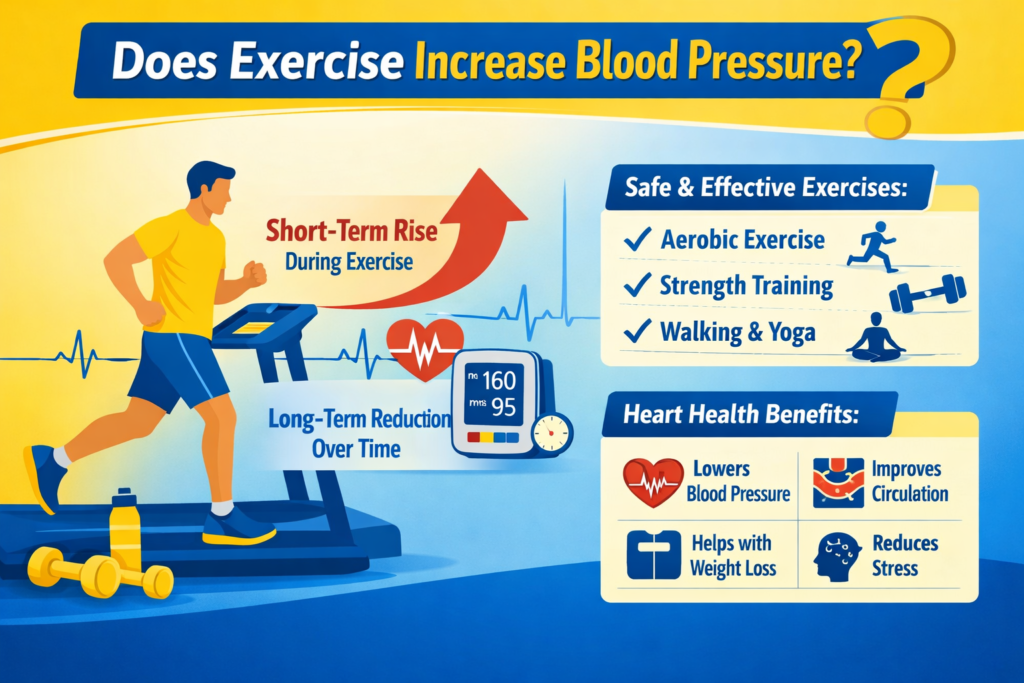
Does Exercise Increase Blood Pressure? Exercise does increase blood pressure—but only temporarily. In the long run, regular physical activity actually helps lower blood pressure and improve heart health. Understanding this balance is important, especially if you have hypertension or are starting a fitness routine. Let’s break it down clearly. Does exercise increase blood pressure temporarily? Yes, exercise causes a short-term rise in blood pressure, especially during moderate to intense activity. This happens because your heart pumps more blood to supply oxygen to working muscles. What happens during exercise: Systolic pressure (top number) rises significantly Diastolic pressure (bottom number) stays stable or changes slightly Heart rate increases to meet oxygen demand Example:During brisk walking or running, systolic pressure can rise from 120 mmHg to 160–200 mmHg. This is normal and expected. Why does blood pressure rise during exercise? Blood pressure rises during exercise to support increased blood flow to muscles. Your body responds by: Increasing heart rate Pumping blood more forcefully Expanding blood vessels in active muscles This is a healthy, controlled response—not a sign of danger for most people. Does exercise lower blood pressure over time? Yes, regular exercise lowers resting blood pressure over time. According to the American Heart Association, consistent physical activity can reduce systolic blood pressure by about 4 to 12 mmHg in people with hypertension. This effect is called:Post-exercise hypotension and long-term adaptation. How does regular exercise improve cardiovascular health? Exercise strengthens the heart and improves blood vessel function. Long-term benefits include: Lower resting blood pressure Improved artery flexibility Reduced heart disease risk Better weight control Improved insulin sensitivity Research insight: According to the American Heart Association, regular aerobic exercise can lower blood pressure by about 4 to 12 mmHg, depending on the individual, which significantly reduces the risk of heart disease and stroke. You can safely replace the placeholder with either version depending on tone preference: More clinical/statistical: American College of Cardiology More general/consumer-friendly: American Heart Association Which types of exercise affect blood pressure differently? Different exercises influence blood pressure in different ways. How does aerobic exercise impact blood pressure? Aerobic exercise is the most effective type for lowering blood pressure. Examples: Walking Cycling Swimming Jogging Benefits: Reduces systolic and diastolic pressure Improves heart efficiency Supports weight management Recommendation:At least 150 minutes per week of moderate aerobic activity. How does resistance training affect blood pressure? Resistance training can temporarily increase blood pressure more sharply than aerobic exercise. However, it still provides long-term benefits when done properly. Key points: Short spikes in blood pressure during lifting Long-term reduction in resting blood pressure Helps build muscle and metabolic health Best practice:Use moderate weights and avoid holding your breath (Valsalva maneuver). Which exercises are best for people with hypertension? The safest and most effective exercises include: Walking (most recommended) Swimming Cycling Light-to-moderate strength training Yoga and stretching Avoid initially: Heavy weightlifting High-intensity bursts without conditioning Is exercise safe for people with high blood pressure? Yes, exercise is generally safe and highly recommended for people with hypertension. However, safety depends on your current health condition. What precautions should you take before exercising? Follow these simple safety steps: Consult a doctor if you have severe hypertension Start slowly and build intensity gradually Warm up and cool down properly Stay hydrated Monitor how you feel (dizziness, chest pain = stop) Tip:If your blood pressure is above 180/120 mmHg, avoid exercise until medically cleared. What intensity of exercise is recommended for blood pressure control? Moderate-intensity exercise is ideal for most people. How to recognize moderate intensity: You can talk, but not sing Slight increase in breathing and heart rate Guidelines (CDC & WHO): 150–300 minutes of moderate exercise weekly OR 75–150 minutes of vigorous exercise When can exercise be risky for blood pressure? Exercise can be risky in specific situations. Higher-risk scenarios: Uncontrolled hypertension Existing heart disease Symptoms like chest pain or dizziness Extremely intense workouts without conditioning Warning signs to stop exercising: Chest discomfort Severe shortness of breath Lightheadedness What are the key benefits of exercise for heart health? Exercise is one of the most powerful tools for improving cardiovascular health. Benefit Impact on Blood Pressure Stronger heart Pumps blood more efficiently Better circulation Reduces resistance in arteries Weight control Lowers strain on the heart Stress reduction Prevents pressure spikes Improved metabolism Supports long-term BP control Key Takeaways Exercise raises blood pressure temporarily, which is normal Regular exercise lowers resting blood pressure over time Aerobic exercise is the most effective for hypertension Strength training is beneficial when done safely Most people with high blood pressure should exercise regularly Always start gradually and consult a doctor if unsure FAQs Does walking lower blood pressure? Yes. Regular walking can significantly reduce blood pressure over time and is one of the safest exercises. Is it dangerous if my blood pressure rises during exercise? No. A temporary increase during exercise is normal and necessary for proper circulation. Can exercise replace blood pressure medication? In some cases, lifestyle changes reduce the need for medication, but only a doctor can decide this. How quickly does exercise lower blood pressure? Some effects occur immediately after exercise, but long-term reductions typically take a few weeks. Is weightlifting safe for high blood pressure? Yes, if done with proper technique, moderate weights, and controlled breathing. What time of day is best to exercise for blood pressure? Any consistent time works. Morning exercise may help regulate blood pressure throughout the day. Conclusion Exercise may briefly increase blood pressure, but that’s part of a healthy physiological response. Over time, regular physical activity becomes one of the most effective ways to lower blood pressure, protect your heart, and improve overall health. If you’re unsure where to start, begin with simple activities like walking and gradually build from there.

Does Exercise Increase Blood Pressure? (Short-Term vs Long-Term Effects Explained) Read More »