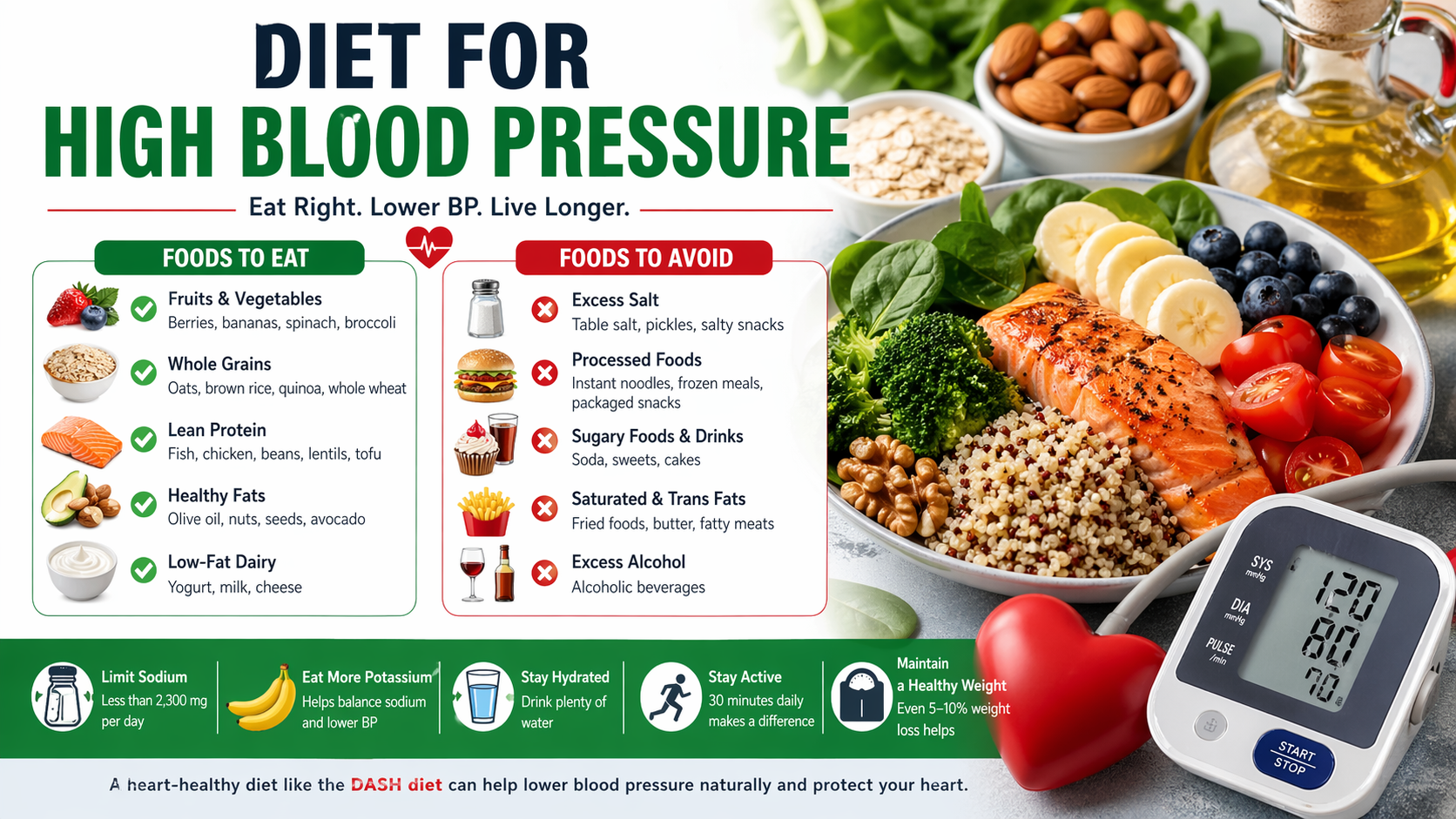
What Is the Best Diet for High Blood Pressure?
The best diet for high blood pressure is usually the DASH diet: a heart-healthy eating pattern built around fruits, vegetables, whole grains, beans, nuts, fish, poultry, low-fat dairy, and lower sodium intake. It works best when you also cut back on packaged, processed, and restaurant foods that quietly load your day with salt.
This matters because high blood pressure is common and often silent. CDC says hypertension is consistently at or above 130/80 mm Hg, and recent U.S. data found a crude adult prevalence of 47.7% during August 2021 to August 2023.
The good news is that diet can move the needle fast. NHLBI’s DASH materials report that blood pressure reductions appeared within 2 weeks in the original DASH trial, and the biggest reductions happened when DASH was paired with lower sodium intake, especially around 1,500 mg per day.
Quick safety note: if blood pressure is higher than 180/120 mm Hg and comes with chest pain, shortness of breath, back pain, numbness, weakness, vision change, or trouble speaking, that can be a hypertensive emergency and needs urgent care.
What is the best diet for high blood pressure?
The best diet for high blood pressure is the DASH eating plan, especially when it is paired with lower sodium. DASH emphasizes foods naturally rich in potassium, calcium, magnesium, fiber, and protein, while keeping saturated fat, trans fat, and sodium lower.
In practical terms, DASH is not a crash diet or a supplement trick. It is a whole eating pattern that centers on vegetables, fruits, whole grains, low-fat dairy, beans, nuts, fish, poultry, and healthy oils, while cutting back on fatty processed meats, added sugars, and excess salt.
For a typical 2,000-calorie DASH pattern, NHLBI lists these targets: grains 6–8 servings/day, vegetables 4–5/day, fruits 4–5/day, low-fat or fat-free dairy 2–3/day, meats/poultry/fish 6 or fewer/day, nuts/seeds/beans 4–5/week, sweets 5 or fewer/week, with sodium around 2,300 mg/day and lower if needed.
Here’s the big-picture comparison:
| Focus | Better choice for hypertension | Less helpful choice |
|---|---|---|
| Main eating pattern | DASH-style whole-food meals | Ultra-processed, salty convenience foods |
| Grains | Oats, brown rice, whole-wheat bread | Refined salty snack foods, instant noodles |
| Protein | Beans, fish, skinless poultry, nuts | Processed meats, fatty meats |
| Dairy | Low-fat or fat-free dairy | Full-fat, salty processed dairy choices |
| Flavoring | Herbs, spices, lemon, vinegar | Heavy reliance on salt, sauces, and gravies |
| Drinks | Water, unsweetened options | Alcohol excess, sugary drinks |
The table matches the core guidance from NHLBI, CDC, and the American Heart Association: build meals from nutrient-dense whole foods and cut sodium, saturated fat, added sugar, and excess alcohol.
Which foods should you eat more often with hypertension?
The foods to eat more often with hypertension are fruits, vegetables, whole grains, beans, nuts, low-fat dairy, fish, and skinless poultry. These foods support a lower-sodium, potassium-rich, heart-healthy eating pattern.
Which fruits and vegetables fit best?
The best fruit and vegetable choices are the ones you can eat regularly and consistently. CDC and AHA guidance points toward produce-rich eating, and potassium-rich foods can help reduce the effects of sodium.
Helpful picks include:
- Leafy greens
- Tomatoes
- Beans and lentils
- Potatoes and sweet potatoes
- Bananas
- Oranges and other citrus
- Berries
- Squash
- Yogurt paired with fruit, if dairy works for you
CDC specifically notes that bananas, potatoes, beans, and yogurt are good potassium sources, and AHA explains that potassium helps the body lose more sodium in urine and eases tension in blood vessel walls.
Which proteins, grains, and fats fit best?
The best non-produce staples are whole grains, low-fat dairy, fish, skinless poultry, nuts, legumes, and non-tropical oils. These fit the core DASH pattern and help replace the foods that usually bring extra sodium, saturated fat, and added sugar.
Strong everyday options include:
- Oatmeal
- Brown rice
- Whole-wheat bread
- Plain yogurt
- Low-fat milk
- Salmon or other fish
- Skinless chicken
- Chickpeas, lentils, black beans
- Unsalted nuts
- Olive or canola oil
One caution: potassium is helpful for many people with high blood pressure, but it is not automatically safe for everyone. AHA says people with kidney disease, conditions that affect potassium handling, or certain medications should ask a health professional before purposely increasing potassium or using potassium-based salt substitutes.
Which foods should you limit or avoid with high blood pressure?
The foods to limit or avoid with high blood pressure are the ones most likely to pile on sodium, and secondarily saturated fat, added sugar, and excess alcohol. The main problem is usually not one dramatic “bad” food. It is the repeated pattern of processed and restaurant foods throughout the day.
A practical top list looks like this:
- Cold cuts and cured meats
- Bacon, sausage, and hot dogs
- Canned soups and salty broths
- Pizza
- Fast-food sandwiches and burgers
- Chips, crackers, and savory snacks
- Instant noodles
- Frozen meals
- Condiments, gravies, and bottled sauces
- Restaurant rice, pasta, and grain dishes
- Salty breads and tortillas that add up across the day
- Fatty or processed meats
- Sugary drinks and sweet snacks
- Alcohol in excess
- Black licorice in large amounts
Why these? CDC lists many of the biggest sodium sources in the U.S. diet as sandwiches, grain-based dishes, meat and seafood dishes, pizza, soups, chips and savory snacks, condiments and gravies, cold cuts, and breads or tortillas. AHA also recommends limiting sodium, fatty and processed meats, added sugars, and alcohol.
A better way to think about this is not “never eat these again.” It is “eat them less often, compare labels, and replace them with lower-sodium versions when possible.” That mindset is more realistic and easier to stick with long-term.
What foods can raise blood pressure quickly or temporarily?
The main diet-related triggers that can raise blood pressure quickly or temporarily are very salty meals, caffeine, alcohol, and large amounts of black licorice.
Sodium is the biggest food issue. AHA and FDA explain that excess sodium pulls water into the bloodstream, increasing blood volume and pressure.
Caffeine can temporarily raise blood pressure, which is why the AHA advises avoiding caffeine for at least 30 minutes before a blood pressure reading. NHLBI also lists drinking too much caffeine as a risk factor for high blood pressure.
Alcohol can raise blood pressure, too. AHA says that if you drink, limit intake to no more than two drinks per day for men and one drink per day for women.
Black licorice is the odd one that people rarely expect. The American Heart Association explains that large amounts can lower potassium and promote sodium retention, which can push blood pressure up.
Does eating itself raise blood pressure?
Not in a simple, predictable way. Blood pressure changes through the day based on normal body rhythms and activities, and in some people, especially older adults or people with low blood pressure problems, blood pressure can actually drop after meals rather than rise.
So if someone searches “does eating raise BP,” the more accurate answer is this: the meal’s content matters more than the act of eating itself. A high-sodium restaurant meal, alcohol, or caffeine may push readings up, while some people with post-meal low blood pressure can feel dizzy after eating, especially after higher-carb meals.
Is there one food that “kills” high blood pressure?
No. There is no one food that “kills” high blood pressure, cures hypertension, or replaces the need for an overall healthy eating pattern. The AHA explicitly warns against the miracle-food mindset.
What works is the pattern:
- Less sodium
- More fruits and vegetables
- More whole grains and legumes
- Better fats
- Less alcohol
- Fewer processed foods
- Medication when prescribed
That combo is why DASH works. A single beet, banana, garlic clove, or trendy supplement is not a full treatment plan.
The same logic applies to “5 worst fruits for high blood pressure.” There is no official medical list like that. In fact, major guidance encourages fruit as part of a blood-pressure-friendly pattern. The bigger diet problems are sodium-heavy processed foods, excess alcohol, added sugars, and poor overall meal quality.
What does a simple high blood pressure diet menu look like?
A simple high blood pressure diet menu looks like a normal day of food built around produce, whole grains, lean protein, low-fat dairy, and lower sodium. It does not need fancy ingredients. It needs a smart pattern.
Here is a practical one-day example:
Breakfast
Oatmeal topped with berries and a spoonful of unsalted nuts, plus plain low-fat yogurt
Mid-morning snack
A banana or an orange
Lunch
Grilled chicken salad with mixed greens, tomatoes, beans, olive oil, and lemon, plus a whole-grain pita
Afternoon snack
Carrot sticks with hummus, or a small handful of unsalted almonds
Dinner
Baked salmon, brown rice or quinoa, and roasted vegetables
Evening option
Fruit and a small glass of low-fat milk, if desired
This menu follows the same logic as DASH: more whole foods, more potassium- and fiber-rich choices, lower sodium, and fewer processed add-ons. Adjust portions for calorie needs, diabetes, kidney disease, or other medical conditions.
How do you start the DASH diet without getting overwhelmed?
The easiest way to start DASH is to make 3 to 5 repeatable swaps, not a total overnight food overhaul. DASH works because it is sustainable.
Start here:
- Replace one salty packaged meal a day with a simple whole-food meal.
- Add one fruit or vegetable to every meal.
- Switch from processed meats to beans, fish, or skinless poultry more often.
- Use herbs, spices, lemon, vinegar, garlic, or pepper instead of relying on salt.
- Compare labels and choose lower-sodium versions of bread, soup, sauces, and frozen foods.
- Ask before using potassium salt substitutes if you have kidney disease or take medications that affect potassium.
How do you read sodium on a food label?
The fastest label rule is this: 5% Daily Value or less is low sodium, and 20% Daily Value or more is high sodium. FDA uses that as the general guide for Nutrition Facts labels.
Also, remember two things:
- The Daily Value for sodium is less than 2,300 mg per day.
- More than 70% of sodium in the diet comes from packaged, prepared, and restaurant foods, not just the salt shaker.
That is why label reading matters so much for hypertension.
What common mistakes make a hypertension diet harder to follow?
The most common mistakes are focusing on the wrong target or trying to hack the problem with one small trick.
Here are the big ones:
- Only cutting table salt: Most sodium comes from packaged and restaurant foods, not just what you shake on top.
- Thinking sea salt or kosher salt is “safe”: AHA says sea salt and kosher salt still contain about the same sodium as table salt.
- Assuming a supplement can replace medicine: AHA says there are no special pills, vitamins, or drinks that replace prescribed treatment and lifestyle change.
- Overdoing potassium without asking first: Potassium helps many people, but not everyone, especially those with kidney disease or certain medications.
- Believing one “superfood” will fix everything: Blood pressure improves from the overall pattern, not one heroic ingredient.
- Ignoring alcohol and caffeine: These can affect readings and overall control.
What else besides food helps lower blood pressure?
Food is a major lever, but it is not the only one. Blood pressure control usually works best when diet is combined with physical activity, healthy weight, lower alcohol intake, home monitoring, and medication when prescribed.
CDC recommends that adults get at least 150 minutes of moderate-intensity activity per week, and it notes that physical activity can help lower blood pressure.
If you already take blood pressure medicine, do not replace it with food trends, supplements, or “natural” internet advice. Lifestyle changes help a lot, but many people still need medication, and stopping prescribed treatment on your own can be risky.
What is the key takeaway for a blood-pressure-friendly diet?
The key takeaway is simple: the best high blood pressure diet is a lower-sodium, DASH-style eating pattern built around whole foods. Eat more fruits, vegetables, whole grains, beans, nuts, low-fat dairy, fish, and skinless poultry. Eat fewer packaged, processed, and restaurant foods that drive sodium up.
There is no miracle food. There is a better pattern. And that pattern can start with your next grocery trip, your next restaurant order, or your next label check.
Frequently asked questions about diet and hypertension
What is the best diet for high blood pressure?
The best-supported option is the DASH diet, especially when paired with lower sodium intake.
How much sodium should someone with high blood pressure aim for?
AHA recommends no more than 2,300 mg per day, with an ideal target of 1,500 mg per day for most adults, especially those with high blood pressure.
What foods are best to eat for hypertension?
Focus on fruits, vegetables, whole grains, beans, nuts, low-fat dairy, fish, and skinless poultry.
What foods should be avoided with high blood pressure?
The main foods to limit are processed meats, canned soups, pizza, fast food, salty snacks, instant meals, heavy sauces, excess alcohol, and other high-sodium processed foods.
Does caffeine raise blood pressure?
It can temporarily raise blood pressure, which is why the AHA says to avoid caffeine for at least 30 minutes before a blood pressure reading.
Does eating itself raise blood pressure?
Not necessarily. Blood pressure can shift after meals, and in some people it may actually drop after eating. Meal composition matters more than the act of eating.
Is there a single food that cures hypertension?
No. Major heart-health guidance does not support a single miracle food. Blood pressure improves through an overall eating pattern and, for many people, medication too.
Are fruits bad for high blood pressure?
No. Whole fruit is generally part of a blood-pressure-friendly eating pattern. There is no official evidence-based list of “5 worst fruits” for hypertension.
A short conclusion: if you want the most practical answer, start by lowering sodium, eating more whole foods, and using DASH as your template. That is the most evidence-backed place to begin.