
May 18, 2026

Managing blood pressure during pregnancy

High Blood Pressure During Pregnancy: Causes, Normal BP Range, Risks, and Treatment

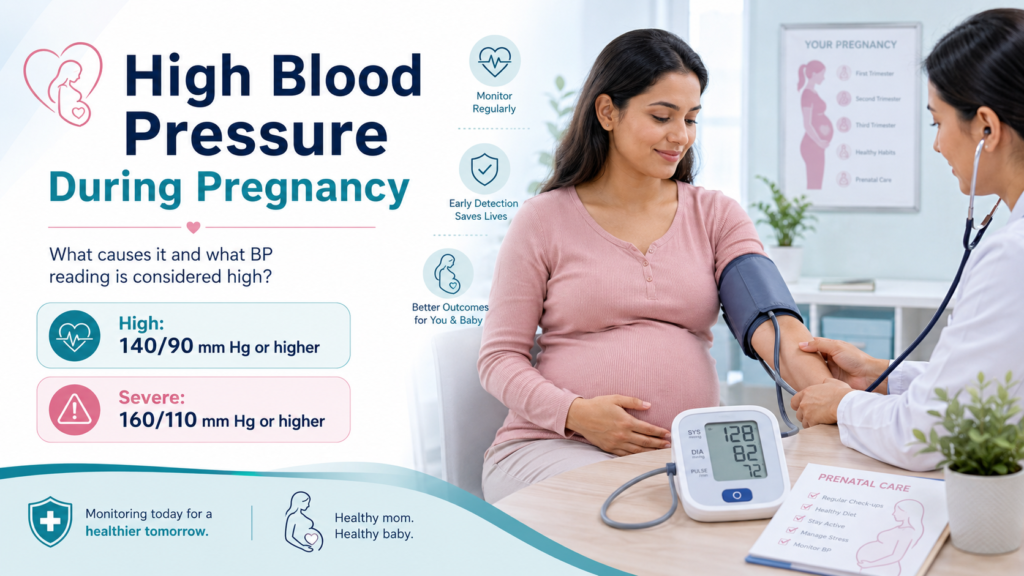
What Causes High Blood Pressure During Pregnancy and What BP Reading Is Considered High? High blood pressure during pregnancy means the force of blood against the artery walls is higher than expected during pregnancy. It matters because uncontrolled blood pressure can affect the mother, placenta, and baby. The main answer is simple: a blood pressure reading of 140/90 mm Hg or higher during pregnancy is considered high, especially when confirmed on repeat readings. A reading of 160/110 mm Hg or higher is considered severe and needs urgent medical attention. The CDC defines high blood pressure during pregnancy as 140/90 mm Hg or higher in two readings taken at least 4 hours apart, and severe high blood pressure as 160/110 mm Hg on two or more occasions. High blood pressure in pregnancy is preventable and treatable in many cases, but it should always be managed with a qualified healthcare professional. The CDC states that hypertensive disorders affect about 5% to 10% of women during pregnancy and have increased over the past two decades. What Does High Blood Pressure During Pregnancy Mean? High blood pressure during pregnancy means the systolic number, diastolic number, or both are above the safe pregnancy threshold. The systolic number is the top number, and the diastolic number is the bottom number. A reading such as 142/92 mm Hg means the systolic pressure is 142, and the diastolic pressure is 92. In pregnancy, this reading is considered high because it is above 140/90. High blood pressure may be present before pregnancy, appear after 20 weeks, or occur with preeclampsia. Doctors usually classify it based on timing, symptoms, urine protein, organ function, and fetal growth. What Is a Normal Blood Pressure Range During Pregnancy? A healthy adult’s blood pressure is below 120/80 mm Hg, but pregnancy care focuses especially on whether blood pressure reaches 140/90 mm Hg or higher. The American Heart Association lists normal adult blood pressure as less than 120 systolic and less than 80 diastolic. Pregnancy blood pressure can naturally shift. Some women have slightly lower readings in mid-pregnancy, while others develop rising blood pressure later. A single reading should not be interpreted alone unless it is very high or accompanied by symptoms. Blood Pressure Reading Meaning in Pregnancy What It Usually Means Below 120/80 mm Hg Usually normal Continue routine prenatal care 120–129 / less than 80 Elevated adult range Discuss trends with a clinician 130–139 / 80–89 Higher than ideal May need closer monitoring 140/90 or higher High in pregnancy Requires medical assessment 160/110 or higher Severe high BP Urgent medical care is needed What Blood Pressure Reading Is Considered High During Pregnancy? A blood pressure reading of 140/90 mm Hg or higher is considered high during pregnancy when confirmed properly. A reading of 160/110 mm Hg or higher is severe high blood pressure. This distinction matters because mild-to-moderate high BP and severe high BP are managed differently. Severe BP can increase the risk of stroke, seizures, placental complications, and emergency delivery. Contact your maternity team if readings are repeatedly high. Seek urgent care immediately if high BP is combined with symptoms such as severe headache, vision changes, upper abdominal pain, sudden swelling, or breathing difficulty. What Causes High Blood Pressure During Pregnancy? High blood pressure during pregnancy can be caused by pre-existing hypertension, changes in blood vessels and placenta function, kidney disease, diabetes, obesity, older maternal age, family history, autoimmune disease, or carrying twins or triplets. The exact cause depends on the type of pregnancy hypertension. Some women enter pregnancy with chronic hypertension. Others develop gestational hypertension after 20 weeks. Some develop preeclampsia, a more serious condition involving high BP and signs of organ stress. What Causes Chronic Hypertension in Pregnancy? Chronic hypertension in pregnancy is high blood pressure that existed before pregnancy or was diagnosed before 20 weeks of pregnancy. The CDC also defines chronic hypertension as high BP that continues for 12 weeks after delivery. Risk factors can include family history, age, kidney disease, diabetes, obesity, sleep apnea, high-sodium diet, inactivity, and stress. The NHLBI notes that high blood pressure risk can be affected by lifestyle habits, family history, age, other medical conditions, and some medicines. What Causes Gestational Hypertension? Gestational hypertension is high blood pressure that develops during pregnancy in someone who previously had normal blood pressure. It usually appears after 20 weeks and does not include the same organ-damage findings used to diagnose preeclampsia. The exact cause is not always known. Doctors look at risk factors such as first pregnancy, age 40 or older, BMI of 35 or more, family history of preeclampsia, multiple pregnancy, previous gestational hypertension, vascular disease, and kidney disease. NICE lists these as factors requiring additional assessment and follow-up in gestational hypertension. What Causes Preeclampsia? Preeclampsia is related to abnormal pregnancy blood vessel and placental function, but the exact cause can vary. It usually develops after 20 weeks and involves high blood pressure plus protein in urine or other signs of organ problems. The CDC explains that preeclampsia occurs when sudden high blood pressure develops with protein in urine or other problems after 20 weeks of pregnancy. It can also happen in women who already have chronic hypertension. What Are the Main Types of Hypertension During Pregnancy? The main types are chronic hypertension, gestational hypertension, preeclampsia, and eclampsia. Some people also use the older term pregnancy-induced hypertension, or PIH, usually to describe high BP that begins during pregnancy. Type When It Happens Key Feature Chronic hypertension Before pregnancy or before 20 weeks BP was already high or appeared early Gestational hypertension After 20 weeks High BP without preeclampsia features Preeclampsia Usually, after 20 weeks High BP plus protein in urine or organ problems Eclampsia Severe complication of preeclampsia Seizures without another cause The CDC describes eclampsia as a medical emergency in which a pregnant woman with preeclampsia has seizures with no other cause. What Is the Difference Between Gestational Hypertension and Preeclampsia? Gestational hypertension means high BP during pregnancy without the additional diagnostic signs

High Blood Pressure During Pregnancy: Causes, Normal BP Range, Risks, and Treatment Read More »
Understanding high blood pressure explained

Types of HTN and Other Names for Hypertension Explained

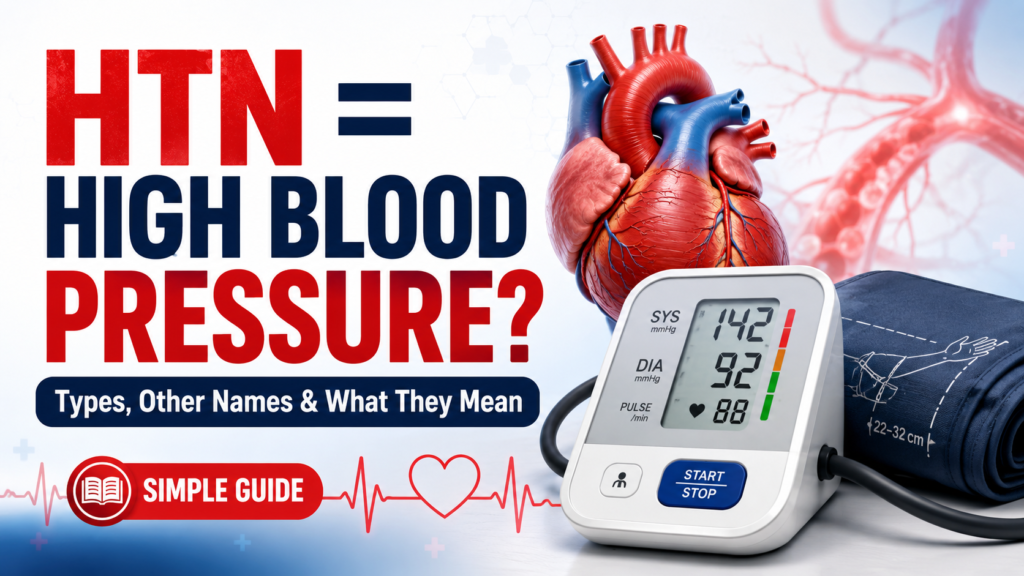
What Are the Types of HTN and Other Names for Hypertension? Hypertension means high blood pressure. The medical abbreviation for hypertension is HTN, and many people also call it elevated blood pressure, arterial hypertension, or simply high BP. In most cases, when people search for “types of HTN” or “another word for hypertension,” they want two things: first, the meaning of the term; second, the different medical categories of high blood pressure. This guide explains both in simple language. Hypertension matters because it is common, often silent, and strongly linked with heart disease, stroke, kidney disease, and other serious health problems. The World Health Organization reported that about 1.4 billion adults aged 30–79 had hypertension in 2024, and about 600 million adults with hypertension were unaware they had it. What Does Hypertension Mean in Simple Words? Hypertension means the pressure inside the blood vessels is consistently higher than normal. Blood pressure rises when blood pushes too strongly against artery walls over time. Blood pressure is written as two numbers, such as 120/80 mm Hg. The first number is systolic pressure, and the second number is diastolic pressure. The CDC defines high blood pressure as blood pressure that is consistently at or above 130/80 mm Hg in the U.S. classification system. In simple terms: Hypertension = high blood pressure HTN = abbreviation for hypertension BP = abbreviation for blood pressure Arterial hypertension = high pressure in the arteries Hypertension is not usually diagnosed from one random reading. Blood pressure can rise temporarily because of stress, caffeine, pain, exercise, or poor sleep. What Are Other Names for Hypertension? Other names for hypertension include high blood pressure, elevated blood pressure, high BP, HTN, and arterial hypertension. Common terms include: Term Meaning Hypertension Medical term for high blood pressure HTN Common medical abbreviation for hypertension High blood pressure Every day name for hypertension Elevated blood pressure Blood pressure is above normal, but not always full hypertension Arterial hypertension High pressure in the arteries Hypertensive disorder A broad term for conditions involving high blood pressure Silent killer Informal name because hypertension often has no symptoms The term “silent killer” is used because many people with high blood pressure feel normal while the condition slowly damages the heart, brain, kidneys, blood vessels, and eyes. The CDC states that high blood pressure usually has no warning signs or symptoms, and measuring blood pressure is the only way to know whether it is high. What Do Systolic and Diastolic Blood Pressure Mean? Systolic blood pressure is the top number, and diastolic blood pressure is the bottom number. Both numbers help doctors understand how hard the cardiovascular system is working. Systolic pressure measures pressure when the heart beats and pushes blood through the arteries. Diastolic pressure measures pressure when the heart rests between beats. Example:If your blood pressure is 140/90 mm Hg: 140 = systolic blood pressure 90 = diastolic blood pressure mm Hg = millimeters of mercury, the unit used for blood pressure A high systolic number, a high diastolic number, or both can suggest hypertension depending on the guideline used and whether the readings are consistent. What Are the Main Types of Hypertension? The main types of hypertension include primary hypertension, secondary hypertension, isolated systolic hypertension, resistant hypertension, pregnancy-related hypertension, and pulmonary hypertension. These types are not all the same. Some describe the cause, some describe the blood pressure pattern, and some describe a specific body system affected by high pressure. What Is Primary or Essential Hypertension? Primary hypertension, also called essential hypertension, is high blood pressure without one single identifiable cause. It is the most common form of long-term high blood pressure. Primary hypertension usually develops gradually over years. It is often linked with several combined risk factors, such as age, genetics, excess body weight, high salt intake, physical inactivity, alcohol use, and other lifestyle or metabolic factors. WHO lists older age, genetics, overweight or obesity, physical inactivity, high-salt diet, and excess alcohol as risk factors for hypertension. Primary hypertension is also called: Essential hypertension Idiopathic hypertension Usual high blood pressure Chronic high blood pressure in many adult cases What Is Secondary Hypertension? Secondary hypertension is high blood pressure caused by another medical condition. It may be related to kidney disease, artery problems, hormone disorders, heart conditions, medicines, or pregnancy-related conditions. Mayo Clinic explains that secondary hypertension differs from primary hypertension because it has an underlying medical cause. Conditions affecting the kidneys, arteries, heart, or endocrine system can contribute to this type. Possible causes include: Kidney disease Renal artery narrowing Thyroid problems Adrenal gland disorders Sleep apnea Certain medications Pregnancy-related blood pressure disorders Secondary hypertension may appear suddenly, occur at a younger age, or be difficult to control with usual medication. What Is Isolated Systolic Hypertension? Isolated systolic hypertension means the top blood pressure number is high while the bottom number is not high. This pattern is common in older adults because arteries can become stiffer with age. For example, a reading such as 150/78 mm Hg may suggest isolated systolic hypertension if confirmed by repeated measurements. The systolic number is elevated, but the diastolic number is below 80. This type matters because high systolic pressure increases strain on the arteries and heart. What Is Resistant Hypertension? Resistant hypertension means blood pressure remains above goal despite the use of multiple blood pressure medicines. The American Heart Association scientific statement defines resistant hypertension as above-goal blood pressure despite three antihypertensive drug classes, usually including a calcium channel blocker, a renin-angiotensin system blocker, and a diuretic at maximum or tolerated doses. It also includes patients controlled on four or more medications. Before labeling hypertension as resistant, clinicians usually check for: Incorrect blood pressure measurement Missed medication doses White-coat effect High salt intake Interfering medicines Kidney disease Sleep apnea Hormonal causes Resistant hypertension needs careful medical evaluation because it may signal hidden causes or higher cardiovascular risk. What Is Pregnancy-Related Hypertension? Pregnancy-related hypertension means high blood pressure that occurs before, during, or after pregnancy. It includes chronic hypertension,

Types of HTN and Other Names for Hypertension Explained Read More »