
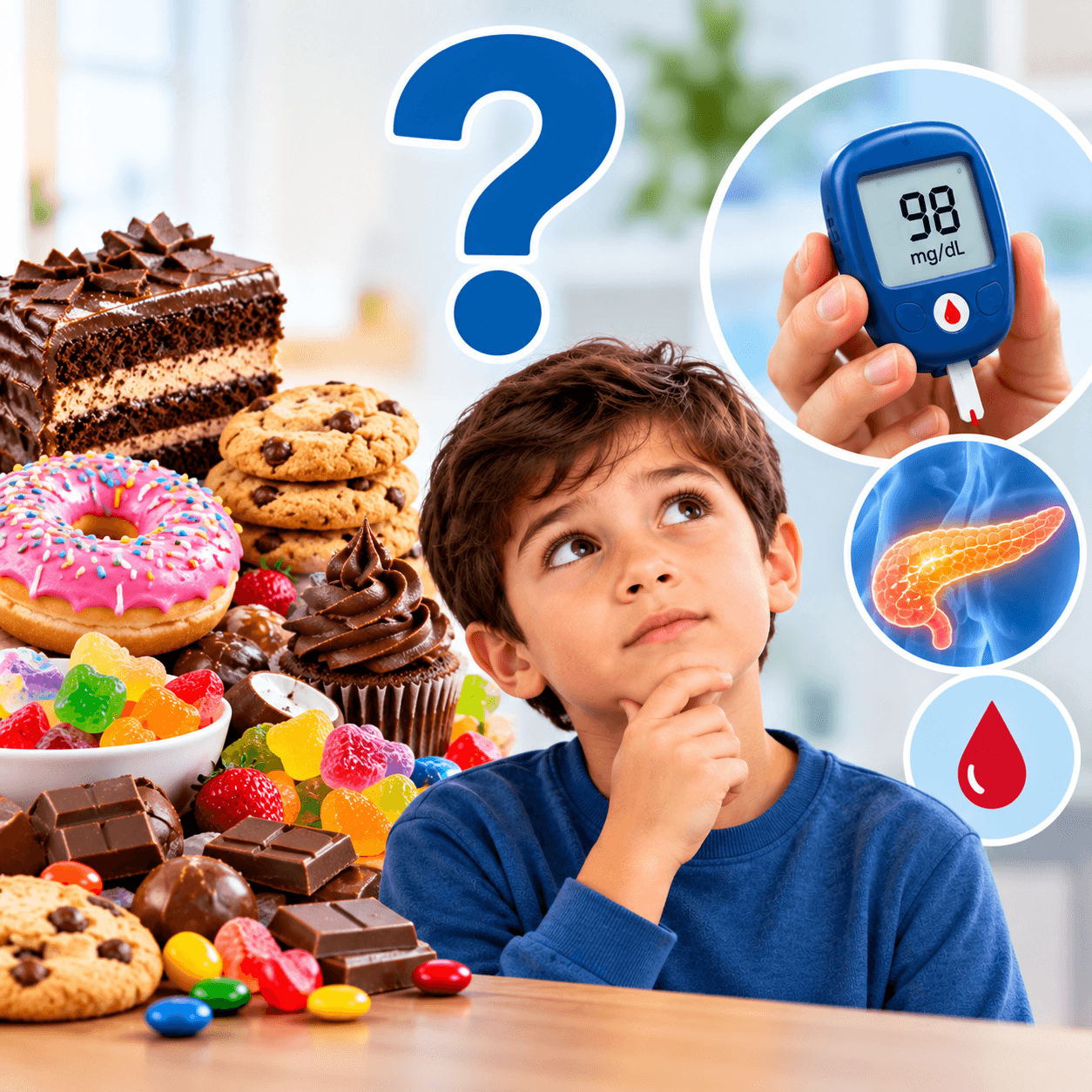
Does Eating Sweets Cause Diabetes?
No, eating sweets does not directly cause diabetes. Having candy, chocolate, cake, or dessert occasionally does not mean you will develop diabetes. Type 1 diabetes is an autoimmune condition and is not caused by eating sugar or sweets.
Type 2 diabetes is more complex. Regularly eating large amounts of sweets can contribute to excess calorie intake and weight gain, which may increase the risk of insulin resistance and type 2 diabetes. Genetics, physical activity, body weight, age, and other health factors also play important roles.
Can Eating Too Many Sweets Cause Diabetes?
Eating too many sweets does not directly cause diabetes, but it may increase your risk of type 2 diabetes over time. Many sweets contain large amounts of added sugar, refined carbohydrates, and calories. Eating them frequently can make it easier to consume more calories than your body needs.
Over time, excess calorie intake may contribute to weight gain and insulin resistance, both of which are associated with type 2 diabetes. However, sweets are only one part of the picture. Your overall diet, activity level, genetics, body weight, and other health factors also affect your risk.
Does Eating Sweets Cause Type 1 Diabetes?
No, eating sweets does not cause type 1 diabetes. Type 1 diabetes is an autoimmune condition in which the immune system mistakenly attacks the insulin-producing beta cells in the pancreas. As these cells are destroyed, the body produces little or no insulin.
Researchers believe genetics and certain environmental factors may contribute to the autoimmune process, but eating candy, desserts, or other sugary foods is not considered a cause. A child who develops type 1 diabetes did not develop it because they ate too many sweets.
Does Eating Sweets Cause Type 2 Diabetes?
Sweets alone do not cause type 2 diabetes. Type 2 diabetes develops when the body becomes resistant to insulin and eventually cannot produce enough insulin to keep blood glucose within a healthy range.
Frequently eating large portions of high-sugar, high-calorie foods may indirectly increase your risk by contributing to weight gain and poor metabolic health. However, family history, genetics, physical inactivity, age, prediabetes, and other factors can also increase the risk.
Why Are Sweets Linked to Diabetes?
Sweets are linked to type 2 diabetes mainly because many are high in added sugar and calories. Frequently consuming more calories than your body needs can contribute to weight gain, particularly when combined with low levels of physical activity.
Excess body fat can make cells less responsive to insulin in some people. This is called insulin resistance. As insulin resistance increases, the pancreas has to work harder to control blood glucose, which may eventually contribute to prediabetes and type 2 diabetes.
Do Sweets Raise Blood Sugar?
Yes, most sweets can raise blood sugar because they contain carbohydrates. During digestion, carbohydrates are broken down into glucose, which enters the bloodstream. The pancreas then releases insulin to help move glucose into cells.
A temporary rise in blood glucose after eating does not mean you have diabetes. Diabetes occurs when the body cannot properly regulate blood glucose because it does not produce enough insulin, does not use insulin effectively, or both.
Can Eating Candy Every Day Cause Diabetes?
Eating candy every day does not guarantee that you will develop diabetes. However, regularly eating large portions of candy can significantly increase your intake of added sugar and calories.
If those extra calories contribute to weight gain and insulin resistance, your risk of type 2 diabetes may increase. A small portion occasionally is very different from consuming large amounts of candy, sugary drinks, and other highly processed foods every day.
Are Sugary Drinks Worse Than Sweets?
Sugary drinks are particularly important to limit when considering type 2 diabetes risk. Regular soda, sweetened tea, energy drinks, sports drinks, and many flavored coffee drinks can contain substantial amounts of added sugar.
Sugary beverages are also easy to consume quickly and may not make you feel as full as solid food. Frequent consumption has been associated with weight gain, obesity, and type 2 diabetes, making water and unsweetened beverages better everyday choices.
Does Chocolate Cause Diabetes?
No, chocolate does not directly cause diabetes. Eating chocolate occasionally can be part of a balanced diet. However, many milk chocolate, white chocolate, and chocolate-based desserts contain substantial amounts of added sugar and calories.
Portion size and frequency matter more than simply labeling chocolate as “good” or “bad.” If you have diabetes, you should also consider the total carbohydrate content because carbohydrates can affect your blood glucose.
Can People With Diabetes Eat Sweets?
Yes, people with diabetes can usually eat sweets in moderation. Having diabetes does not necessarily mean eliminating desserts, chocolate, or other sweet foods completely.
The amount of carbohydrate and portion size are important because sweets can raise blood glucose. People using insulin or certain diabetes medications may also need to consider their treatment plan when including desserts in meals.
Are Sugar-Free Sweets Better for Diabetes?
Sugar-free sweets are not automatically better for people with diabetes. A product labeled “sugar-free” may still contain carbohydrates, calories, saturated fat, or ingredients that affect blood glucose.
Check the Nutrition Facts label, particularly the total carbohydrate content, rather than looking only at sugar. Portion size and the overall nutritional quality of the food still matter.
Is Fruit Bad Because It Contains Sugar?
No, whole fruit is not considered unhealthy simply because it contains natural sugar. Fruit also provides fiber, vitamins, minerals, water, and beneficial plant compounds that are not usually found in candy and other sweets.
Whole fruit is generally a better choice than fruit juice because its fiber can slow digestion and help with fullness. People with diabetes can usually include fruit in their diet while considering portion size and total carbohydrate intake.
Can You Get Diabetes If You Never Eat Sweets?
Yes, you can develop diabetes even if you rarely eat sweets. Type 1 diabetes is caused by an autoimmune process rather than sugar consumption, so avoiding sweets cannot prevent it.
Type 2 diabetes also develops from multiple factors. Genetics, family history, insulin resistance, body weight, physical activity, age, and certain medical conditions can all affect your risk, even if you eat very little added sugar.
Should You Stop Eating Sweets to Prevent Diabetes?
You do not necessarily need to completely stop eating sweets to reduce your risk of type 2 diabetes. A more practical approach is to limit excessive added sugar and make nutritious foods the foundation of your diet.
Choose vegetables, whole fruits, whole grains, beans, appropriate protein sources, and other nutrient-rich foods more often. Staying physically active, maintaining a healthy weight when possible, and limiting sugary drinks can also help reduce your risk.
How Often Can You Eat Sweets?
There is no single recommended frequency for eating sweets that applies to everyone. Your needs depend on your overall diet, calorie requirements, activity level, body weight, and whether you have diabetes or another health condition.
Instead of focusing only on frequency, consider portion size and your overall eating pattern. An occasional dessert within a balanced diet is different from consuming large amounts of sweets and sugary drinks throughout the day.
What Are the Warning Signs of Diabetes?
Common symptoms of diabetes include increased thirst, frequent urination, increased hunger, fatigue, blurred vision, and unexplained weight loss. Some people may also experience slow-healing wounds or numbness and tingling in their hands or feet.
Type 2 diabetes can develop gradually and may cause few symptoms at first. Type 1 diabetes can develop more quickly, particularly in children. Vomiting, abdominal pain, dehydration, deep or rapid breathing, fruity-smelling breath, or severe drowsiness can indicate diabetic ketoacidosis (DKA) and require urgent medical care.
When Should You Get Tested for Diabetes?
You should consider diabetes testing if you have symptoms or important risk factors for type 2 diabetes. Risk factors can include prediabetes, a family history of type 2 diabetes, overweight or obesity, physical inactivity, or a history of gestational diabetes.
Healthcare professionals can diagnose diabetes using tests such as A1C, fasting plasma glucose, or an oral glucose tolerance test. Testing is important because type 2 diabetes can sometimes develop without obvious symptoms.
The Bottom Line
Eating sweets does not directly cause diabetes. Type 1 diabetes is an autoimmune condition and has no direct connection to how many sweets a person eats. Type 2 diabetes develops through a combination of genetics, insulin resistance, body weight, physical activity, age, diet, and other factors.
Regularly consuming large amounts of sweets can still contribute to excess calorie intake and weight gain, potentially increasing type 2 diabetes risk. Rather than completely avoiding dessert, focus on reasonable portions, fewer sugary drinks, regular physical activity, and an overall nutritious eating pattern.
Frequently Asked Questions
Can eating too many sweets give you diabetes?
Not directly. Eating large amounts of sweets regularly can contribute to excess calorie intake and weight gain, which may increase your risk of insulin resistance and type 2 diabetes.
However, type 2 diabetes has multiple causes and risk factors. Genetics, family history, physical activity, age, body weight, and overall metabolic health also matter.
Can children get diabetes from eating too many sweets?
No, eating too many sweets does not cause type 1 diabetes in children. Type 1 diabetes develops when the immune system attacks insulin-producing cells in the pancreas.
Children can also develop type 2 diabetes, but sweets alone do not cause it. Genetics, insulin resistance, body weight, physical activity, and other risk factors can contribute.
Does eating chocolate cause diabetes?
No, chocolate does not directly cause diabetes. An occasional piece of chocolate can fit into a balanced eating pattern.
Eating large quantities of high-sugar, high-calorie chocolate regularly may contribute to excess calorie intake and weight gain, which can increase type 2 diabetes risk in some people.
Can people with diabetes eat dessert?
Yes, many people with diabetes can eat dessert in moderation. The key is considering portion size, total carbohydrates, and how the dessert fits into the overall meal.
People taking insulin or other glucose-lowering medications may need individualized guidance. A healthcare professional or registered dietitian can help create an eating plan that works with their treatment.
Which is worse: sweets or sugary drinks?
Sugary drinks are particularly important to limit. Soda, energy drinks, sweetened tea, and similar beverages can provide large amounts of added sugar and calories very quickly.
Frequent consumption of sugar-sweetened beverages is associated with weight gain and a higher risk of type 2 diabetes. Water and unsweetened beverages are generally better choices for everyday hydration.