5 Skin Problems Linked to Diabetes and How to Manage Them
Diabetes can affect more than blood sugar. It can also show up on the skin. In fact, around 30% of people with diabetes develop a skin-related issue at some point. High blood sugar can damage small blood vessels, reduce circulation, and increase inflammation, which makes the skin more vulnerable to dryness, itching, slow healing, and other changes. Sometimes, skin symptoms even appear before type 2 diabetes is diagnosed.
Common diabetes-related skin problems may include:
- darkened patches
- dry or itchy skin
- slow-healing cuts
- foot wounds
- Skin infections and irritation
Because the skin contains delicate nerves and blood vessels, it is one of the first places where signs of long-term high blood sugar may appear.
Taking care of your skin is an important part of diabetes management. Helpful steps include avoiding very hot baths, applying moisturizer regularly, using a humidifier if indoor air is dry, checking your feet often for cuts or sores, wearing shoes that fit properly, and cleaning small wounds promptly with soap and water. More serious injuries, such as deep cuts or burns, should be checked by a doctor.
If you have diabetes and notice unusual skin changes, ongoing itching, wounds that heal slowly, or signs of infection, it is a good idea to speak with a healthcare professional. Early attention can help prevent complications and keep minor problems from becoming serious.
Faqs
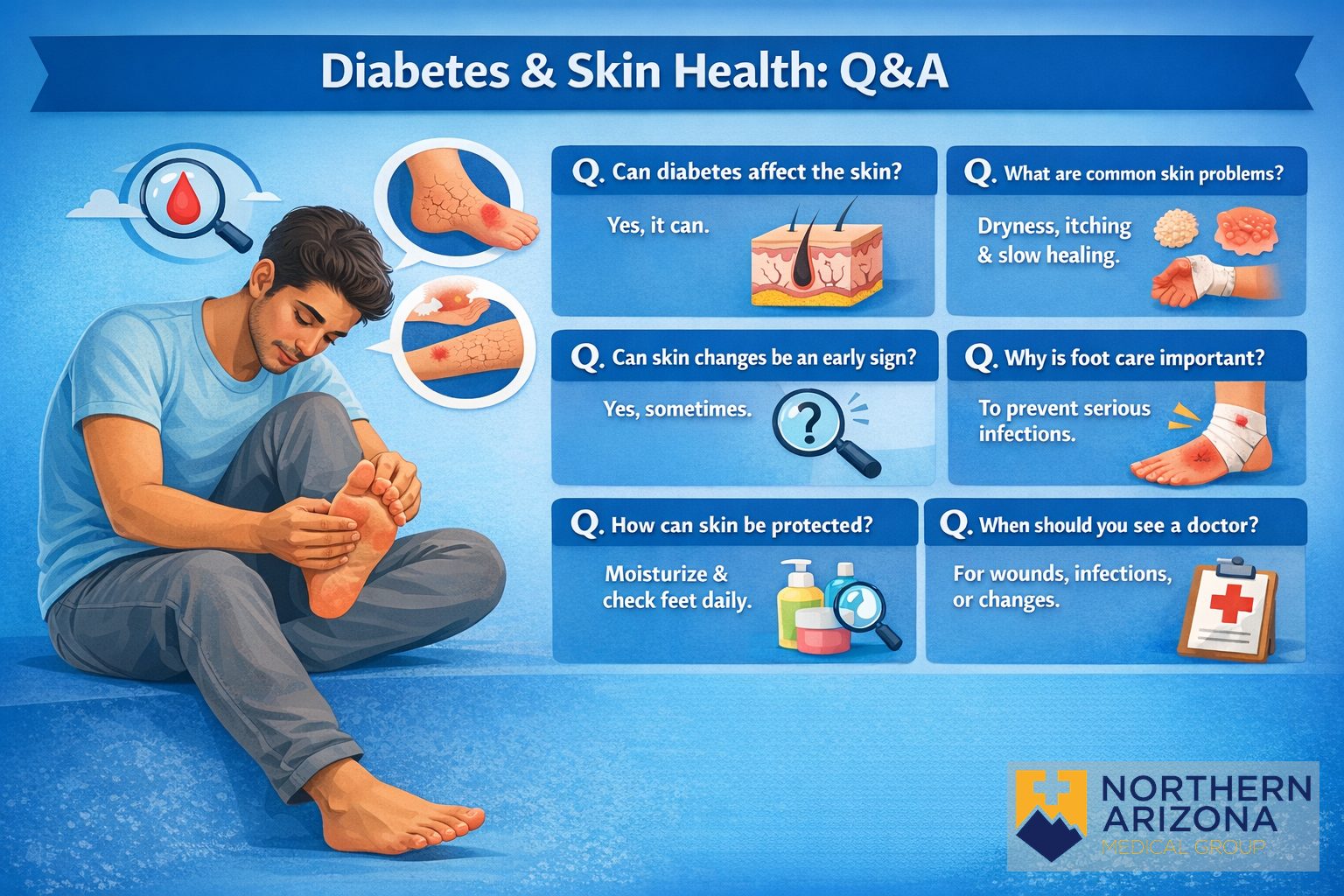
Q: Can diabetes affect your skin?
Yes, diabetes can affect your skin in several ways. Skin problems are actually quite common in people with diabetes, and sometimes they can even be one of the early signs of the condition.
Q: Why does diabetes cause skin problems?
High blood sugar can damage small blood vessels, reduce circulation, and increase inflammation in the body. This can make the skin drier, more sensitive, and slow to heal.
Q: What are some 5 common skin issues linked to diabetes?
Some common skin problems include dryness, itching, dark patches of skin, infections, and wounds that take longer than normal to heal. Foot-related skin problems are also common.
Q: Can skin changes be an early sign of diabetes?
Yes, in some cases, skin changes may appear before type 2 diabetes is diagnosed. That is why unusual or ongoing skin problems should not be ignored.
Q: Why is foot care so important for people with diabetes?
Foot care is very important because diabetes can reduce feeling in the feet and slow down healing. Even a small cut, blister, or sore can become serious if it is not treated properly.
Q: How can people with diabetes protect their skin?
They can protect their skin by keeping it moisturized, avoiding very hot baths, using a humidifier if the air is dry, checking their feet regularly, and cleaning small cuts or wounds right away.
Q: When should someone see a doctor?
A doctor should be contacted if there is a wound that is not healing, signs of infection, severe dryness, unusual skin changes, or any deep cut or burn.
Resources:
- Acanthosis nigricans. (2025).
https://dermnetnz.org/topics/acanthosis-nigricans - Dasari N, et al. (2021). Updates in diabetic wound healing, inflammation, and scarring.
https://pmc.ncbi.nlm.nih.gov/articles/PMC8432997/ - Diabetes and skin complications. (n.d.).
https://diabetes.org/about-diabetes/complications/skin-complications - Diabetes and your skin. (2024).
https://www.cdc.gov/diabetes/signs-symptoms/diabetes-and-your-skin.html - Edwards E, et al. (2025). Skin manifestations of diabetes mellitus.
https://www.ncbi.nlm.nih.gov/books/NBK481900/ - Skin problems associated with diabetes mellitus. (n.d.).
https://dermnetnz.org/topics/skin-problems-associated-with-diabetes-mellitus