What Causes High Blood Pressure?
High blood pressure usually does not come from one single cause. In most adults, it develops gradually over time because of a mix of aging, genetics, lifestyle habits, body weight, and other health conditions. In other cases, high blood pressure is secondary, which means an identifiable medical problem, medication, or substance is driving it.
This topic matters because high blood pressure is common, often silent, and harmful when it stays uncontrolled. The World Health Organization says about 1.28 billion adults ages 30 to 79 worldwide have hypertension, and uncontrolled hypertension contributes to heart attacks, strokes, and premature death.
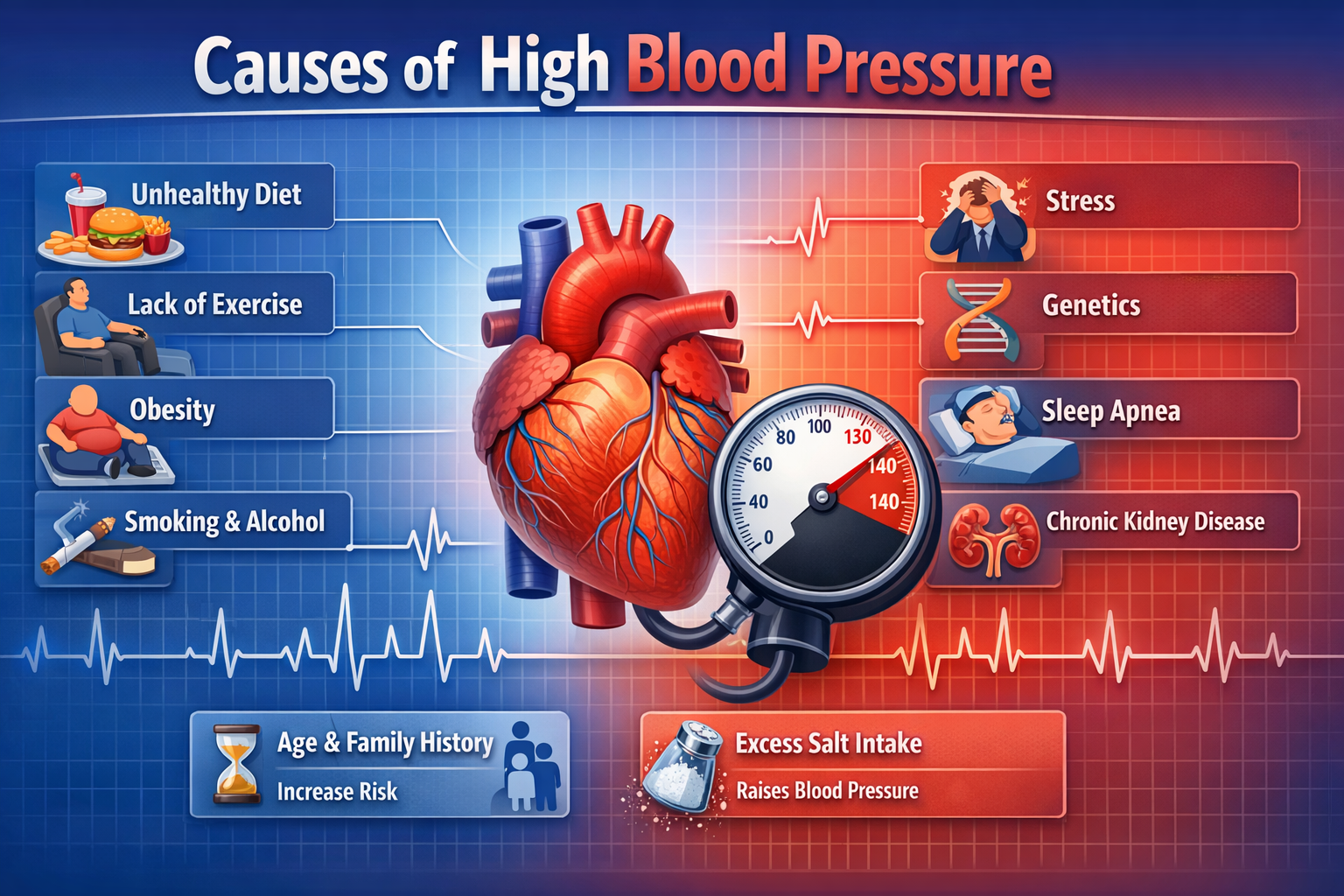
The simplest answer is this: high blood pressure is most often caused or worsened by a combination of too much sodium, excess body weight, low physical activity, alcohol, tobacco exposure, poor sleep, stress-related behaviors, family history, aging, and medical conditions such as kidney disease, sleep apnea, diabetes, thyroid disorders, and pregnancy-related disorders.
What is high blood pressure, and why does the cause matter?
High blood pressure means blood is pushing against artery walls at an unhealthy level. Under current U.S. guidance reflected by CDC and NHLBI, hypertension is generally defined as consistent readings of 130/80 mm Hg or higher.
Knowing the cause matters because treatment is not always the same. Someone with primary hypertension may benefit most from long-term lifestyle changes and sometimes medication, while someone with secondary hypertension may need treatment for an underlying condition such as kidney disease, sleep apnea, or a hormone problem.
High blood pressure is especially important to catch because it usually has no warning signs or symptoms. CDC notes that measuring blood pressure is the only way to know whether it is high.
What is the difference between primary and secondary hypertension?
The difference is that primary hypertension has no single identifiable cause, while secondary hypertension is caused by another condition, medicine, or trigger. Mayo Clinic notes that for most adults, there is no identifiable single cause, and this form tends to develop gradually over many years. Secondary hypertension, by contrast, tends to appear more suddenly and can cause higher readings.
This distinction helps explain why “cause” can mean two different things:
- a long-term pattern of risk factors that gradually raises blood pressure
- a direct underlying problem that pushes blood pressure up more abruptly
In practice:
- Primary hypertension is more common and is linked to age, genetics, diet, inactivity, weight, and vascular changes.
- Secondary hypertension is more likely when blood pressure rises suddenly, becomes very hard to control, or appears alongside clues such as kidney disease, sleep apnea, thyroid problems, certain medicines, or pregnancy complications.
What lifestyle factors cause or worsen high blood pressure?
Lifestyle factors are among the most important modifiable causes of high blood pressure. NHLBI and CDC both note that unhealthy habits, especially poor diet, inactivity, and excess weight, can raise risk and contribute to hypertension over time.
The biggest everyday contributors include:
- too much sodium
- excess body weight
- too little exercise
- alcohol overuse
- tobacco use
- poor sleep
- stress-related habits
Does too much sodium raise blood pressure?
Yes. Too much sodium can raise blood pressure by increasing fluid retention and affecting how blood vessels and the kidneys handle salt and water. NHLBI states that too much sodium can raise blood pressure, and notes that about 90% of children and adults in the U.S. eat too much salt.
This matters because sodium is one of the most actionable causes. Cutting back often helps, especially in people who are salt-sensitive or already have hypertension. NHLBI also points to the DASH eating plan and lower sodium intake as proven ways to reduce blood pressure.
Practical examples of high-sodium foods include:
- processed meats
- canned soups
- fast food
- chips and salty snacks
- pizza
- packaged sauces and frozen meals
Can being overweight or obese lead to high blood pressure?
Yes. Excess body weight is a major driver of high blood pressure. NHLBI lists overweight and obesity as risk factors, and CDC says obesity increases the risk of developing hypertension.
Weight affects blood pressure in several ways:
- It changes blood vessel function
- It increases strain on the heart
- It affects kidney function and hormone systems
- It often overlaps with insulin resistance, diabetes, and sleep apnea
CDC reports that 58% of U.S. adults with obesity have high blood pressure, which shows how tightly the two conditions overlap. That does not mean every person with obesity will have hypertension, but it does show that obesity is a major risk signal.
Does inactivity make blood pressure worse?
Yes. Not getting enough physical activity increases the risk of hypertension. CDC says high blood pressure can develop because of unhealthy lifestyle choices, such as not getting enough regular physical activity, and Mayo Clinic notes that inactivity often contributes to weight gain and higher resting heart rates.
In simple terms, regular movement helps blood vessels function better and supports a healthier weight, blood sugar, and heart function. A sedentary pattern does the opposite over time.
Can alcohol, smoking, and stress raise blood pressure?
Yes. Alcohol, tobacco exposure, and stress can all raise blood pressure, although they do it in different ways. Mayo Clinic notes that drinking too much alcohol is linked with increased blood pressure, smoking can raise blood pressure immediately for a short time and damage blood vessels, and high stress can cause temporary increases while also driving unhealthy habits that keep pressure high.
Here is the practical breakdown:
- Alcohol: heavy intake is linked with higher blood pressure.
- Smoking or vaping nicotine can cause short-term spikes and ongoing blood vessel injury.
- Stress: often raises blood pressure temporarily, and repeated stress may worsen it indirectly through overeating, alcohol, poor sleep, and tobacco use.
A common misconception is that stress alone is the only cause. In reality, stress is usually one contributor in a larger pattern rather than the sole explanation.
Can poor sleep contribute to high blood pressure?
Yes. Poor sleep can contribute, especially when the problem is obstructive sleep apnea. NHLBI lists sleep apnea among medical conditions that can cause high blood pressure, and Mayo Clinic lists obstructive sleep apnea as a cause of secondary hypertension.
Poor sleep matters because blood pressure is normally supposed to dip during sleep. When breathing repeatedly stops or sleep is chronically poor, the body can stay in a more activated, stress-like state. That can keep blood pressure elevated or make it harder to control.
What medical conditions can cause high blood pressure?
Several medical conditions can directly cause or worsen high blood pressure. The most important are kidney disease, obesity, diabetes, metabolic syndrome, sleep apnea, thyroid problems, certain tumors, and pregnancy-related disorders.
This is where secondary hypertension becomes important. If blood pressure rises suddenly, is severe, or stays high despite treatment, clinicians often look for an underlying cause.
Can kidney disease cause high blood pressure?
Yes. Kidney disease can both cause and worsen high blood pressure. NIDDK explains that damaged kidneys may be unable to filter extra water and salt properly, which raises blood pressure, and that worsening kidney disease can in turn push blood pressure even higher.
This creates a harmful cycle:
- kidney function declines
- Sodium and fluid handling worsen
- blood pressure rises
- Higher pressure causes more kidney damage
This two-way relationship is one reason doctors often check kidney function when evaluating hypertension.
Can sleep apnea, diabetes, and metabolic syndrome raise blood pressure?
Yes. These conditions are strongly linked with hypertension. NHLBI specifically names sleep apnea, chronic kidney disease, metabolic syndrome, and overweight or obesity as conditions that can cause high blood pressure, and the CDC adds that diabetes and obesity increase risk as well.
Why these conditions matter:
- Sleep apnea repeatedly stresses the cardiovascular system during sleep.
- Diabetes damages blood vessels and often overlaps with obesity and kidney disease.
- Metabolic syndrome reflects a cluster of problems, including abdominal obesity, abnormal lipids, higher blood sugar, and blood pressure issues that raise cardiovascular risk.
Can thyroid or hormone problems cause hypertension?
Yes. Thyroid problems and some hormone-related disorders can cause secondary hypertension. NHLBI lists thyroid problems and some tumors among medical conditions that can cause high blood pressure, and Mayo Clinic also notes adrenal gland tumors as one of the recognized causes.
These causes are less common than primary hypertension, but they are important because treating the underlying disorder may significantly improve blood pressure.
Can pregnancy cause high blood pressure?
Yes. Pregnancy can cause high blood pressure, and this should always be taken seriously. CDC notes that high blood pressure can occur during pregnancy, and NHLBI has reported that chronic hypertension in pregnancy doubled in the U.S. from 2007 to 2021 in an NIH-supported study.
This matters because high blood pressure in pregnancy can threaten both maternal and fetal health. Anyone who is pregnant and has elevated readings, severe headache, vision changes, chest pain, or swelling should seek prompt medical care.
What medicines and substances can raise blood pressure?
Yes, some medicines and substances can raise blood pressure. Mayo Clinic lists cough and cold medicines, some pain relievers, birth control pills, and other prescription drugs among possible causes of secondary hypertension, and also names cocaine and amphetamines.
Common categories that may contribute include:
- decongestants in some cold medicines
- NSAID pain relievers in some people
- some hormonal contraceptives
- stimulant drugs
- certain antidepressants or other prescription medicines, depending on the person and dose
This does not mean people should stop taking medicine on their own. It means medication lists should be reviewed with a clinician if blood pressure rises unexpectedly.
Can blood pressure go up temporarily without meaning chronic hypertension?
Yes. Blood pressure can go up temporarily because of stress, pain, exercise, caffeine, nicotine, illness, or even being anxious in a medical setting. Mayo Clinic notes that sometimes just getting a health checkup can raise blood pressure, which is known as white coat hypertension.
That is why one reading does not always equal a diagnosis. High blood pressure is usually diagnosed based on repeated measurements over time, not a single spike. CDC also emphasizes that blood pressure is diagnosed by comparing readings to guideline-based ranges, and measuring it correctly matters.
A useful way to think about it:
- Temporary spike: can happen for situational reasons
- Persistent hypertension: stays elevated across repeated readings or home monitoring
Who is more likely to develop high blood pressure?
Some risk factors cannot be changed. NHLBI and Mayo Clinic list age, family history, genetics, sex, and race or ethnicity among major risk factors. Blood pressure tends to rise with age as blood vessels stiffen, and hypertension often runs in families.
Higher-risk patterns include:
- older age
- family history of hypertension
- being overweight or obese
- physical inactivity
- high sodium intake
- tobacco use
- heavy alcohol use
- diabetes, kidney disease, or sleep apnea
Mayo Clinic also notes that high blood pressure is particularly common among Black people and often develops at younger ages, reflecting well-documented disparities in risk and outcomes.
What is the difference between common causes and warning signs that suggest a deeper problem?
The key difference is this: common causes usually build gradually, while warning signs can suggest a more urgent or secondary cause. Gradual patterns include aging, weight gain, poor diet, and low activity. More concerning clues include sudden onset, very high readings, difficult-to-control blood pressure, pregnancy, kidney disease, medication changes, or symptoms of an endocrine disorder.
Here is a quick comparison:
| Pattern | What it usually suggests | Examples |
|---|---|---|
| Gradual rise over the years | Primary hypertension | age, family history, weight, sodium, inactivity |
| Sudden rise or very hard to control | Possible secondary hypertension | kidney disease, sleep apnea, thyroid disorder, medication effect |
| Short-lived spike | Temporary elevation | stress, pain, caffeine, nicotine, white coat effect |
| High blood pressure in pregnancy | Needs prompt evaluation | chronic hypertension in pregnancy, gestational hypertension, preeclampsia concerns |
These patterns are general, not diagnostic, but they help explain why clinicians ask about symptoms, medicines, sleep, kidney health, and pregnancy status.
What signs suggest high blood pressure may need urgent medical attention?
Most high blood pressure has no symptoms, but very high readings can be dangerous. Mayo Clinic says blood pressure higher than 180/120 mm Hg is considered a hypertensive emergency or crisis and needs emergency medical help.
Seek urgent care right away if a very high reading happens with symptoms such as:
- chest pain
- shortness of breath
- severe headache
- weakness or trouble speaking
- confusion
- vision changes
Even without symptoms, repeatedly elevated readings deserve medical follow-up because long-term uncontrolled pressure damages the heart, brain, kidneys, and eyes.
What are the most important takeaways about the causes of high blood pressure?
The most important takeaway is that high blood pressure usually comes from multiple contributors, not a single cause. In most adults, the main drivers are excess sodium, weight gain, inactivity, alcohol, tobacco exposure, aging, genetics, and vascular changes over time. In others, an identifiable medical issue such as kidney disease, sleep apnea, thyroid disease, medication effects, or pregnancy is involved.
Key Takeaway
- High blood pressure is usually multifactorial.
- Most cases are primary hypertension, which means there is no one single identifiable cause.
- Secondary hypertension has a direct trigger, such as kidney disease, sleep apnea, thyroid problems, certain medicines, or pregnancy.
- The biggest modifiable contributors are too much sodium, excess body weight, low activity, alcohol, tobacco, and poor sleep.
- Because hypertension often has no symptoms, checking blood pressure is essential.
FAQ: What else do people ask about the causes of high blood pressure?
Can stress alone cause high blood pressure?
Stress can temporarily raise blood pressure, and chronic stress can worsen it indirectly through poor sleep, alcohol, tobacco use, and overeating. It is usually one contributor rather than the only cause.
Is salt the main cause of high blood pressure?
Too much sodium is one of the most important modifiable causes, but it is not the only one. Weight, inactivity, alcohol, genetics, kidney disease, sleep apnea, and other factors also matter.
Can dehydration raise blood pressure?
Dehydration can affect blood pressure regulation, but it is not one of the main long-term causes listed by major hypertension sources. Persistent hypertension is more strongly linked to sodium balance, kidney function, weight, sleep apnea, alcohol, and other chronic factors.
What is the most common cause of high blood pressure?
The most common form is primary hypertension, which usually has no single identifiable cause and develops gradually from a mix of age, genetics, diet, body weight, and lifestyle habits.
Can lack of sleep cause high blood pressure?
Yes. Poor sleep, especially obstructive sleep apnea, can contribute to high blood pressure and make it harder to control.
Can medications cause high blood pressure?
Yes. Some cold medicines, pain relievers, birth control pills, stimulants, and other drugs can raise blood pressure in some people.
Does high blood pressure always have symptoms?
No. CDC says high blood pressure usually has no warning signs or symptoms.
When should I worry about a high blood pressure reading?
A reading above 180/120 mm Hg is an emergency, especially with symptoms such as chest pain, shortness of breath, neurological symptoms, or severe headache. Repeated readings above normal also deserve medical follow-up.
A short conclusion adds value here: high blood pressure is often silent, but its causes are not mysterious once you break them into patterns. Most come down to a combination of lifestyle factors, inherited risk, and underlying health conditions. The good news is that many of the biggest causes are modifiable, and the first step is simply knowing your numbers.