Where Can You Get an A1C Test in Kingman, Arizona?
You can get an A1C test at a primary care clinic with in-house laboratory services, an independent laboratory, or a hospital outpatient lab in Kingman. One local option is Northern Arizona Medical Group, located at 3555 Western Avenue, Kingman, AZ 86409, where A1C testing is available through the clinic’s in-house laboratory and diabetes-care services.
Northern Arizona Medical Group accepts new patients and advertises same-day appointment availability. Patients can call 928-757-8440 to confirm testing availability, appointment timing, insurance requirements, and whether other blood tests will be ordered with the A1C.
Other Kingman options include Labcorp on North Stockton Hill Road and outpatient laboratory services through Kingman Regional Medical Center. Testing requirements vary, so contacting the location before travelling is recommended.
Local location details in this guide were verified on 24 July 2026. Hours, appointment policies, insurance participation, and laboratory-order requirements can change.
Where Are A1C Tests Available in Kingman, Arizona?
A1C testing is available through local medical clinics and diagnostic laboratories. The right option depends on whether you need only a blood draw or also need screening advice, result interpretation, treatment planning, and ongoing diabetes care.
| Kingman testing option | Location | What the facility provides | Important preparation |
|---|---|---|---|
| Northern Arizona Medical Group | 3555 Western Ave, Kingman, AZ 86409 | In-house A1C testing, diabetes screening, medical interpretation, treatment and monitoring | Call 928-757-8440 to request an appointment and confirm coverage |
| Labcorp | 2401 N Stockton Hill Rd, Kingman, AZ 86401 | Independent laboratory collection; Labcorp lists hemoglobin A1C in its test menu | Confirm whether you need an order, appointment, or direct-access purchase |
| KRMC Medical Professional Center | 1739 Beverly Ave, Suite 109, Kingman, AZ 86409 | Outpatient laboratory testing for tests ordered by a healthcare provider | Bring the provider’s order and insurance card; appointment recommended |
Sources for locations and services: Northern Arizona Medical Group, Labcorp, and Kingman Regional Medical Center.
Can You Get an A1C Test at Northern Arizona Medical Group?
Yes. Northern Arizona Medical Group lists A1C testing as part of both its diabetes-care services and its in-house laboratory services. The clinic can also evaluate other aspects of diabetes care instead of providing an isolated laboratory result.
Services may include:
- A1C testing
- Fasting glucose testing
- Diabetes screening and diagnosis
- Medication and insulin-management support
- Nutrition and weight-management guidance
- Blood sugar monitoring
- Follow-up appointments
- Patient education
Northern Arizona Medical Group is located at:
3555 Western Ave
Kingman, AZ 86409
Phone: 928-757-8440
Its published hours are Monday through Thursday from 7:30 a.m. to 5:00 p.m. and Friday from 7:30 a.m. to 4:30 p.m. The clinic is closed on Saturday and Sunday. Same-day appointments may be available, but patients should call to confirm that A1C testing can be arranged during the requested visit.
Can You Get an A1C Test at Labcorp in Kingman?
Labcorp has a Kingman patient service centre at 2401 N Stockton Hill Road, Kingman, AZ 86401, and Labcorp’s official test menu includes a hemoglobin A1C test.
Labcorp also offers certain consumer-requested tests through its OnDemand service. Availability, eligibility, payment, and the participating collection location should be confirmed before purchasing or travelling to the Kingman location.
An independent lab may be suitable when:
- A healthcare provider has already issued an order.
- You need a scheduled laboratory blood draw.
- Your provider will interpret the result separately.
- You are using an eligible direct-access testing service.
A laboratory result alone does not provide a complete diagnosis or personalised treatment plan. Arrange clinical follow-up when a result is abnormal or does not match your home glucose readings.
Can You Get an A1C Test Through a KRMC Outpatient Laboratory?
Yes, KRMC provides outpatient laboratory services for tests ordered by a healthcare provider. Its Medical Professional Center laboratory is at 1739 Beverly Avenue, Suite 109, Kingman, AZ 86409.
Published hours for this location are:
- Monday–Friday: 7:00 a.m.–4:30 p.m.
- Saturday: 7:00 a.m.–11:00 a.m.
KRMC recommends an appointment at this location and advises patients to bring their doctor’s laboratory order and insurance card. Patients should also ask their provider whether any accompanying tests require fasting.
What Is an A1C Test and What Does It Measure?
An A1C test is a blood test that estimates your average blood glucose level over approximately the previous three months. It measures the percentage of hemoglobin in red blood cells that has glucose attached to it.
A standard glucose-meter reading shows your blood sugar at one moment. An A1C test gives a broader view of your recent glucose exposure.
Healthcare professionals use A1C testing to:
- Screen for prediabetes
- Help diagnose type 2 diabetes
- Monitor previously diagnosed diabetes
- Assess whether a care plan is working
- Support decisions about medication, nutrition, activity, and follow-up
The A1C test is also known as an HbA1c test, hemoglobin A1C test, glycated hemoglobin test, or glycohemoglobin test.
Testing matters because diabetes can remain unnoticed for years. The CDC estimates that 40.1 million people in the United States had diagnosed or undiagnosed diabetes in 2023, and approximately 11 million adults with diabetes were undiagnosed. The same report estimates that 115.2 million U.S. adults have prediabetes.
Who Should Consider Getting an A1C Test?
Adults should consider A1C testing when they meet age-based screening recommendations, have risk factors for type 2 diabetes, experience possible diabetes symptoms, or need ongoing diabetes monitoring.
The CDC advises adults over age 45 to get tested. Testing may also be appropriate at a younger age for people who are overweight and have at least one additional risk factor.
The U.S. Preventive Services Task Force recommends screening nonpregnant adults aged 35 to 70 who have overweight or obesity, even when they do not have diabetes symptoms.
Testing may be discussed sooner when a person has concerns such as:
- A family history of type 2 diabetes
- Previous gestational diabetes
- Overweight or obesity
- High blood pressure
- Abnormal cholesterol or triglycerides
- Limited physical activity
- A previous elevated glucose result
- Increased thirst or urination
- Unexplained weight loss
- Blurred vision
- Recurrent infections
- Slow-healing wounds
Symptoms alone cannot confirm diabetes. A healthcare professional must use appropriate blood testing and clinical evaluation.
Do You Need to Fast Before an A1C Test?
No. You do not normally need to fast before an A1C test, and the blood sample can generally be collected at any time of day.
However, your healthcare provider may order other tests at the same time. A fasting glucose test, cholesterol panel, or another metabolic test may require fasting.
Before your appointment, ask:
- Is the A1C the only test being performed?
- Has fasting glucose also been ordered?
- Is a cholesterol or triglyceride test included?
- Can I take my usual medicines?
- Can I drink water?
- How many hours should I fast, when required?
Do not stop diabetes medicine, insulin, or any prescribed treatment unless the ordering healthcare professional gives you specific instructions.
What Should You Bring to an A1C Testing Appointment?
Bring identification, insurance information, the laboratory order when one is required, and an updated medication list. These items help prevent delays and allow the healthcare team to interpret the result accurately.
Consider bringing:
- Photo identification
- Insurance or Medicare card
- Doctor’s laboratory order
- Current medication and supplement list
- Recent home glucose readings
- Continuous glucose monitor reports, when available
- Previous A1C results
- A list of symptoms or questions
- Information about recent blood loss or transfusions
KRMC specifically advises laboratory patients to bring their provider’s order and insurance card.
Patients visiting Northern Arizona Medical Group should call 928-757-8440 before the visit to confirm appointment availability and any required documentation.
What Happens During an A1C Test?
An A1C test usually involves collecting a small blood sample from a vein in your arm. Some A1C monitoring tests use a finger-prick sample, although laboratory-based testing is preferred when the result will be used to establish a diagnosis.
The usual process is:
- Registration: Staff confirms your identity, order, and insurance information.
- Clinical review: A provider may review your symptoms, risk factors, medicines, and health history.
- Blood collection: A trained professional takes a blood sample.
- Laboratory analysis: The sample is analysed to determine the percentage of glycated hemoglobin.
- Result reporting: The A1C percentage may be reported with an estimated average glucose value.
- Interpretation: A healthcare professional explains whether the result is normal, in the prediabetes range, or in the diabetes range.
- Follow-up: Additional testing or a personalised care plan may be recommended.
The blood draw itself generally takes only a few minutes. Total visit and result-processing times depend on the facility and whether you are also seeing a healthcare provider.
What Do A1C Test Results Mean?
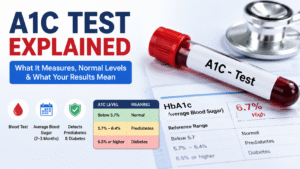
A1C results are reported as a percentage. A higher percentage generally indicates that average blood glucose has been higher during the previous two to three months.
| A1C result | General diagnostic category | What it may mean |
|---|---|---|
| Below 5.7% | Normal range | Diabetes is not indicated by the A1C result |
| 5.7%–6.4% | Prediabetes range | Blood glucose is above normal, with an increased risk of type 2 diabetes |
| 6.5% or higher | Diabetes range | The result may indicate diabetes and generally requires clinical confirmation |
These diagnostic ranges are published by both the CDC and NIDDK.
What Is a Normal A1C Level?
An A1C below 5.7% is within the general normal diagnostic range. A normal result does not guarantee that a person will never develop diabetes, so the timing of future screening should be based on age, health history, and risk factors.
What A1C Level Indicates Prediabetes?
An A1C from 5.7% through 6.4% is in the prediabetes range. Within that range, a higher number generally represents a greater risk of progressing to type 2 diabetes.
Prediabetes is an opportunity for early action. A healthcare provider may discuss:
- Eating patterns
- Physical activity
- Weight management
- Sleep and stress
- Blood pressure
- Cholesterol
- Medication when clinically appropriate
- Repeat A1C testing
What A1C Level May Indicate Diabetes?
An A1C of 6.5% or higher is in the diabetes diagnostic range. In a person without clear diabetes symptoms, an abnormal result normally needs confirmation on another day using a repeat A1C or another accepted diabetes test.
The result should not be interpreted in isolation. A clinician will consider symptoms, medical history, medicines, other laboratory findings, and conditions that may affect A1C accuracy.
Does One High A1C Result Confirm Diabetes?
Not always. When a patient does not have clear symptoms, an A1C result in the diabetes or prediabetes range should generally be confirmed with a repeat measurement or another accepted glucose test.
Confirmatory testing may include:
- A second laboratory A1C
- Fasting plasma glucose
- Oral glucose tolerance testing
- Random plasma glucose when symptoms are present
NIDDK also states that point-of-care A1C tests analysed in a doctor’s office or clinic should not be used by themselves to diagnose diabetes. For diagnosis, a venous blood sample should be analysed by a laboratory using an appropriately certified method.
Point-of-care tests may still be useful for monitoring a person who already has diabetes, depending on the clinical setting.
How Should You Choose an A1C Testing Location?
Choose a primary care or diabetes clinic when you need both testing and medical guidance. Choose an independent or hospital laboratory when you already have an order and a provider who will review the result.
| Your situation | Most suitable option | Reason |
|---|---|---|
| You have symptoms or do not know whether you need testing | Primary care or diabetes clinic | A provider can assess symptoms and choose the correct tests |
| You need an A1C plus ongoing diabetes care | Clinic with in-house laboratory | Testing, interpretation, treatment, and follow-up can be coordinated |
| You already have a laboratory order | Independent or hospital outpatient laboratory | The laboratory can collect and process the ordered test |
| You want consumer-requested screening | Eligible direct-access service | Some services permit testing without a separate office visit |
| Your result is abnormal or confusing | Medical clinic | A clinician can arrange confirmation and explain the next steps |
| Your A1C conflicts with home glucose readings | Medical clinic | Medical conditions or assay interference may need investigation |
For patients who want one local care team to handle the test, explain the result, and provide ongoing support, Northern Arizona Medical Group offers in-house A1C testing and diabetes-management services in Kingman.
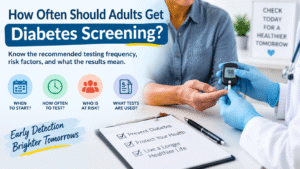
How Often Should Your A1C Be Tested?
Testing frequency depends on whether you have normal glucose levels, prediabetes, or diagnosed diabetes.
The CDC provides the following general guidance:
- Normal result: Retesting depends on your age and risk factors.
- Prediabetes: A repeat A1C is commonly recommended every one to two years.
- Diagnosed diabetes: Most people are tested at least twice a year.
- Changing treatment or above-target glucose: Testing may be needed more frequently.
NIDDK similarly states that people with diabetes should generally receive an A1C test at least twice each year and may need more frequent testing when treatment goals are not being met.
Your healthcare provider may adjust the schedule based on:
- Medication changes
- Insulin use
- Pregnancy
- Hypoglycaemia risk
- Kidney or liver disease
- Recent hospitalisation
- Home glucose patterns
- Other chronic conditions
What Can Make an A1C Result Less Accurate?
Conditions that change red blood cells, hemoglobin, or red-cell lifespan can make an A1C result falsely high or falsely low.
The CDC identifies several possible sources of interference:
- Severe anaemia
- Kidney failure
- Liver disease
- Sickle cell anaemia
- Thalassaemia
- Certain medicines
- Recent blood loss
- Blood transfusion
- Early or late pregnancy
Some hemoglobin variants can also interfere with certain A1C testing methods. A healthcare professional may suspect interference when the A1C result does not match laboratory glucose, home glucose, or continuous glucose monitor readings.
Tell the healthcare team before testing when you:
- Recently donated or lost a substantial amount of blood
- Received a blood transfusion
- Have anaemia
- Have kidney or liver disease
- Are pregnant
- Have sickle cell disease, sickle cell trait, or thalassaemia
- Believe your A1C does not match your usual glucose readings
A provider may recommend another glucose test or a different A1C testing method.
What Should You Do After Receiving Your A1C Result?
Review the result with a healthcare professional, especially when it is elevated, unexpected, or inconsistent with your daily glucose readings. The next step depends on your result and overall health.
What Should You Do If Your A1C Is Normal?
Continue appropriate preventive care and ask when you should be screened again. A normal result may not require immediate treatment, but future testing may still be needed based on age and risk factors.
Helpful steps include:
- Maintaining regular physical activity
- Eating a balanced diet
- Attending preventive visits
- Monitoring blood pressure and cholesterol
- Reporting new diabetes symptoms
- Following the screening schedule recommended by your provider
What Should You Do If Your Result Shows Prediabetes?
Discuss a diabetes-prevention plan with your healthcare provider. Prediabetes means blood glucose is above normal but has not reached the diabetes diagnostic range.
Your plan may address:
- Practical nutrition changes
- Gradual and sustainable weight management
- Regular physical activity
- Sleep and stress
- Blood pressure and cholesterol
- Medication when clinically appropriate
- Repeat laboratory testing
The USPSTF recommends offering or referring adults with prediabetes to effective preventive interventions.
What Should You Do If Your Result Is in the Diabetes Range?
Arrange clinical follow-up for diagnostic confirmation and a complete evaluation. Do not change medication or begin using someone else’s diabetes medicine based only on an isolated result.
Follow-up may include:
- Repeat A1C or another glucose test
- Kidney-function testing
- Cholesterol and blood pressure assessment
- Medication review
- Nutrition planning
- Home glucose-monitoring guidance
- Eye and foot-care recommendations
- A personalised A1C target
- Ongoing diabetes appointments
Northern Arizona Medical Group provides A1C testing, diabetes treatment, nutrition and weight-management support, and continuing monitoring at its Kingman clinic.
What Common A1C Testing Mistakes Should You Avoid?
The most common mistake is treating an A1C percentage as a complete diagnosis without medical interpretation.
Avoid these errors:
- Assuming you must fast: A1C itself does not normally require fasting.
- Ignoring other ordered tests: A fasting glucose or lipid panel may require preparation.
- Diagnosing yourself from one result: An abnormal result may need confirmation.
- Using a finger-prick result as the only diagnostic evidence: Laboratory confirmation is preferred for diagnosis.
- Assuming the same target applies to everyone: An appropriate diabetes-management goal depends on individual health.
- Ignoring conditions that affect red blood cells: Anaemia, kidney disease, transfusion, pregnancy, and hemoglobin variants can change accuracy.
- Delaying follow-up: Prediabetes and diabetes-range results require a practical next-step plan.
- Comparing A1C directly with one home reading: A1C represents an average, while a glucose-meter result captures one moment.
Why Is Clinical Follow-Up Important After an A1C Test?
Clinical follow-up turns a laboratory number into an appropriate prevention or treatment plan. A healthcare professional can determine whether the result is reliable, whether it requires confirmation, and whether other health concerns should be evaluated.
A primary care or diabetes clinic can connect A1C testing with:
- Blood pressure management
- Cholesterol monitoring
- Kidney-health assessment
- Medication review
- Nutrition support
- Weight-management planning
- Home glucose monitoring
- Remote patient monitoring
- Screening for diabetes complications
At Northern Arizona Medical Group, patients can receive an A1C test through the in-house laboratory and continue care with the clinic’s diabetes-management team. The clinic is accepting new patients and advertises same-day appointment availability.
To request an appointment:
Northern Arizona Medical Group
3555 Western Ave, Kingman, AZ 86409
Call: 928-757-8440
What Is the Key Takeaway for Kingman Patients?
You can receive an A1C test in Kingman through Northern Arizona Medical Group, Labcorp, or a KRMC outpatient laboratory. The most convenient choice depends on whether you need only a laboratory blood draw or also need medical evaluation, result interpretation, and continuing diabetes care.
An A1C test normally does not require fasting. A result below 5.7% is generally normal, 5.7%–6.4% indicates prediabetes, and 6.5% or higher is in the diabetes range. An abnormal diagnostic result often requires confirmation.
What Do Kingman Patients Frequently Ask About A1C Testing?
Can I Get an A1C Test Without Fasting?
Yes. An A1C test does not normally require fasting. However, you may need to fast when your provider orders fasting glucose, cholesterol, or other laboratory tests at the same time.
Can I Request an A1C Test Without Having Diabetes Symptoms?
Yes. Diabetes and prediabetes screening may be recommended based on age, weight, health history, and other risk factors even when you do not have symptoms.
How Long Does an A1C Blood Draw Take?
The blood collection usually takes only a few minutes. Registration, a medical consultation, other ordered tests, and laboratory processing can increase the total time.
Can a Finger-Prick Test Diagnose Diabetes?
A finger-prick A1C may be useful for monitoring, but NIDDK states that point-of-care A1C tests should not be used alone to diagnose diabetes. Diagnostic testing should use an appropriate laboratory method.
Does Medicare Cover A1C Testing?
Medicare may cover diabetes screening or monitoring when eligibility and medical-necessity requirements are met. Coverage and patient costs depend on the reason for testing, the ordering provider, the laboratory, and the individual plan. Confirm benefits with Medicare, your insurer, and the testing facility before the visit.
Can an A1C Result Change Quickly?
A1C reflects average glucose over approximately three months, so it does not change as quickly as a daily glucose reading. Recent weeks can still influence the result, particularly after a major treatment or lifestyle change.
Where Can I Schedule an A1C Test in Kingman?
Northern Arizona Medical Group provides in-house A1C testing at 3555 Western Ave, Kingman, AZ 86409. Call 928-757-8440 to confirm availability and request an appointment.