guide

Vegetables diabetics should limit and enjoy

What Vegetables Should Diabetics Avoid? (Complete Guide)

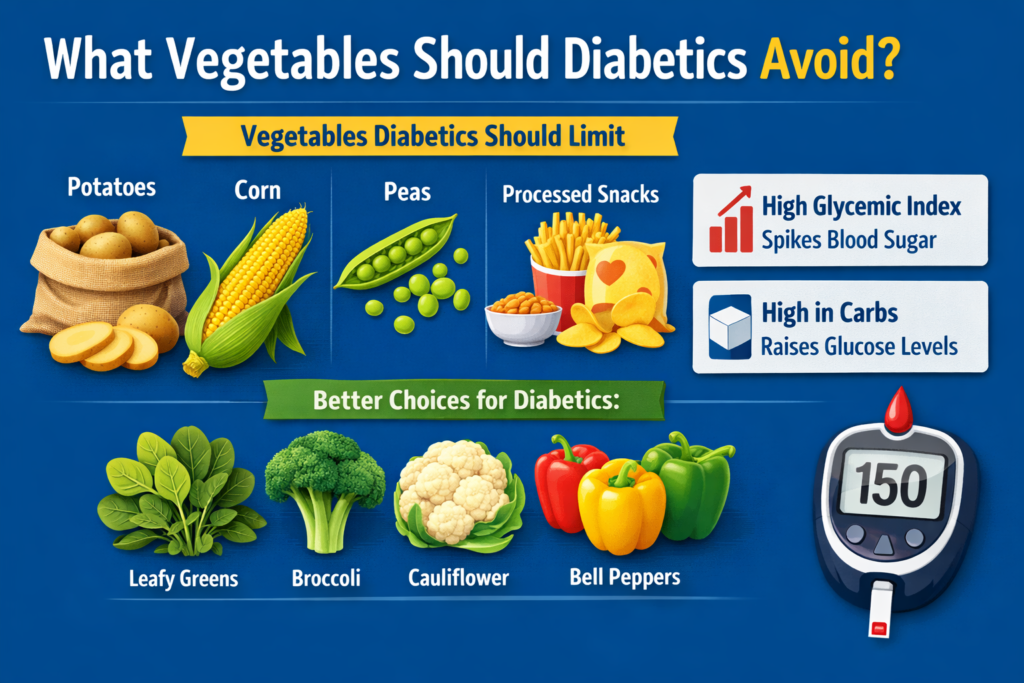
What Vegetables Should Diabetics Avoid? If you have diabetes, you don’t need to avoid vegetables entirely—but some vegetables should be limited because they can raise blood sugar quickly. These are usually starchy vegetables or processed vegetable products. Most vegetables are healthy, but understanding carbohydrates, glycemic index, and portion size is key to managing blood glucose […]

What Vegetables Should Diabetics Avoid? (Complete Guide) Read More »

What Grocery List Supports a 1,500 Calorie Weight Loss Plan?

What Should Diabetics Eat? Best Foods, Worst Foods & Sugar Symptoms

What Should a Person With Diabetes Eat, Avoid, and Know About Sugar? Diabetes nutrition gets overcomplicated fast. One article says fruit is fine. Another says bananas are too sugary. Someone else says all carbs are bad. That kind of advice is exactly why so many people feel stuck. Here’s the simpler truth: diabetes-friendly eating is

What Should Diabetics Eat? Best Foods, Worst Foods & Sugar Symptoms Read More »

Can you know you have diabetes just by how you feel No. Symptoms can suggest diabetes, but only blood sugar testing can confirm it.

What Foods Can Diabetics Eat Freely? Safe Foods List + Expert Guide

What Foods Can a Diabetic Eat Freely? If you’re living with diabetes, the idea of eating “freely” can feel confusing. The short answer is: no food is truly unlimited, but many foods can be eaten in larger amounts because they have minimal impact on blood sugar. Understanding which foods are “safe” helps you eat confidently

What Foods Can Diabetics Eat Freely? Safe Foods List + Expert Guide Read More »

Hyperglycemia vs hypoglycemia explained

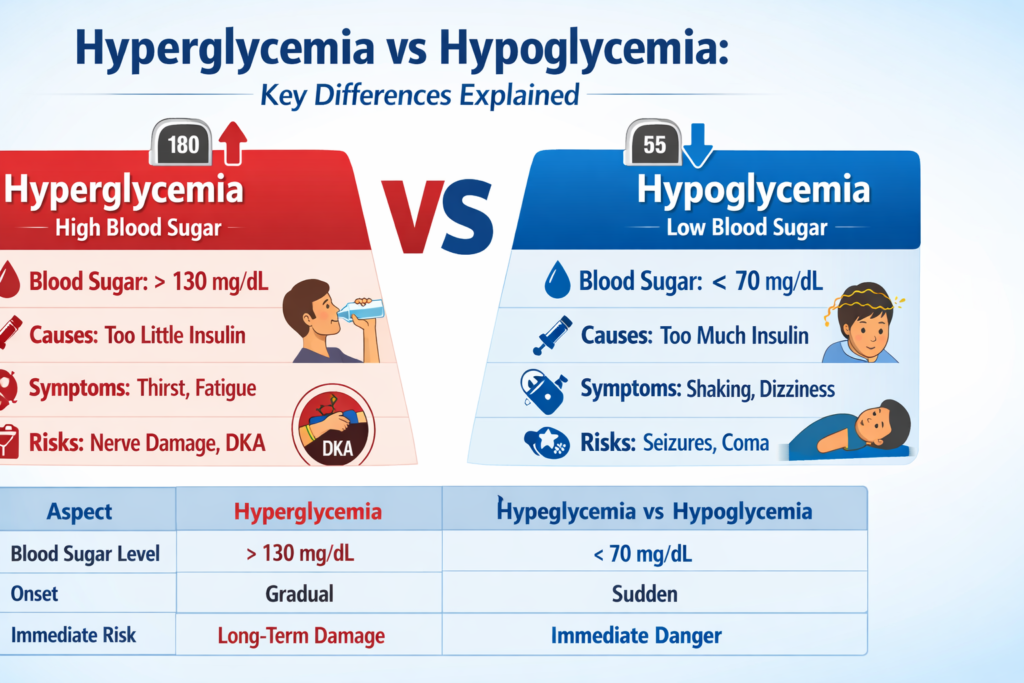
Hyperglycemia vs Hypoglycemia: Key Differences, Symptoms & Treatment

What Is the Difference Between Hyperglycemia and Hypoglycemia? Hyperglycemia and hypoglycemia are two opposite blood sugar conditions. Hyperglycemia means high blood sugar, while hypoglycemia means low blood sugar. Both are commonly linked to diabetes but can also affect non-diabetic individuals. Understanding the difference is important because both conditions can become dangerous if not treated quickly.

Hyperglycemia vs Hypoglycemia: Key Differences, Symptoms & Treatment Read More »

Blood glucose range guide illustration

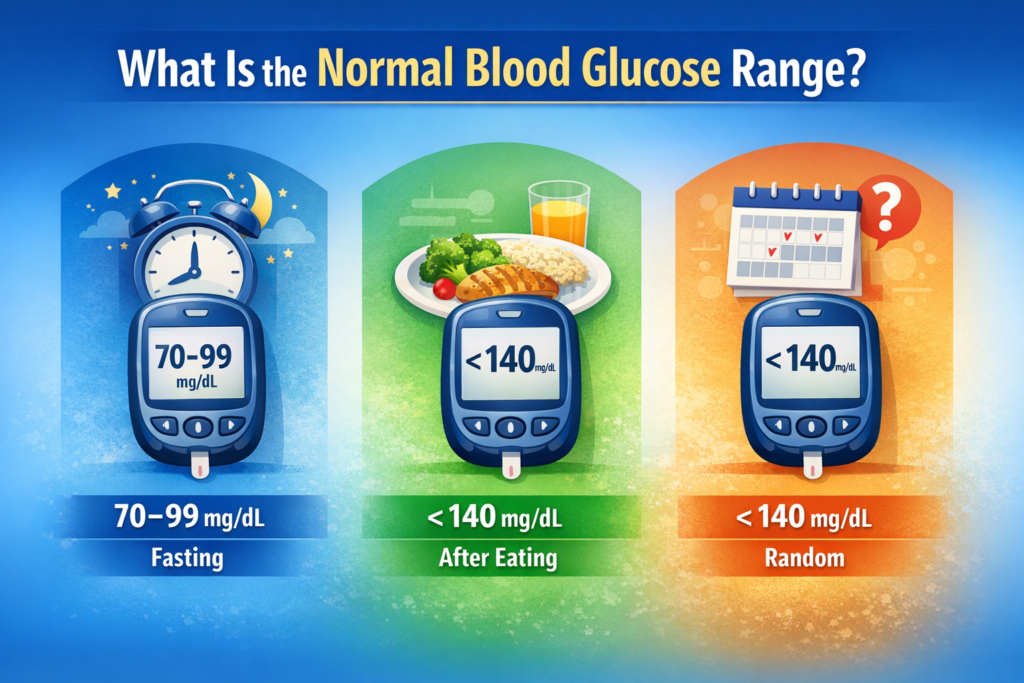
Normal Blood Glucose Range: Fasting, After Eating & HbA1c Explained

What Is the Normal Blood Glucose Range? Understanding your blood glucose level is one of the most important indicators of your overall health. Whether you’re checking for diabetes, monitoring your diet, or simply being proactive, knowing what “normal” looks like can help you stay in control. The normal blood glucose range for healthy adults is:

Normal Blood Glucose Range: Fasting, After Eating & HbA1c Explained Read More »

How Does Blood Sugar Work A Simple Guide to Glucose, Insulin, and Health

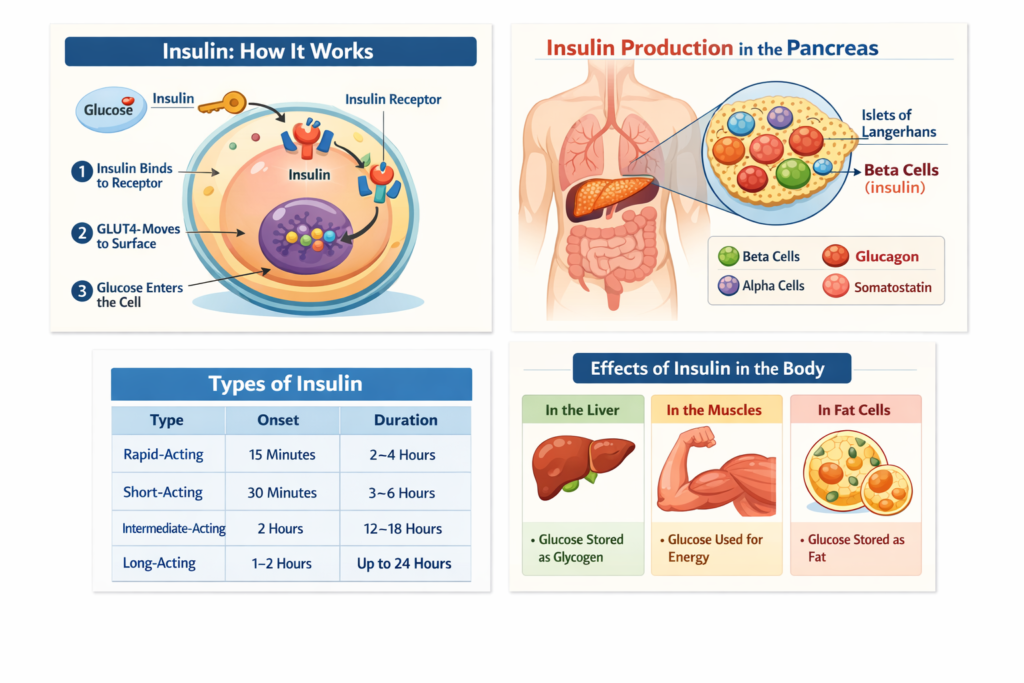
How Does Blood Sugar Work? A Simple Guide to Glucose, Insulin, and Health

How Does Blood Sugar Work in the Human Body? Blood sugar, also called blood glucose, is the main source of energy for your body. It comes from the food you eat and is carefully controlled by hormones to keep your body functioning properly. Understanding how blood sugar works helps you prevent energy crashes, avoid chronic

How Does Blood Sugar Work? A Simple Guide to Glucose, Insulin, and Health Read More »

Checking blood sugar_ understanding type 2 diabetes

What Causes Type 2 Diabetes? Risk Factors, Insulin Resistance & Prevention

What Causes Type 2 Diabetes? Type 2 diabetes develops when the body becomes resistant to insulin or when the pancreas cannot produce enough insulin to keep blood sugar levels normal. Over time, this leads to high blood glucose levels. Unlike Type 1 diabetes, which is an autoimmune disease, Type 2 diabetes is strongly influenced by

What Causes Type 2 Diabetes? Risk Factors, Insulin Resistance & Prevention Read More »

What triggers type 1 diabetes

What Causes Type 1 Diabetes? Genetics, Immune System, and Risk Factors Explained

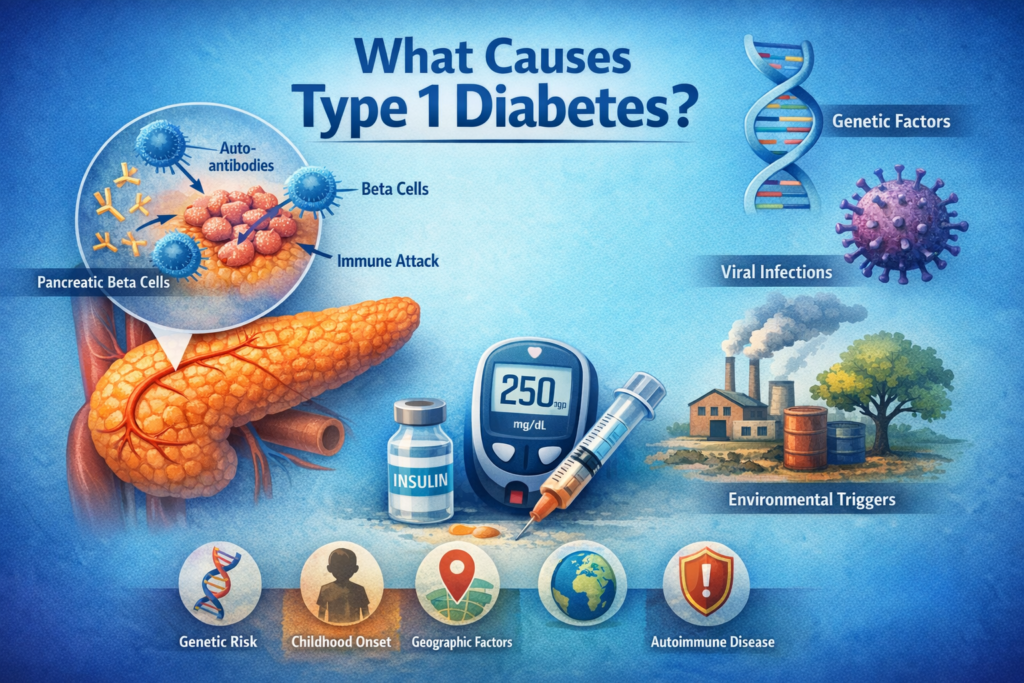
What Causes Type 1 Diabetes? Type 1 diabetes is primarily caused by an autoimmune reaction in which the body’s immune system mistakenly attacks insulin-producing cells in the pancreas. This destruction prevents the body from producing enough insulin to regulate blood sugar. Unlike Type 2 diabetes, Type 1 diabetes is not caused by lifestyle, diet, or

What Causes Type 1 Diabetes? Genetics, Immune System, and Risk Factors Explained Read More »

Can you know you have diabetes just by how you feel No. Symptoms can suggest diabetes, but only blood sugar testing can confirm it.

How to Know If You Have Diabetes: Early Symptoms, Tests & Warning Signs

How Do You Know If You Have Diabetes? You usually know you might have diabetes if you notice common warning signs such as frequent urination, unusual thirst, increased hunger, unexplained weight loss, fatigue, blurry vision, slow-healing sores, or frequent infections. The only way to know for sure is with a medical blood test, such as

How to Know If You Have Diabetes: Early Symptoms, Tests & Warning Signs Read More »