What Causes Type 1 Diabetes? Genetics, Immune System, and Risk Factors Explained
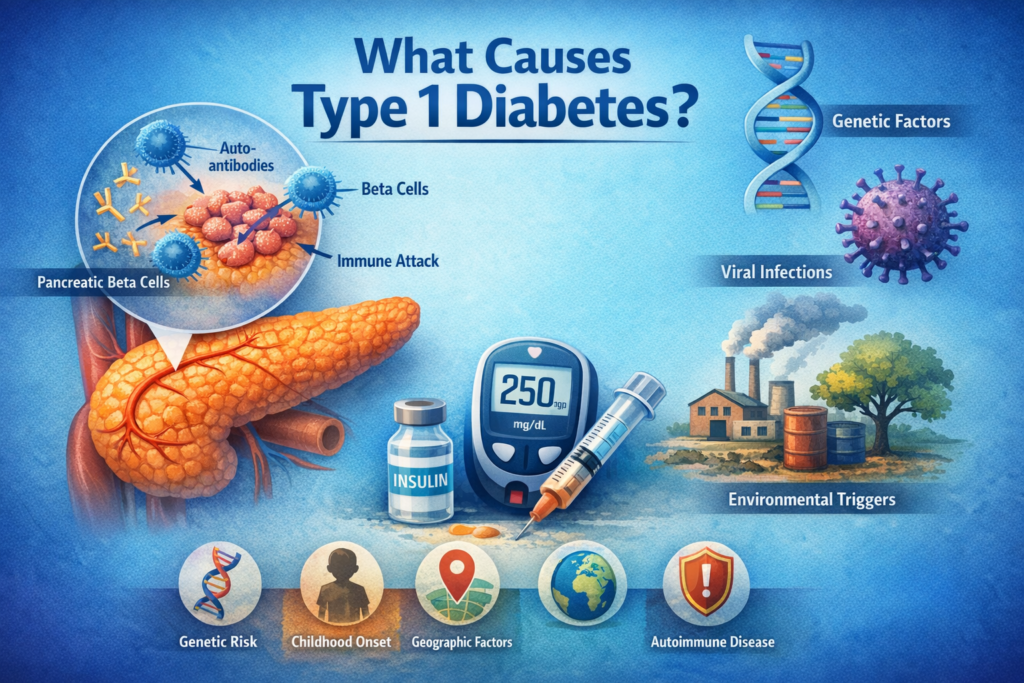
What Causes Type 1 Diabetes? Type 1 diabetes is primarily caused by an autoimmune reaction in which the body’s immune system mistakenly attacks insulin-producing cells in the pancreas. This destruction prevents the body from producing enough insulin to regulate blood sugar. Unlike Type 2 diabetes, Type 1 diabetes is not caused by lifestyle, diet, or weight. Instead, it develops through a combination of genetic susceptibility and environmental triggers that activate the immune system. Understanding the causes of Type 1 diabetes helps individuals identify risk factors, understand how the disease develops, and follow ongoing research on prevention and treatment. What Is Type 1 Diabetes? Type 1 diabetes is an autoimmune disease that destroys insulin-producing cells in the pancreas. Insulin is a hormone that allows glucose (sugar) in the bloodstream to enter cells and be used for energy. Without insulin, blood sugar levels rise to dangerous levels. Key characteristics of Type 1 diabetes The body produces little or no insulin The immune system attacks pancreatic beta cells Blood glucose levels become elevated Insulin therapy is required for life Type 1 diabetes often develops in children, teenagers, or young adults, which is why it was historically called juvenile diabetes. However, it can occur at any age. What Is the Main Cause of Type 1 Diabetes? The main cause of Type 1 diabetes is autoimmune destruction of insulin-producing beta cells in the pancreas. In people with this condition, the immune system mistakenly identifies beta cells as harmful and gradually destroys them. As the number of beta cells decreases, the pancreas produces less insulin. Key points about the primary cause It is an autoimmune disease Immune cells attack pancreatic beta cells Insulin production eventually stops Blood glucose becomes difficult to control Type 1 diabetes develops when the immune system destroys the pancreatic beta cells that make insulin. U.S. health agencies describe the disease as an autoimmune condition, and they note that this process can begin months or even years before symptoms appear. Researchers believe the disease usually results from a combination of genetic susceptibility and environmental triggers, rather than one single cause. How Does the Immune System Destroy Insulin-Producing Cells? Type 1 diabetes develops when the immune system attacks the insulin-producing cells inside the pancreas. This immune attack occurs gradually and may start months or years before symptoms appear. The process typically includes Immune system activation Production of autoantibodies Inflammation of pancreatic islets Destruction of beta cells Loss of insulin production When about 80–90% of beta cells are destroyed, symptoms of Type 1 diabetes usually begin. What Role Do Pancreatic Beta Cells Play? Pancreatic beta cells produce insulin, the hormone responsible for controlling blood glucose levels. These cells are located in small clusters called islets of Langerhans inside the pancreas. Beta cells perform several essential functions Detect rising blood sugar levels Release insulin into the bloodstream Help cells absorb glucose for energy Maintain stable blood glucose levels When beta cells are destroyed, the body loses its ability to regulate blood sugar naturally. What Are Islet Autoantibodies? Islet autoantibodies are immune proteins that attack the insulin-producing cells of the pancreas. These antibodies are often detectable before Type 1 diabetes symptoms appear. Common autoantibodies include: GAD antibodies (Glutamic Acid Decarboxylase) IA-2 antibodies Insulin autoantibodies ZnT8 antibodies Doctors sometimes use these markers to identify people at higher risk of developing Type 1 diabetes. One of the clearest early markers of future Type 1 diabetes is the presence of islet autoantibodies. NIDDK reports that people with two or more diabetes-related autoantibodies are at high risk for progression, and these antibodies can appear before any symptoms. Major autoantibodies include those against insulin, GAD65, IA-2, and ZnT8. Is Type 1 Diabetes Genetic? Type 1 diabetes has a genetic component, but genes alone do not cause the disease. People inherit certain genes that increase susceptibility to autoimmune reactions affecting the pancreas. However, many individuals with genetic risk never develop the disease. Which Genes Are Linked to Type 1 Diabetes? Several genes related to the immune system are associated with increased risk. The most important genes belong to the Human Leukocyte Antigen (HLA) system. Key genes linked to Type 1 diabetes HLA-DR3 HLA-DR4 HLA-DQ genes These genes influence how the immune system recognizes and responds to cells in the body. Research consistently shows that HLA-region genes are the strongest known genetic risk factors for Type 1 diabetes. The American Diabetes Association notes that HLA-DR3 and HLA-DR4 are especially associated with risk in many White populations, while NIDDK also states that Type 1 diabetes is a complex disorder caused by multiple genetic and environmental factors acting together. Does Family History Increase Risk? Yes. Family history slightly increases the likelihood of developing Type 1 diabetes. However, most people diagnosed with Type 1 diabetes do not have a close family member with the condition. Approximate risk estimates Family Relationship Estimated Risk General population ~0.4% Father with Type 1 diabetes ~6–9% Mother with Type 1 diabetes ~1–4% Sibling with Type 1 diabetes ~5–7% Family history raises risk, but it does not make Type 1 diabetes inevitable. NIDDK’s Diabetes in America estimates the lifetime risk by age 20 at about 1 in 300 in the general population, compared with about 1 in 40 for children of mothers with Type 1 diabetes and about 1 in 15 for children of fathers with Type 1 diabetes. Risk for siblings ranges from about 1 in 12 to 1 in 35, depending on other factors. What Environmental Triggers May Contribute to Type 1 Diabetes? Environmental triggers may activate the autoimmune process in genetically susceptible individuals. These triggers do not directly cause the disease but may initiate the immune system attack on beta cells. Possible environmental factors include: Viral infections Early childhood exposures Gut microbiome changes Environmental toxins Can Viral Infections Trigger Type 1 Diabetes? Some research suggests that viral infections may trigger the autoimmune response that leads to Type 1 diabetes. Viruses may damage beta cells or alter immune system behavior. Possible viral triggers include: Enteroviruses Coxsackievirus Rubella virus Cytomegalovirus Viruses
What Causes Type 1 Diabetes? Genetics, Immune System, and Risk Factors Explained Read More »