
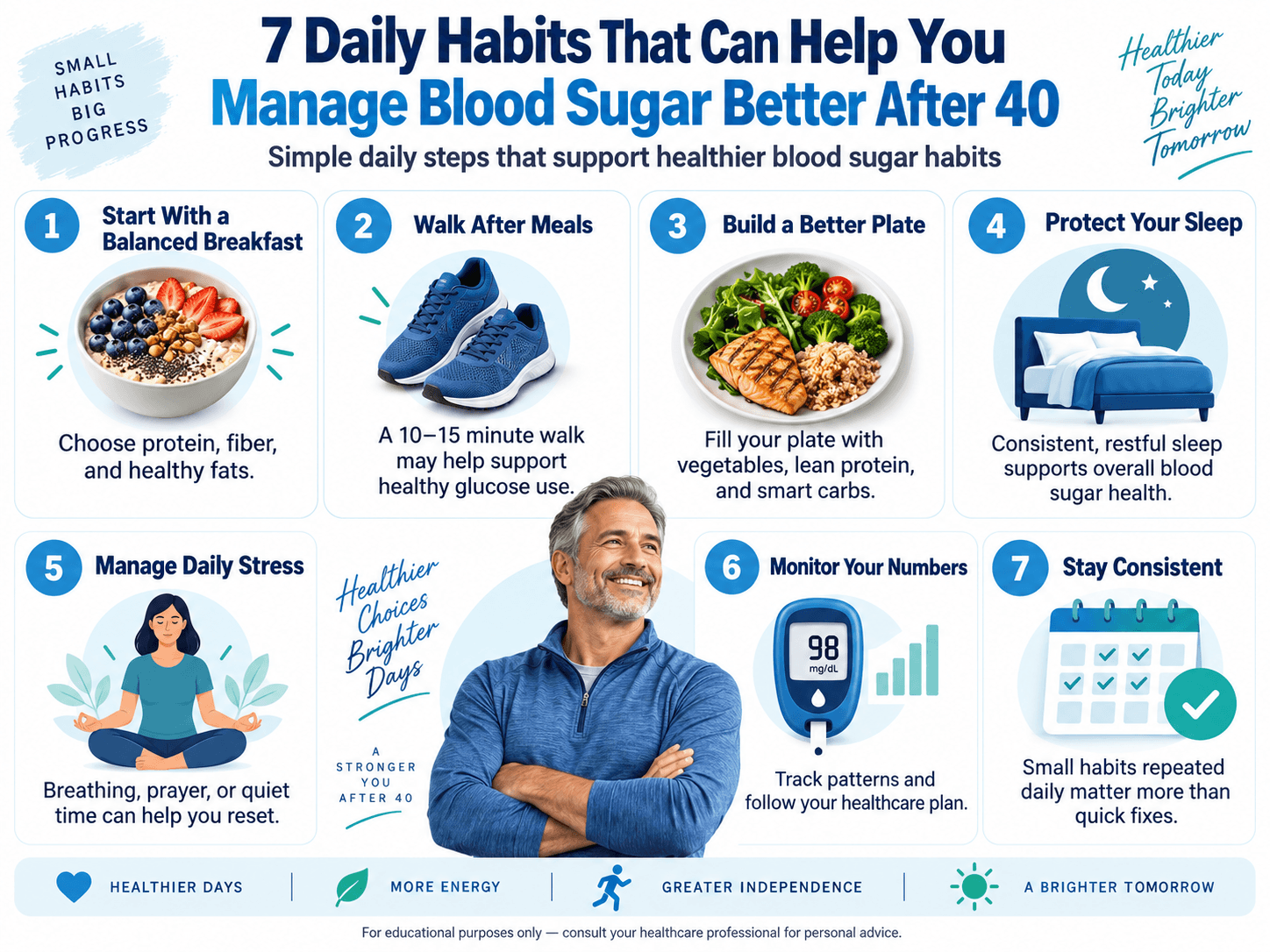
7 Daily Habits That Can Help You Manage Blood Sugar Better After 40
Small changes in your daily routine may make a bigger difference than you think
Many people notice changes after turning 40. Energy levels may not feel the same, weight may become harder to manage, and recovery after busy days may take longer. But one change often happens quietly in the background: the body may become less efficient at managing blood sugar.
For some adults, this happens gradually through insulin resistance, where the body’s cells do not respond as effectively to insulin. Over time, this can contribute to higher blood sugar levels and increase the risk of type 2 diabetes.
The surprising part is that managing blood sugar is not always about making dramatic lifestyle changes overnight. The habits you repeat every day — what you eat in the morning, how much you move, how well you sleep, and how you handle stress — can influence how your body responds to glucose.
For adults over 40, small consistent actions may become powerful tools for supporting better blood sugar control.
Quick Takeaway: Daily Habits That Support Better Blood Sugar Management
Simple habits that may help support healthier blood sugar levels include:
- Starting the day with a balanced breakfast
- Moving your body regularly, especially after meals
- Choosing meals with more fiber and protein
- Prioritizing quality sleep
- Managing daily stress
- Monitoring blood sugar patterns when recommended
- Staying consistent instead of chasing quick fixes
1. Start Your Morning With a Blood Sugar-Friendly Routine
The first few hours of your day can influence many choices that follow.
A morning routine built around balanced nutrition and movement may help your body handle glucose more effectively throughout the day.
Many traditional breakfast choices — such as sugary cereals, sweetened drinks, pastries, or highly refined carbohydrates — can cause blood sugar to rise quickly. For some people, repeated blood sugar spikes may make glucose management more challenging.
A more balanced approach may include:
- Protein-rich foods
- Fiber-containing carbohydrates
- Healthy fats
- Adequate hydration
Examples may include eggs with vegetables, plain yogurt with nuts and berries, or other balanced meals based on your individual health needs.
The goal is not perfection. The goal is creating a routine your body can respond to consistently.
2. Take a Short Walk After Meals
One of the simplest habits that many adults overlook is movement after eating.
After a meal, blood glucose naturally rises as food is digested. Physical activity helps muscles use glucose for energy, which may support better blood sugar regulation.
You do not necessarily need intense workouts to create a healthier routine.
Simple options include:
- A 10–20 minute walk after meals
- Light household activities
- Gentle stretching
- Regular movement breaks during the day
For many adults over 40, the biggest challenge is not knowing exercise is beneficial — it is finding a realistic routine that can continue long term.
A short daily walk that becomes a habit may be more valuable than an intense workout plan that lasts only a few weeks.
3. Build Your Plate Differently
Many people think managing diabetes means completely removing their favorite foods.
That approach often becomes difficult to maintain.
Instead, focus on how your plate is structured.
A balanced meal often includes:
Protein
Protein can help create more satisfying meals and may reduce rapid hunger after eating.
Examples:
- Fish
- Eggs
- Poultry
- Beans
- Greek yogurt
Fiber-rich foods
Fiber slows digestion and can help support steadier blood sugar responses.
Examples:
- Vegetables
- Beans
- Lentils
- Whole grains
Healthy fats
Sources such as nuts, seeds, and healthy oils can be included as part of a balanced eating pattern.
The goal is not a “perfect diabetes diet.” It is creating meals that support your body’s needs.
4. Protect Your Sleep Like Your Health Depends on It
Because it does.
Many adults focus on food and exercise but underestimate the role of sleep in blood sugar management.
Poor sleep can affect hormones involved in:
- Hunger regulation
- Stress response
- Insulin sensitivity
A person who sleeps poorly may also experience:
- Increased cravings
- Lower energy for physical activity
- Difficulty maintaining healthy routines
Helpful sleep habits may include:
- Keeping a consistent bedtime
- Reducing screen exposure before sleep
- Creating a relaxing nighttime routine
- Avoiding heavy meals close to bedtime
Better sleep is not just about feeling rested — it supports many systems involved in overall health.
5. Find Ways to Reduce Daily Stress
Stress is a normal part of life, especially for adults balancing work, family, and personal responsibilities.
However, ongoing stress can affect the body’s hormone balance.
During stressful periods, the body releases hormones that prepare it for action. These changes can influence blood glucose levels.
Stress management does not require complicated techniques.
Small practices may include:
- Deep breathing exercises
- Spending time outdoors
- Meditation or prayer
- Gentle movement
- Talking with supportive friends or family
The goal is not eliminating stress completely. It is helping your body recover from it.
6. Pay Attention to Your Blood Sugar Patterns
Numbers can provide valuable information.
For people monitoring diabetes or prediabetes, understanding patterns may help identify how different foods, activities, sleep habits, and medications affect blood glucose.
Instead of focusing on a single reading, look for patterns:
- Are morning levels consistently higher?
- Do certain meals cause larger increases?
- Does physical activity change your readings?
Blood sugar monitoring should always follow the guidance of your healthcare provider.
Your numbers are not just measurements — they are clues that can help you understand your body.
7. Focus on Consistency, Not Quick Fixes
One of the biggest mistakes people make after a diabetes diagnosis is searching for a fast solution.
Extreme diets, unrealistic exercise plans, and short-term challenges may be difficult to maintain.
Blood sugar management is usually built through repeated actions:
- Choosing healthier meals most days
- Staying physically active
- Taking medications as prescribed
- Attending medical appointments
- Maintaining healthy routines
A small improvement repeated every day can become a meaningful change over time.
Why Blood Sugar Management Becomes More Important After 40
Age is only one factor, but many adults experience changes that can affect glucose regulation, including:
- Reduced muscle mass
- Changes in metabolism
- Less physical activity
- Increased insulin resistance risk
- Changes in sleep patterns
This does not mean diabetes is unavoidable.
Understanding your risks and making informed choices can help you take a more proactive approach to your health.
FAQs
Can lifestyle changes lower blood sugar naturally?
Healthy lifestyle habits such as balanced nutrition, regular activity, weight management, and good sleep may support better blood sugar control. Individual results vary, and people with diabetes should continue following their healthcare provider’s recommendations.
What is the best daily habit for controlling blood sugar?
There is no single habit that works for everyone. A combination of balanced meals, regular movement, medication adherence when prescribed, and consistent routines often plays an important role.
Does walking after meals help blood sugar?
Post-meal walking may help the body use glucose more effectively. Even short periods of light activity can be a practical way to add movement into daily life.
Can poor sleep affect blood sugar?
Yes. Poor sleep quality may influence hormones involved in glucose regulation and appetite control.
Medical Disclaimer
This article is for educational purposes only and is not a substitute for professional medical advice, diagnosis, or treatment. People with diabetes or blood sugar concerns should consult a qualified healthcare professional before making significant changes to diet, exercise, or medication routines.
Final Thoughts
Managing blood sugar after 40 is not about making your life restrictive. It is about understanding your body and building habits that support your long-term health.
The most effective changes are often not dramatic ones. They are the simple actions you repeat:
A balanced breakfast.
A short walk.
A better night’s sleep.
A healthier plate.
A consistent routine.
Over time, these small decisions can become some of the most valuable investments in your health.