Prediabetes A1C Levels: What Your Numbers Mean
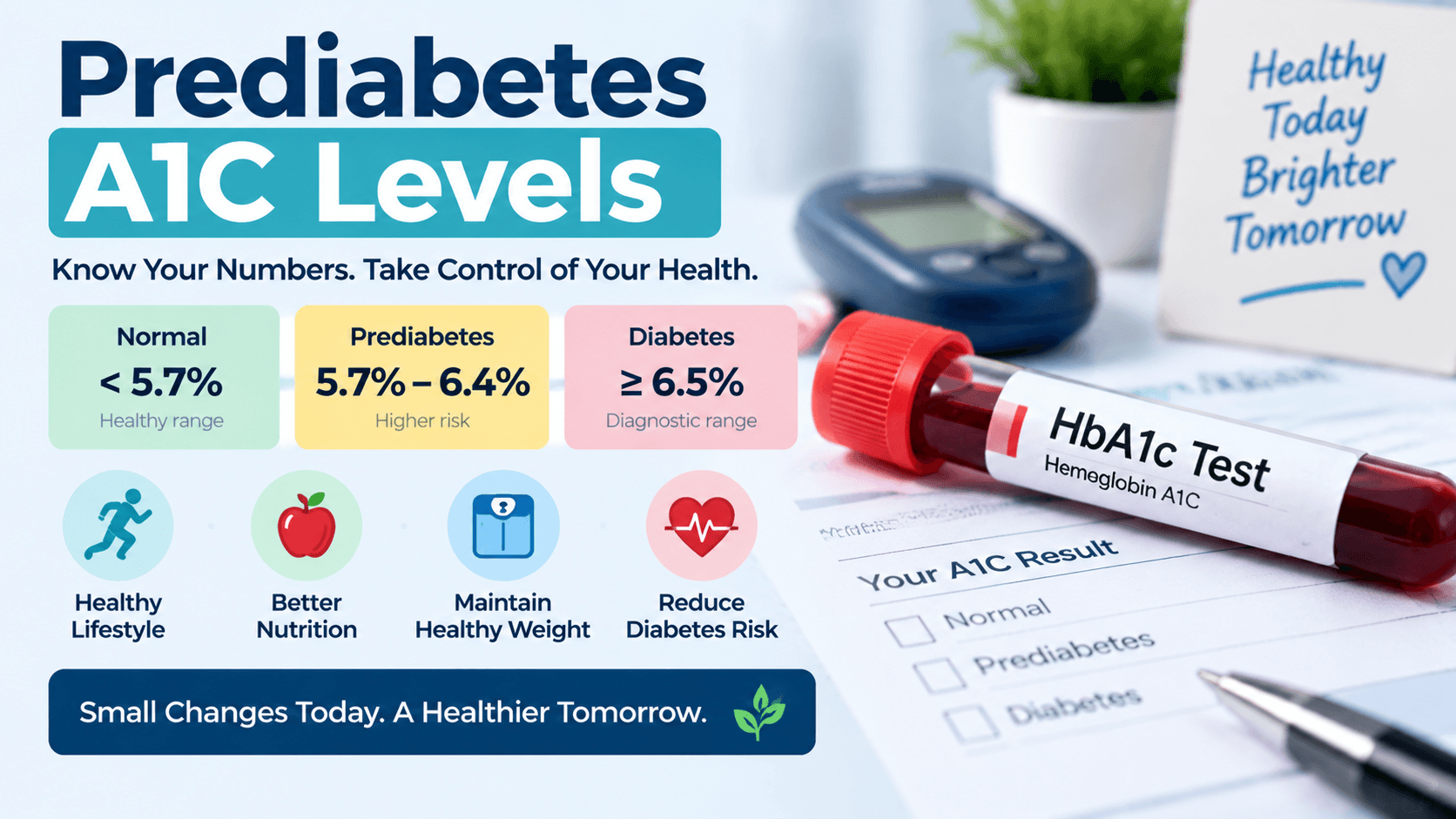
A prediabetes A1C level is between 5.7% and 6.4%. This means your average blood sugar is higher than normal but has not reached the level used to diagnose diabetes.
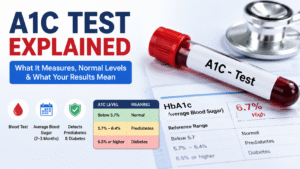
The A1C test, also known as HbA1c, shows your average blood glucose levels over the past two to three months. Healthcare providers use this test to identify prediabetes, monitor blood sugar changes, and estimate the risk of developing type 2 diabetes.
Knowing your A1C range can help you take early steps to improve your health and reduce future diabetes risk.
What A1C Level Means You Have Prediabetes?
An A1C result between 5.7% and 6.4% means you have prediabetes.
The American Diabetes Association (ADA) classifies A1C levels into three categories:
| A1C Result | Classification |
|---|---|
| Below 5.7% | Normal blood sugar range |
| 5.7%–6.4% | Prediabetes |
| 6.5% or higher | Diabetes |
A prediabetes result does not mean you have diabetes. It means your body is starting to have difficulty maintaining normal blood sugar levels.
How Does the A1C Test Work?
The A1C test measures how much glucose is attached to hemoglobin, a protein found in red blood cells.
Because red blood cells survive for about three months, the test provides an estimate of your average blood sugar during that time.
Unlike some glucose tests, an A1C test usually does not require fasting.
Doctors use A1C testing to:
- Detect prediabetes
- Diagnose diabetes
- Monitor blood sugar control
- Assess diabetes risk
Why Does Prediabetes Cause Higher A1C Levels?
Prediabetes usually develops when the body becomes less sensitive to insulin, a condition called insulin resistance.
Insulin helps move glucose from the bloodstream into cells for energy. When cells respond poorly to insulin, glucose stays in the blood longer, causing A1C levels to rise.
Common factors linked with higher A1C levels include:
- Excess body weight
- Limited physical activity
- Family history of diabetes
- Unhealthy eating patterns
- High blood pressure
- History of gestational diabetes
Can Prediabetes A1C Levels Return to Normal?
Yes, prediabetes A1C levels can improve and return to the normal range with healthy lifestyle changes.
Many people reduce their diabetes risk by focusing on:
Regular Physical Activity
Exercise helps your body use insulin more effectively and improves blood glucose control.
Examples include:
- Walking
- Cycling
- Swimming
- Resistance training
Healthy Eating Habits
A balanced diet can help maintain stable blood sugar levels.
Helpful choices include:
- Vegetables
- High-fiber foods
- Lean proteins
- Whole grains
- Healthy fats
Limiting sugary drinks and highly processed foods may also support better glucose control.
Maintaining a Healthy Weight
For people who are overweight, losing even a modest amount of weight can improve insulin sensitivity and lower diabetes risk.
What Is the Difference Between Prediabetes and Diabetes A1C Levels?
The main difference between prediabetes and diabetes is how high blood sugar levels have become.
| Category | Prediabetes | Diabetes |
|---|---|---|
| A1C range | 5.7%–6.4% | 6.5% or higher |
| Blood sugar status | Higher than normal | Consistently elevated |
| Symptoms | Often no symptoms | May include thirst, frequent urination, fatigue, and weight changes |
| Risk level | Increased risk of type 2 diabetes | Diagnosed diabetes condition |
Prediabetes is an early warning stage where lifestyle changes can make a significant difference.
When Should You Check Your A1C Level?
You should discuss A1C testing with a healthcare provider if you:
- Have diabetes risk factors
- Have symptoms of high blood sugar
- Have a family history of diabetes
- Have previously had elevated glucose levels
People diagnosed with prediabetes may need regular monitoring to track whether their A1C improves or increases.
Key Takeaway: Understanding Prediabetes A1C Levels
- Prediabetes A1C levels range from 5.7% to 6.4%.
- An A1C below 5.7% is considered normal.
- An A1C of 6.5% or higher may indicate diabetes.
- A1C measures average blood sugar over the last two to three months.
- Lifestyle changes can help lower A1C and reduce the risk of type 2 diabetes.
FAQs
Is an A1C of 5.7 considered prediabetes?
Yes. An A1C of 5.7% is the lowest value in the prediabetes range.
What A1C level is considered diabetes?
An A1C level of 6.5% or higher is considered within the diabetes range.
Can prediabetes be reversed?
Yes. Many people improve their A1C through exercise, healthy eating, weight management, and regular monitoring.
How long does it take to lower A1C?
A1C reflects about three months of blood sugar levels, so changes usually become noticeable after several weeks to months.
Does everyone with prediabetes develop diabetes?
No. Prediabetes increases risk, but many people prevent or delay diabetes through lifestyle improvements.
Is A1C the only test for prediabetes?
No. Doctors may also use fasting blood glucose tests and oral glucose tolerance tests to evaluate blood sugar levels.