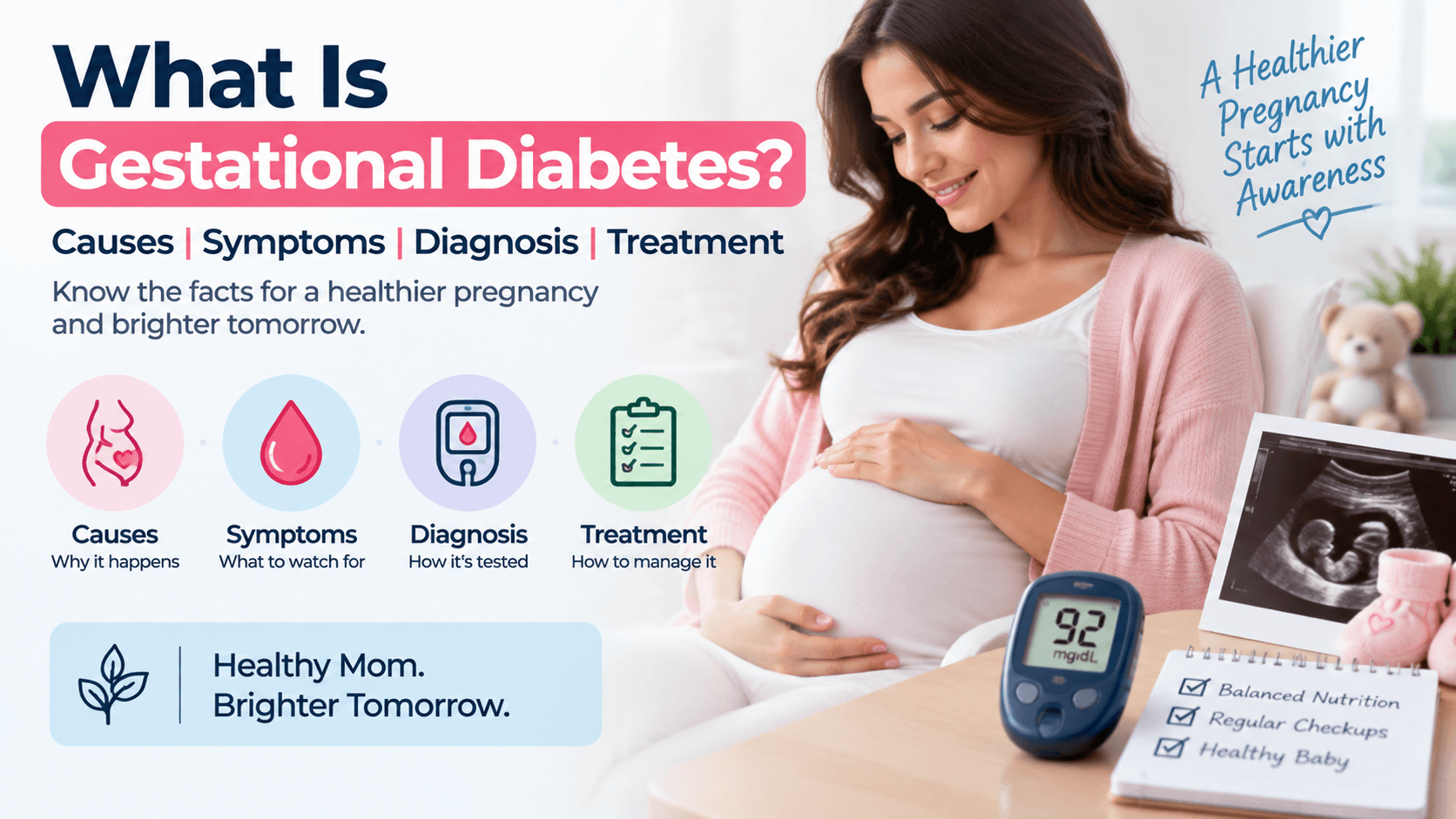
What Is Gestational Diabetes? Causes, Symptoms, Diagnosis, and Treatment
Gestational diabetes is a type of diabetes that develops during pregnancy when the body cannot control blood sugar levels properly. It happens when pregnancy hormones make the body more resistant to insulin, and the pancreas cannot produce enough insulin to keep glucose levels normal.
Many women with gestational diabetes do not notice any symptoms, which is why routine pregnancy screening is important. When diagnosed early and managed correctly, most women can have healthy pregnancies and healthy babies.
In this guide, you will learn what gestational diabetes is, what causes it, its symptoms, risk factors, diagnosis process, effects on pregnancy, and treatment options.
What Is Gestational Diabetes?
Gestational diabetes mellitus (GDM) is high blood sugar that develops during pregnancy in women who did not have diabetes before pregnancy.
During pregnancy, the placenta produces hormones that help the baby grow. However, these hormones can reduce how effectively insulin works in the mother’s body. This condition is called insulin resistance.
Normally, the pancreas responds by producing more insulin. But if the body cannot produce enough insulin to overcome this resistance, blood glucose levels rise and gestational diabetes develops.
In simple terms:
Pregnancy hormones → Increased insulin resistance → Higher blood sugar → Gestational diabetes
Why Does Gestational Diabetes Happen During Pregnancy?
Gestational diabetes happens mainly because pregnancy changes the way the body uses insulin.
The placenta plays an important role in this process. It produces hormones that support fetal development but can also make the body’s cells less sensitive to insulin.
When insulin becomes less effective:
- Glucose remains in the bloodstream instead of entering cells
- Blood sugar levels increase
- The pancreas has to work harder to produce more insulin
If the pancreas cannot meet this increased demand, gestational diabetes occurs.
What Causes Gestational Diabetes?
There is no single cause of gestational diabetes. It develops from a combination of pregnancy-related hormonal changes, genetics, and individual health factors.
How Do Pregnancy Hormones Cause Gestational Diabetes?
Pregnancy hormones naturally increase insulin resistance to ensure enough glucose is available for the growing baby.
However, excessive insulin resistance can cause problems.
The process works like this:
- The placenta releases pregnancy hormones
- These hormones reduce insulin sensitivity
- The body needs more insulin to control blood sugar
- If insulin production is not enough, glucose levels rise
Who Is at Risk of Developing Gestational Diabetes?
Certain factors can increase the chance of developing gestational diabetes.
Common risk factors include:
- Being overweight or having obesity before pregnancy
- Having a family history of type 2 diabetes
- Previous gestational diabetes
- Polycystic ovary syndrome (PCOS)
- Previous delivery of a baby with a high birth weight
- Older maternal age
- A history of abnormal blood glucose levels
However, gestational diabetes can occur in women without any obvious risk factors.
What Are the Symptoms of Gestational Diabetes?
Most women with gestational diabetes do not have noticeable symptoms. The condition is often discovered during routine pregnancy blood sugar testing.
When symptoms appear, they may include:
- Increased thirst
- Frequent urination
- Unusual tiredness
- Blurred vision
- Increased hunger
Some symptoms can look similar to normal pregnancy changes, which is why testing is more reliable than symptoms alone.
Can You Have Gestational Diabetes Without Symptoms?
Yes, gestational diabetes can develop without any warning signs.
Many pregnant women feel completely healthy while their blood glucose levels are higher than normal.
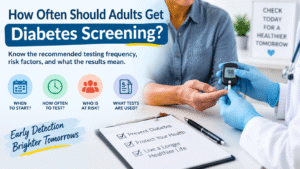
This is why healthcare providers usually recommend screening between 24 and 28 weeks of pregnancy.
Women with higher risk factors may be tested earlier.
How Is Gestational Diabetes Diagnosed?
Gestational diabetes is diagnosed through blood glucose tests performed during pregnancy.
Doctors usually use two main tests:
Glucose Challenge Test
This is a screening test where a pregnant woman drinks a glucose solution and blood sugar is measured afterward.
If the result is higher than expected, additional testing may be needed.
Oral Glucose Tolerance Test (OGTT)
The OGTT confirms gestational diabetes by measuring how the body processes glucose over several hours.
The test usually involves:
- Fasting before the test
- Drinking a glucose solution
- Measuring blood sugar levels at specific times
Doctors use the results to determine whether glucose levels meet diagnostic criteria.
How Does Gestational Diabetes Affect the Mother?
Gestational diabetes can increase certain pregnancy risks if blood sugar is not well controlled.
Possible effects on the mother include:
- High blood pressure during pregnancy
- Preeclampsia
- Higher chance of cesarean delivery
- Increased risk of developing type 2 diabetes later in life
Women who have experienced gestational diabetes should continue regular diabetes screening after pregnancy.
How Does Gestational Diabetes Affect the Baby?
Gestational diabetes can affect the baby because glucose from the mother’s blood crosses the placenta.
Higher maternal blood glucose can cause the baby to produce more insulin, which may affect growth.
Possible effects include:
- Larger birth size
- Difficult delivery
- Low blood sugar after birth
- Breathing difficulties
- Higher risk of metabolic problems later in life
Proper blood sugar management reduces these risks.
How Is Gestational Diabetes Treated?
Gestational diabetes treatment focuses on keeping blood glucose levels within a healthy range.
The main treatment approaches include:
Healthy Eating Plan
A balanced pregnancy diet can help control blood sugar.
Important strategies include:
- Eating regular meals
- Choosing high-fiber foods
- Managing carbohydrate portions
- Avoiding excessive sugary foods and drinks
Physical Activity
Safe physical activity during pregnancy can improve insulin sensitivity and help the body use glucose more effectively.
Exercise plans should always follow advice from a healthcare professional.
Blood Sugar Monitoring
Regular glucose checks help track how well treatment is working.
Monitoring allows healthcare providers to adjust diet, activity, or medication when needed.
Insulin Treatment
Some women need insulin if lifestyle changes do not control blood sugar levels.
Insulin helps move glucose from the bloodstream into cells and is considered safe when prescribed during pregnancy.
Does Gestational Diabetes Go Away After Pregnancy?
Gestational diabetes often improves after delivery because pregnancy hormone levels decrease.
However, having gestational diabetes increases the mother’s risk of developing type 2 diabetes in the future.
After pregnancy, doctors usually recommend:
- Follow-up blood sugar testing
- Maintaining a healthy weight
- Regular physical activity
- Healthy eating habits
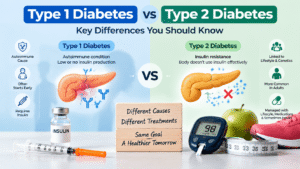
Gestational Diabetes vs Type 1 and Type 2 Diabetes
| Feature | Gestational Diabetes | Type 1 Diabetes | Type 2 Diabetes |
|---|---|---|---|
| When it occurs | During pregnancy | Usually childhood or young adulthood, but possible at any age | Usually adulthood |
| Main cause | Pregnancy-related insulin resistance | Autoimmune destruction of insulin-producing cells | Insulin resistance and reduced insulin production |
| Usually disappears after pregnancy | Often yes | No | No |
| Main treatment | Lifestyle changes, monitoring, insulin if needed | Insulin therapy | Lifestyle changes, medication, sometimes insulin |
Common Myths About Gestational Diabetes
Myth: Eating sugar directly causes gestational diabetes
Fact: Gestational diabetes is mainly caused by pregnancy-related insulin resistance and the body’s inability to produce enough insulin.
Myth: Only overweight women develop gestational diabetes
Fact: Weight can increase risk, but gestational diabetes can occur in women of different body sizes.
Myth: Gestational diabetes always disappears permanently
Fact: Blood sugar often returns to normal after delivery, but future diabetes risk remains higher.
Key Takeaway
Gestational diabetes is a pregnancy-related condition caused by increased insulin resistance and difficulty maintaining normal blood sugar levels. Most women do not experience symptoms, so pregnancy screening is essential.
Early diagnosis, healthy eating, physical activity, glucose monitoring, and medical treatment when needed can help protect both mother and baby.
FAQs
What is the main cause of gestational diabetes?
The main cause is increased insulin resistance caused by pregnancy hormones combined with the body’s inability to produce enough insulin.
What are the first symptoms of gestational diabetes?
Most women have no symptoms, but possible signs include increased thirst, frequent urination, fatigue, and blurred vision.
When is gestational diabetes tested?
Most pregnant women are tested between 24 and 28 weeks of pregnancy.
Can gestational diabetes harm the baby?
Yes, uncontrolled gestational diabetes can increase risks such as larger birth size, low blood sugar after birth, and delivery complications.
Does gestational diabetes go away after birth?
Blood sugar often returns to normal after delivery, but women have a higher risk of developing type 2 diabetes later.
Can gestational diabetes be prevented?
Risk cannot always be eliminated, but maintaining a healthy weight, regular activity, and balanced nutrition can reduce risk.