A1C Test in Kingman, AZ: What Your A1C Results Mean and When to Get Help
The A1C test is a blood test that measures a person’s average blood glucose (blood sugar) level over the previous 2 to 3 months. Healthcare professionals use the A1C test to help diagnose prediabetes and diabetes and to monitor how well diabetes is being managed.
Unlike a regular blood glucose test that shows blood sugar at one specific moment, the A1C test provides a longer-term picture of glucose control. The result is reported as a percentage, such as 5.6%, 6.5%, or 7.0%.
Understanding your A1C results can help you recognize diabetes risk, understand treatment goals, and make informed decisions about your health.
For adults living in Kingman, AZ, understanding your A1C level can help identify prediabetes, diabetes risk, and the need for ongoing blood sugar management.
Northern Arizona Medical Group provides primary care services that help patients understand their lab results, monitor chronic conditions, and develop personalized diabetes care plans.
What Is an A1C Test and What Does It Measure?
The A1C test measures the percentage of hemoglobin in red blood cells that has glucose attached to it. This process is called glycation, and the result reflects average blood glucose exposure over the lifespan of red blood cells.
The A1C test is also known as:
- Hemoglobin A1C test
- HbA1c test
- Glycated hemoglobin test
The higher the amount of glucose circulating in the blood, the more glucose attaches to hemoglobin, resulting in a higher A1C percentage.
How Does the A1C Test Show Average Blood Sugar Levels?
The A1C test measures glycated hemoglobin, which forms when glucose binds naturally to hemoglobin inside red blood cells.
Red blood cells usually live for about three months, which allows A1C to reflect average blood glucose levels over that period.
For example:
- A fasting glucose test shows your blood sugar at one specific time.
- An A1C test shows your overall glucose exposure over recent months.
A1C results are reported as a percentage:
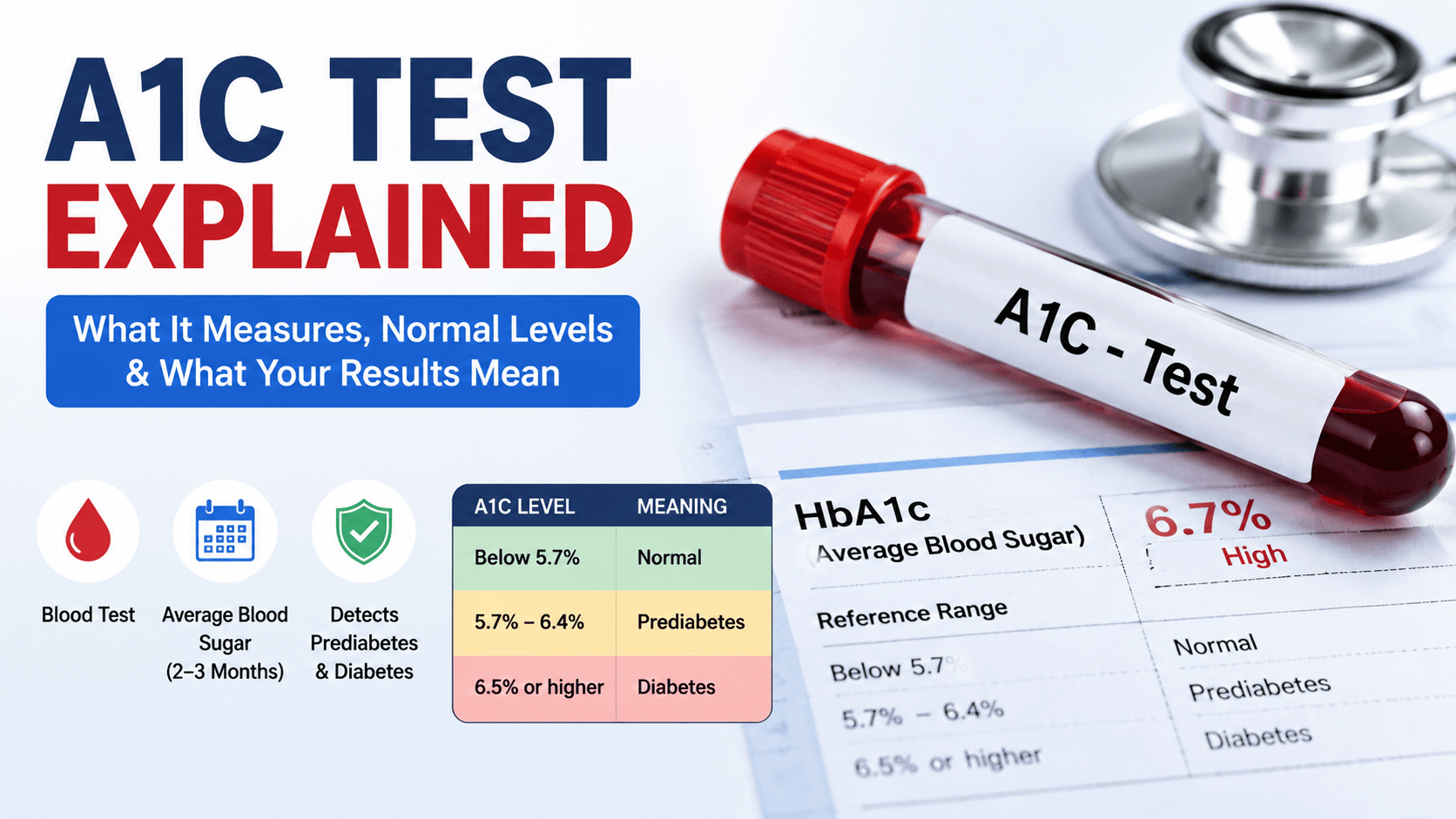
| A1C Percentage | General Interpretation |
|---|---|
| Below 5.7% | Normal range |
| 5.7%–6.4% | Prediabetes range |
| 6.5% or higher | Diabetes range |
Why Do Doctors Use the A1C Test?
Healthcare providers use A1C testing because it provides information about long-term blood sugar control without usually requiring fasting.
Doctors commonly use A1C testing for:
- Diabetes screening
- Prediabetes detection
- Diabetes diagnosis
- Monitoring diabetes treatment effectiveness
A1C results help providers understand whether blood sugar levels are improving, remaining stable, or becoming more difficult to manage.
A1C Testing in Kingman, AZ: When Should You Schedule a Visit?
Many people discover an abnormal A1C result during routine blood work and are unsure what the number means.
You should consider discussing your A1C results with a healthcare provider if:
- Your A1C is 5.7% or higher
- You have symptoms of high blood sugar
- Diabetes runs in your family
- You have high blood pressure or cholesterol problems
- You have concerns about diabetes prevention
- You need help managing an existing diabetes diagnosis
A healthcare provider can review your results, explain your risk level, and recommend appropriate next steps.
How Is A1C Used to Diagnose Prediabetes and Diabetes?
The A1C test helps identify whether blood glucose levels have been consistently higher than normal.
Diagnostic categories include:
| Condition | A1C Result |
|---|---|
| Normal | Less than 5.7% |
| Prediabetes | 5.7% to 6.4% |
| Diabetes | 6.5% or higher |
A diabetes diagnosis may require confirmation with repeat testing or another accepted diabetes test depending on the situation.
Healthcare providers may also consider:
- Symptoms
- Medical history
- Risk factors
- Additional glucose tests
What Do A1C Test Results Mean?
A1C results show the percentage of hemoglobin molecules with attached glucose.
A higher percentage generally indicates higher average blood glucose levels over recent months.
What Is a Normal A1C Level?
A normal A1C level is generally below 5.7%.
This suggests average blood glucose levels are within the expected range.
What A1C Level Indicates Prediabetes?
An A1C between 5.7% and 6.4% is generally considered the prediabetes range.
Prediabetes means blood glucose levels are higher than normal but not yet in the diabetes range.
Steps that may help reduce diabetes risk include:
- Increasing physical activity
- Improving nutrition
- Managing weight when appropriate
- Regular health monitoring
What A1C Level Indicates Diabetes?
An A1C level of 6.5% or higher falls within the diabetes diagnostic range.
Your healthcare provider may use:
- Repeat A1C testing
- Fasting glucose testing
- Oral glucose tolerance testing
- Symptoms and medical history
to determine the appropriate diagnosis.
What Happens During an A1C Review Appointment?
Many patients are unsure what happens after receiving an abnormal A1C result.
During an A1C review visit, your healthcare provider may:
- Review your A1C number and explain what it means
- Discuss diabetes risk factors
- Review medications if needed
- Discuss nutrition and physical activity
- Recommend additional testing when appropriate
- Create a personalized blood sugar management plan
Understanding your results is the first step toward making informed health decisions.
Why A1C Monitoring Matters for Older Adults
A1C monitoring is especially important for many older adults because diabetes risk can increase with age.
Regular monitoring can help healthcare providers:
- Identify blood sugar changes early
- Adjust treatment plans
- Reduce diabetes complication risks
- Support long-term health
For Medicare-age adults, regular preventive care and chronic condition management can play an important role in maintaining overall wellness.
How Do You Convert A1C to Average Blood Sugar?
A1C can be converted into an estimated average glucose (eAG) value.
Approximate relationship:
| A1C | Estimated Average Glucose |
|---|---|
| 6% | About 126 mg/dL |
| 7% | About 154 mg/dL |
| 8% | About 183 mg/dL |
| 9% | About 212 mg/dL |
This conversion helps patients better understand how A1C relates to daily blood glucose readings.
What Is the Difference Between A1C and Other Diabetes Tests?
Different diabetes tests measure different aspects of blood sugar.
| Test | What It Measures | Requires Fasting? |
|---|---|---|
| A1C test | Average glucose over 2–3 months | Usually no |
| Fasting glucose | Blood sugar after fasting | Yes |
| Oral glucose tolerance test | How the body processes glucose | Yes |
| Random glucose test | Blood sugar at a specific time | No |
Your healthcare provider may choose one or more tests depending on your health situation.
What Factors Can Affect A1C Accuracy?
Although A1C is a valuable test, some conditions can affect results.
Factors that may influence A1C include:
- Certain types of anemia
- Hemoglobin variants
- Kidney disease
- Pregnancy
- Conditions affecting red blood cell lifespan
If your A1C does not match your glucose readings or symptoms, your healthcare provider may recommend additional evaluation.
How Can You Lower Your A1C Level?
Lowering A1C usually requires improving blood glucose control over time.
Helpful strategies include:
Nutrition Improvements
- Choosing high-fiber foods
- Reducing excessive refined carbohydrates
- Eating balanced meals
Physical Activity
Regular movement helps improve insulin sensitivity.
Examples:
- Walking
- Cycling
- Swimming
- Strength training
Weight Management
For people who are overweight, medically appropriate weight loss may improve blood glucose control.
When Should You Talk With a Healthcare Professional?
Discuss your A1C results with a healthcare provider if:
- Your A1C is outside the normal range
- You have symptoms of high blood sugar
- Your results do not match your glucose readings
- You need help creating a diabetes management plan
Early evaluation can help prevent complications and support better long-term health.
Key Takeaways About the A1C Test
- The A1C test measures average blood glucose exposure over about 2–3 months.
- A1C helps diagnose and monitor diabetes.
- Below 5.7% is generally considered normal.
- 5.7%–6.4% suggests prediabetes.
- 6.5% or higher falls within the diabetes diagnostic range.
- Fasting is usually not required.
- Healthcare providers can help interpret results and create personalized care plans.
Frequently Asked Questions About A1C Testing
What does an A1C test measure?
An A1C test measures average blood sugar levels over approximately the previous 2–3 months.
Is an A1C test the same as a blood sugar test?
No. A1C measures long-term average glucose exposure, while regular glucose tests measure blood sugar at a specific moment.
What A1C level is considered diabetes?
An A1C level of 6.5% or higher is within the diabetes diagnostic range.
Do you need to fast before an A1C test?
No. Most people do not need to fast before an A1C test.
How often should A1C be checked?
Testing frequency depends on your health status, diabetes diagnosis, and treatment goals.
Conclusion: Understand Your A1C Results and Take Control of Your Health
Your A1C number provides important information about your blood sugar health and future diabetes risk.
Whether your result shows normal blood sugar, prediabetes, or diabetes, understanding what your number means allows you to make informed decisions.
If you live in Kingman, AZ, and have questions about your A1C results, diabetes risk, or blood sugar management, schedule an appointment with Northern Arizona Medical Group.
Our primary care team can help you understand your numbers and develop a personalized plan to support better long-term health.