
May 20, 2026

Feeling Fine After 40 Your Blood Pressure May Tell a Different Story

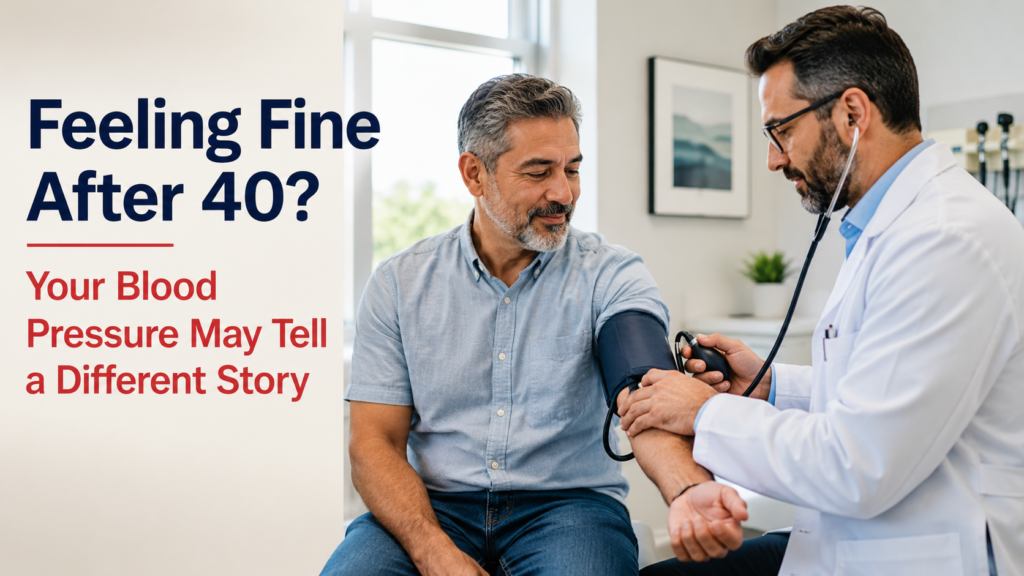
Feeling Fine After 40? Your Blood Pressure May Tell a Different Story

High Blood Pressure With No Symptoms: Why Feeling Fine After 40 Does Not Always Mean Your Blood Pressure Is Healthy Feeling Fine Does Not Always Mean Your Blood Pressure Is Healthy You may feel normal, stay active, go to work, take care of your family, and still have high blood pressure with no symptoms. That is what makes hypertension so easy to miss, especially after age 40. There may be no headache, no dizziness, no chest discomfort, and no obvious warning sign. Why Silent High Blood Pressure Can Still Be Risky But inside the body, silent high blood pressure can quietly place stress on the heart, blood vessels, brain, kidneys, and eyes. The Centers for Disease Control and Prevention notes that high blood pressure is usually defined as blood pressure consistently at or above 130/80 mm Hg, and it often has no signs or symptoms. Why Adults Over 40 in Kingman, AZ Should Pay Attention For adults in Kingman, AZ, especially those with diabetes, obesity, kidney disease, cholesterol problems, heart risk, or Medicare wellness needs, regular blood pressure checks are not just routine. They are one of the simplest ways to detect a problem before it becomes more serious. Blood Pressure Care at Northern Arizona Medical Group At Northern Arizona Medical Group (NAMG) in Kingman, AZ, patients can receive blood pressure evaluation, primary care support, chronic care management, in-house lab testing, and remote patient monitoring when appropriate. NAMG states that it is accepting new patients and offers same-day appointment availability. Why High Blood Pressure Can Be Dangerous Even Without Symptoms Many people expect high blood pressure to “feel” like something. They may wait for symptoms such as headaches, flushing, dizziness, or chest pressure before calling a doctor. The problem is that high blood pressure often does not work that way. The American Heart Association explains that high blood pressure is often called the “silent killer” because there are usually no signs or symptoms, and it needs to be diagnosed in a healthcare setting. That means a person may have hypertension without symptoms for months or years. During that time, the pressure inside the arteries may contribute to long-term damage. High blood pressure can: Make the heart work harder Damage to the arteries over time Increase heart disease risk Increase stroke risk Affects kidney function Contribute to vision problems Worsening risk in people with diabetes or chronic kidney disease This does not mean every high reading is an emergency. It does mean that repeated high readings should not be ignored. Why Adults Over 40 Should Pay Closer Attention Blood pressure often increases with age. The National Heart, Lung, and Blood Institute explains that blood vessels naturally thicken and stiffen over time, which can raise the risk of high blood pressure. After 40, it becomes more important to know your numbers, especially if you have: A family history of hypertension Diabetes or prediabetes High cholesterol Obesity or weight gain Chronic kidney disease Sleep apnea Smoking history Heart disease risk High stress A diet high in sodium Low physical activity For seniors, high blood pressure can also become more complicated because other health conditions, medications, kidney function, and heart health may all need to be considered together. That is why many patients benefit from working with a primary care doctor rather than only checking their blood pressure at home or at a pharmacy once in a while. “I Feel Fine” Does Not Always Mean Your Blood Pressure Is Fine Feeling fine can be reassuring, but it is not a reliable indicator of blood pressure. A person can have hypertension without symptoms and still have elevated numbers. The only way to know is to measure blood pressure correctly and review repeated readings with a healthcare provider. This is especially important for people who say: “I only check my blood pressure when I feel bad.” “I do not have headaches, so I think I am okay.” “My blood pressure was high once, but I felt normal.” “I take medicine sometimes, but not every day.” “I have diabetes, but I do not check my blood pressure often.” If this sounds familiar, it may be time to schedule a blood pressure check in Kingman, AZ. How to Know If You Have High Blood Pressure Start With an Accurate Blood Pressure Reading A blood pressure reading has two numbers: Systolic pressure: the top number Diastolic pressure: the bottom number The American Heart Association lists these general blood pressure categories: Category Systolic Diastolic Normal Less than 120 Less than 80 Elevated 120–129 Less than 80 Stage 1 hypertension 130–139 80–89 Stage 2 hypertension 140 or higher 90 or higher Severe hypertension Higher than 180 and/or higher than 120 These numbers should be interpreted by a healthcare professional, especially if you have diabetes, kidney disease, heart disease, or take multiple medications. Check More Than Once One high reading does not always mean you have chronic hypertension. Blood pressure can rise due to pain, stress, caffeine, exercise, poor sleep, medication effects, or even anxiety during a clinic visit. However, repeated high readings should be reviewed. A primary care provider may recommend: In-office blood pressure checks Home blood pressure logs Medication review Lab testing Kidney function testing Cholesterol testing Diabetes screening or monitoring Heart risk assessment Remote patient monitoring when appropriate How to Check Blood Pressure Correctly at Home Home readings can be helpful, but only if they are done correctly. The CDC recommends steps such as avoiding food or drink for 30 minutes before checking, emptying your bladder, sitting with back supported for at least 5 minutes, keeping your feet flat on the floor, resting your arm at chest height, and placing the cuff on bare skin. For better results: Use a properly sized cuff Sit quietly before measuring Do not talk during the reading Take readings at the same time each day if advised Write down your numbers Bring your log to your appointment Do not change or stop blood pressure medication without talking with your healthcare provider. High

Feeling Fine After 40? Your Blood Pressure May Tell a Different Story Read More »

Senior couple looking at a home blood pressure monitor with concern.

Silent High Blood Pressure Warning Adults Ignore

The Silent Blood Pressure Warning Many Adults Ignore You can feel normal, go about your day, eat breakfast, drive to work, spend time with family, and still have blood pressure that is quietly putting stress on your body. That is what makes high blood pressure so easy to ignore. Many adults expect a warning sign. They think they will feel dizzy, weak, flushed, or suddenly unwell. But high blood pressure often does not work that way. It can stay elevated for months or years without obvious symptoms, while the heart, blood vessels, kidneys, brain, and eyes are still affected over time. The CDC states that high blood pressure is usually 130/80 mm Hg or higher and typically has no signs or symptoms. For adults and seniors in Kingman, AZ, this is one reason regular blood pressure checks matter. The silent warning is not always how you feel. Sometimes, the warning is the number itself. Why High Blood Pressure Is Often Missed High blood pressure is sometimes called “silent” because many people do not feel anything unusual. A person may look healthy, stay active, and still have repeated readings that are higher than recommended. This is especially important for adults over 40, seniors, and people with risk factors such as diabetes, obesity, kidney disease, high cholesterol, family history, smoking, stress, or heart disease risk. A single high reading does not always mean you have hypertension. Blood pressure can rise from stress, pain, caffeine, activity, poor sleep, or even nervousness at a clinic visit. But repeated high readings should not be brushed aside. The American Heart Association lists Stage 1 high blood pressure as 130–139 systolic or 80–89 diastolic, and Stage 2 as 140 or higher systolic or 90 or higher diastolic. Only a healthcare professional can confirm a diagnosis and help decide the right next step. The Warning Many Adults Ignore The warning many adults ignore is simple: Repeated high readings, even when they feel fine. It may happen at home. It may happen at a pharmacy machine. It may show up during a wellness visit. It may appear during an appointment for something unrelated. Many people tell themselves: “I was just stressed.”“I probably checked it wrong.”“I feel fine, so it cannot be serious.”“I will check again next month.” Sometimes those explanations may be true. But if the numbers keep coming back high, your body may be giving you a warning before symptoms appear. Why Silent High Blood Pressure Matters High blood pressure means your heart and blood vessels are working under more pressure than they should. Over time, that pressure can affect important organs. The heart may have to pump harder. Blood vessels can become strained. The kidneys, which help filter blood and manage fluid balance, may be affected. The brain and eyes can also be impacted by long-term uncontrolled blood pressure. CDC notes that high blood pressure can cause problems for the heart, brain, kidneys, and eyes. This does not mean every high reading is an emergency or that every patient needs the same treatment. It means repeated high readings deserve attention. For many patients, early care may include lifestyle guidance, medication review, monitoring, lab work, or treatment for related conditions such as diabetes, cholesterol problems, kidney disease, or weight concerns. Who Should Pay Closer Attention? Some people should be especially careful about ignoring blood pressure readings. Adults over 40 should make blood pressure checks part of routine health care. Mayo Clinic notes that people age 40 or older should ask for a blood pressure check every year, and people with risk factors may need more frequent checks. Seniors should also be careful because blood pressure patterns can change with age, medications, hydration, and other health conditions. Patients with diabetes, obesity, kidney disease, cholesterol concerns, or heart risk should pay close attention because these conditions often overlap. High blood pressure rarely exists alone. It is often part of a larger health picture. Home Readings Can Tell an Important Story A home blood pressure monitor can be helpful when used correctly. It can show whether your numbers are usually normal, sometimes elevated, or repeatedly high. But home readings are only useful when they are taken properly. Sitting quietly, using the right cuff size, placing the cuff correctly, and taking readings at consistent times can all affect accuracy. If you are tracking your blood pressure at home, write down your readings or save them in your device. Bring them to your healthcare provider. Patterns are often more helpful than one isolated number. Blood Pressure Care in Kingman, AZ Northern Arizona Medical Group in Kingman, AZ, provides care for patients who are concerned about blood pressure, chronic conditions, and long-term health risks. NAMG’s services include hypertension care, acute care, in-house lab services, chronic care support, and remote patient monitoring options. For some patients, care may begin with a routine blood pressure check. For others, it may include reviewing home readings, checking related risk factors, discussing medications, or creating a longer-term care plan. The goal is not to scare patients. The goal is to help them understand their numbers before silent blood pressure problems become harder to manage. A Simple Next Step If your blood pressure has been high more than once, or if you are unsure what your readings mean, it may be time to talk with a healthcare provider. You do not have to wait until you feel sick. Concerned about your blood pressure? Northern Arizona Medical Group in Kingman, AZ can help you review your readings, understand your risk factors, and decide the right next step for your health. Call 928-757-8440 or request an appointment through the NAMG contact page. FAQs Can high blood pressure happen without symptoms? Yes. Many people with high blood pressure feel completely normal. That is why regular checks are important, especially for adults over 40, seniors, and people with diabetes, kidney disease, obesity, or heart disease. Should I worry if one blood pressure reading is high? One high reading does not always mean you

Silent High Blood Pressure Warning Adults Ignore Read More »