
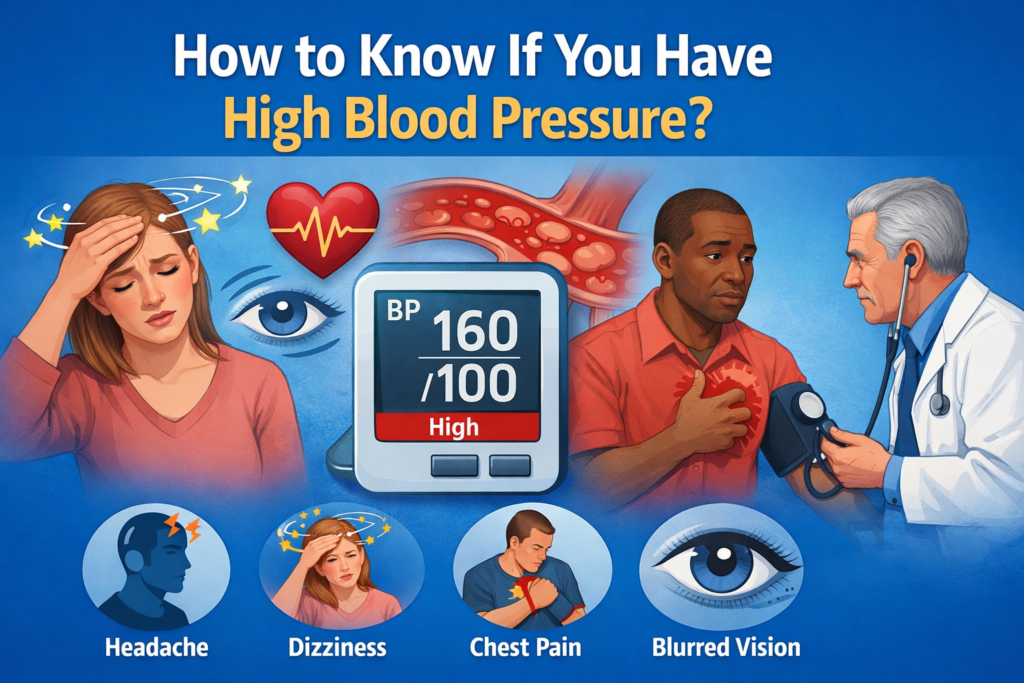
How to Know If You Have High Blood Pressure: Signs, Readings, and When to Get Help
How Do You Know If You Have High Blood Pressure? The most reliable way to know if you have high blood pressure is to measure it with a blood pressure cuff. High blood pressure usually does not cause clear symptoms, which is why many people have it without knowing. CDC says measuring blood pressure is the only way to know whether you have high blood pressure. This matters because high blood pressure can quietly damage the heart, brain, kidneys, and eyes over time. In the United States, hypertension prevalence in adults was 47.7% during August 2021 to August 2023, and the CDC notes that high blood pressure contributes to a large number of deaths. The good news is that high blood pressure can be found early. Once it is detected, many people can lower their risk with lifestyle changes, medicine, or both. What is the fastest, most reliable way to know if you have high blood pressure? The fastest, most reliable way to know if you may have high blood pressure is to check your blood pressure with a validated upper-arm monitor or have it checked by a clinician. A diagnosis is usually based on consistently elevated readings, not on how you feel. CDC defines high blood pressure as blood pressure that is consistently 130/80 mm Hg or higher. NHLBI says a healthy blood pressure for most adults is less than 120/80 mm Hg. What do systolic and diastolic mean? Systolic is the top number, and diastolic is the bottom number. The systolic number measures pressure when the heart beats, and the diastolic number measures pressure when the heart rests between beats. For example, in a reading of 138/86 mm Hg: 138 is the systolic pressure 86 is the diastolic pressure What blood pressure numbers count as high? The commonly used adult categories are: Category Systolic Diastolic Normal Less than 120 and less than 80 Elevated 120 to 129 and less than 80 Stage 1 hypertension 130 to 139 or 80 to 89 Stage 2 hypertension 140 or higher or 90 or higher Severe hypertension Higher than 180 and/or higher than 120 A single reading can show where your blood pressure falls at that moment, but only a clinician can confirm a diagnosis of hypertension. Can you have high blood pressure without symptoms? Yes. Most people with high blood pressure have no warning signs or symptoms. That is why hypertension is often called a “silent” condition. This is the most important thing to understand: you cannot rely on headaches, dizziness, or “feeling fine” to rule high blood pressure in or out. Even when blood pressure has been high for a long time, a person may still feel normal. Because symptoms are unreliable, regular screening matters. The USPSTF recommends screening adults 18 years or older for hypertension. What symptoms can happen when blood pressure is dangerously high? Dangerously high blood pressure may cause symptoms, but routine hypertension often does not. Symptoms become more concerning when blood pressure is very high, especially above 180/120 mm Hg. Symptoms that can happen in a hypertensive emergency include: chest pain shortness of breath back pain numbness weakness change in vision difficulty speaking MedlinePlus also notes that severe headache, nausea, vomiting, confusion, and blurred vision can occur in severe hypertension. These symptoms do not diagnose hypertension by themselves, but they can signal a medical emergency when paired with a very high reading. Is one high blood pressure reading enough to mean you have hypertension? No. One high reading does not always mean you have long-term hypertension. High blood pressure is usually diagnosed when readings stay high over time. The USPSTF recommends: Screen in the office Confirm outside the clinical setting before starting treatment That outside confirmation can be done with: Ambulatory blood pressure monitoring (ABPM): a portable device checks blood pressure regularly over 12 to 24 hours Home blood pressure monitoring (HBPM): You check it yourself at home with an automated device This matters because readings can be temporarily high from stress, activity, or anxiety in a clinic. NHLBI describes white coat hypertension as blood pressure that is higher in a provider’s office than at home or in a pharmacy. CDC also notes that nervousness during a clinic visit can raise readings. How should you check your blood pressure at home for the most accurate reading? To get the most accurate home reading, use a validated upper-arm device, sit quietly first, and follow proper positioning. The USPSTF clinician summary says blood pressure should be taken at the brachial artery in the upper arm with a validated device after 5 minutes of rest. CDC recommends this setup before and during measurement: Do not eat or drink anything for 30 minutes before the reading Empty your bladder first sit in a chair with your back supported for at least 5 minutes Keep both feet flat on the floor Keep your legs uncrossed rest your arm at chest height Place the cuff on bare skin, not over clothing Do not talk during the reading CDC also advises taking at least two readings, 1 to 2 minutes apart, when checking at home. A simple home routine is: Sit quietly for 5 minutes Take the first reading Wait 1 to 2 minutes Take a second reading Write both numbers down with the date and time When should you call a doctor about a high reading? You should contact a doctor if your readings are repeatedly above normal, even if you feel fine. High blood pressure is often symptom-free, but it can still damage your health. As a general guide: Elevated blood pressure (120–129 and under 80): recheck and work on lifestyle habits Stage 1 hypertension (130–139 or 80–89): schedule a medical review, especially if readings stay in this range Stage 2 hypertension (140 or higher or 90 or higher): contact a clinician promptly for evaluation CDC also says you should talk with your health care team right away if you think you have high blood pressure or if you have
How to Know If You Have High Blood Pressure: Signs, Readings, and When to Get Help Read More »