
April 2, 2026

Can diabetes affect your skin?

5 Skin Problems Linked to Diabetes and How to Manage Them

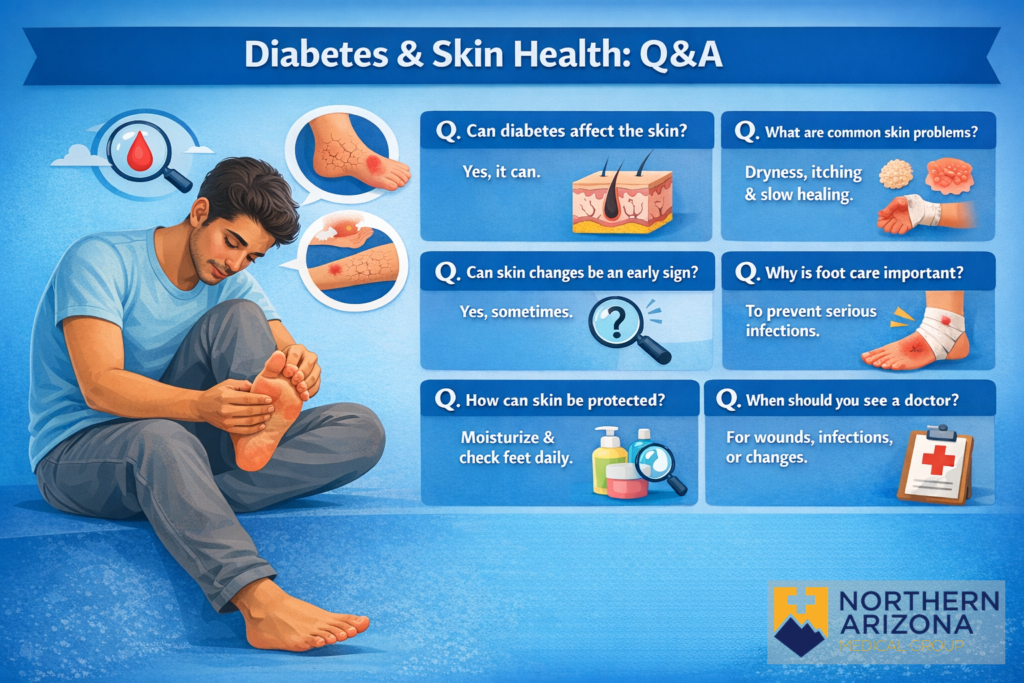
5 Skin Problems Linked to Diabetes and How to Manage Them Diabetes can affect more than blood sugar. It can also show up on the skin. In fact, around 30% of people with diabetes develop a skin-related issue at some point. High blood sugar can damage small blood vessels, reduce circulation, and increase inflammation, which makes the skin more vulnerable to dryness, itching, slow healing, and other changes. Sometimes, skin symptoms even appear before type 2 diabetes is diagnosed. Common diabetes-related skin problems may include: darkened patches dry or itchy skin slow-healing cuts foot wounds  Skin infections and irritation Because the skin contains delicate nerves and blood vessels, it is one of the first places where signs of long-term high blood sugar may appear. Taking care of your skin is an important part of diabetes management. Helpful steps include avoiding very hot baths, applying moisturizer regularly, using a humidifier if indoor air is dry, checking your feet often for cuts or sores, wearing shoes that fit properly, and cleaning small wounds promptly with soap and water. More serious injuries, such as deep cuts or burns, should be checked by a doctor. If you have diabetes and notice unusual skin changes, ongoing itching, wounds that heal slowly, or signs of infection, it is a good idea to speak with a healthcare professional. Early attention can help prevent complications and keep minor problems from becoming serious. Faqs Q: Can diabetes affect your skin? Yes, diabetes can affect your skin in several ways. Skin problems are actually quite common in people with diabetes, and sometimes they can even be one of the early signs of the condition. Q: Why does diabetes cause skin problems? High blood sugar can damage small blood vessels, reduce circulation, and increase inflammation in the body. This can make the skin drier, more sensitive, and slow to heal. Q: What are some 5 common skin issues linked to diabetes? Some common skin problems include dryness, itching, dark patches of skin, infections, and wounds that take longer than normal to heal. Foot-related skin problems are also common. Q: Can skin changes be an early sign of diabetes? Yes, in some cases, skin changes may appear before type 2 diabetes is diagnosed. That is why unusual or ongoing skin problems should not be ignored. Q: Why is foot care so important for people with diabetes? Foot care is very important because diabetes can reduce feeling in the feet and slow down healing. Even a small cut, blister, or sore can become serious if it is not treated properly. Q: How can people with diabetes protect their skin? They can protect their skin by keeping it moisturized, avoiding very hot baths, using a humidifier if the air is dry, checking their feet regularly, and cleaning small cuts or wounds right away. Q: When should someone see a doctor? A doctor should be contacted if there is a wound that is not healing, signs of infection, severe dryness, unusual skin changes, or any deep cut or burn. Resources: Acanthosis nigricans. (2025). https://dermnetnz.org/topics/acanthosis-nigricans Dasari N, et al. (2021). Updates in diabetic wound healing, inflammation, and scarring. https://pmc.ncbi.nlm.nih.gov/articles/PMC8432997/ Diabetes and skin complications. (n.d.). https://diabetes.org/about-diabetes/complications/skin-complications Diabetes and your skin. (2024). https://www.cdc.gov/diabetes/signs-symptoms/diabetes-and-your-skin.html Edwards E, et al. (2025). Skin manifestations of diabetes mellitus. https://www.ncbi.nlm.nih.gov/books/NBK481900/ Skin problems associated with diabetes mellitus. (n.d.). https://dermnetnz.org/topics/skin-problems-associated-with-diabetes-mellitus

5 Skin Problems Linked to Diabetes and How to Manage Them Read More »
High blood pressure and fever symptoms

Does Blood Pressure Increase When You’re Sick? Causes, Risks & What to Do

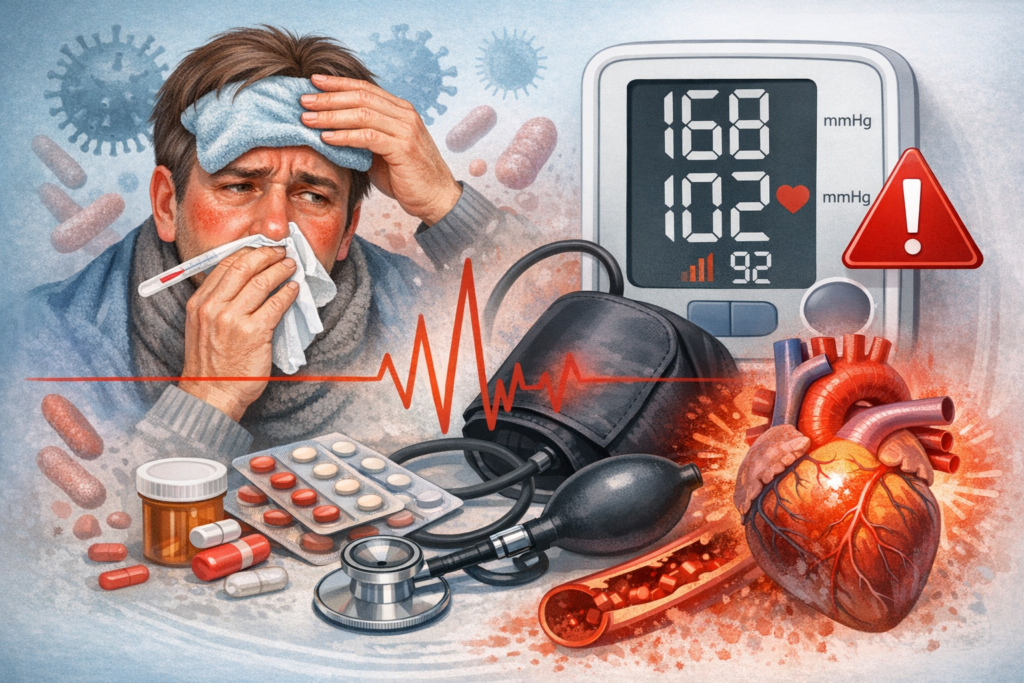
Does Blood Pressure Increase When You’re Sick? Yes, blood pressure can temporarily increase when you’re sick. This is a common physiological response to infection, inflammation, stress, and certain medications. For most people, this rise is short-term and not dangerous. However, if you already have hypertension or other health conditions, illness-related blood pressure spikes may need closer attention. Understanding why this happens—and when to worry—can help you manage your health more confidently during illness. Can a Cold or Flu Raise Blood Pressure? Yes, a cold or flu can raise blood pressure temporarily. When your body fights a viral infection like the common cold or influenza, it activates stress hormones and immune responses that can increase heart rate and tighten blood vessels. Why does this happen? The immune system releases inflammatory chemicals The body produces stress hormones like adrenaline Blood vessels constrict slightly Heart rate may increase Important note:For healthy individuals, this increase is usually mild and temporary. Can Infections Cause High Blood Pressure? Yes, infections—both viral and bacterial—can cause temporary increases in blood pressure. This happens because infections trigger systemic inflammation and activate the body’s stress response. Common scenarios: Respiratory infections (cold, flu, COVID-19) Urinary tract infections (UTIs) Severe infections (like pneumonia or sepsis) In more serious infections, blood pressure can fluctuate—sometimes rising early and dropping later in severe cases like sepsis. Which Types of Infections Affect Blood Pressure the Most? Certain infections are more likely to impact blood pressure significantly: Severe bacterial infections (e.g., pneumonia) Systemic infections (affecting the whole body) Chronic infections (long-term inflammation) COVID-19 and similar viral illnesses (linked to cardiovascular effects) According to research published in journals like Hypertension and The Lancet, inflammation from infection can directly affect vascular function and blood pressure regulation. Why Does Blood Pressure Rise During Illness? Blood pressure rises during illness due to a combination of physiological responses. Does Fever Increase Blood Pressure? Fever can slightly increase blood pressure, but it more commonly raises heart rate. What happens: Body temperature rises The heart pumps faster Blood circulation increases This can indirectly lead to mild BP elevation, especially in sensitive individuals. Do Cold Medications Raise Blood Pressure? Yes, many cold medications can significantly raise blood pressure. Common culprits: Decongestants (pseudoephedrine, phenylephrine) Some combination of cold medicines Why: They constrict blood vessels to reduce nasal congestion This vasoconstriction increases blood pressure Important:People with hypertension should avoid or limit these medications unless advised by a doctor. Does Stress or Pain Affect Blood Pressure When Sick? Yes, stress and discomfort during illness can elevate blood pressure. Factors include: Physical discomfort (headache, body aches) Anxiety about being sick Poor sleep Fatigue These trigger the sympathetic nervous system, which raises blood pressure. Is High Blood Pressure While Sick Dangerous? In most cases, temporary high blood pressure during illness is not dangerous. However, it can be concerning if: You already have hypertension Blood pressure stays high after recovery Readings are consistently above 180/120 mmHg You experience symptoms like chest pain or dizziness When to seek medical help: Severe headache Vision problems Chest discomfort Shortness of breath How Long Does Blood Pressure Stay Elevated During Illness? Blood pressure usually returns to normal once the illness resolves. Typical timeline: Mild illness (cold): 3–7 days Moderate illness (flu): 1–2 weeks Severe infection: may take longer If elevated blood pressure persists beyond recovery, it should be evaluated. Who Is Most at Risk of Blood Pressure Spikes When Sick? Some people are more vulnerable to BP increases during illness. Higher-risk groups: People with existing hypertension Older adults Individuals with heart disease People taking certain medications Those with chronic stress or anxiety How Can You Manage High Blood Pressure When You’re Sick? Managing blood pressure during illness involves simple, practical steps. What helps: Stay hydrated Get enough rest Avoid decongestants if you have high BP Monitor your blood pressure regularly Continue prescribed medications Helpful habits: Reduce salt intake Avoid caffeine if sensitive Use a humidifier for congestion instead of meds What Are Common Myths About Blood Pressure and Illness? Myth 1: A cold causes permanent high blood pressure Reality: The increase is usually temporary. Myth 2: All BP spikes during illness are dangerous Reality: Most are mild and harmless. Myth 3: You should stop BP medication when sick Reality: You should usually continue it unless a doctor advises otherwise. Blood Pressure Changes During Illness vs Normal Conditions Factor Normal State During Illness Heart rate Stable Often increased Blood pressure Stable May rise temporarily Inflammation Low Elevated Hormones Balanced Stress hormones increase Medications None affecting BP Cold meds may increase BP Key Takeaways Yes, blood pressure can rise when you’re sick Colds, flu, and infections often cause temporary increases Medications like decongestants are a major hidden cause Most increases are short-term and not dangerous People with hypertension should monitor closely Blood pressure usually normalizes after recovery FAQs Does being sick raise blood pressure? Yes, illness can temporarily raise blood pressure due to stress, inflammation, and medication effects. Can a cold increase blood pressure significantly? Usually, no—it causes mild, temporary increases unless combined with medication or pre-existing conditions. Do infections cause long-term high blood pressure? No, most infections only cause temporary changes unless complications occur. Should I check my blood pressure when sick? Yes, especially if you have hypertension or experience unusual symptoms. Can fever alone raise blood pressure? Fever may slightly increase BP, but it mainly raises heart rate. Are cold medicines safe for people with high BP? Some are not. Decongestants can raise blood pressure and should be used cautiously. When should I worry about high BP during illness? If readings are very high or symptoms like chest pain or dizziness occur, seek medical care. Conclusion Getting sick can temporarily affect many parts of your body—including your blood pressure. In most cases, these changes are mild and resolve as you recover. The key is awareness. If you understand what’s normal and what’s not, you can manage your health confidently—even when you’re under the weather.

Does Blood Pressure Increase When You’re Sick? Causes, Risks & What to Do Read More »