March 26, 2026

New types of diabetes explained

What Is the New Type of Diabetes? New Subtypes Explained (2026 Guide)

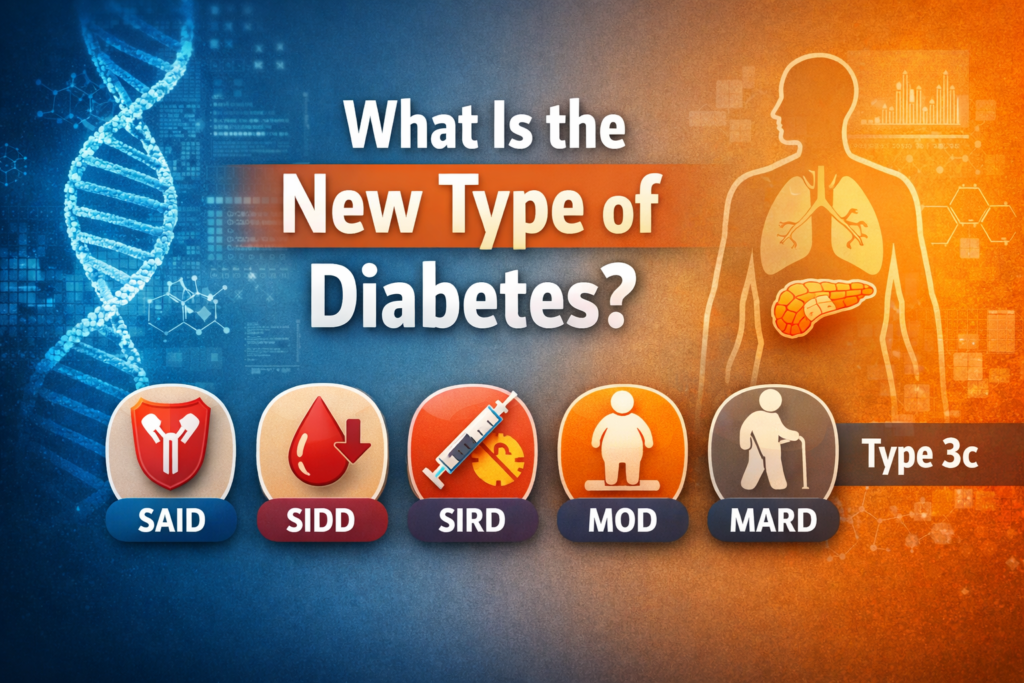
What is the new type of diabetes? There is no single officially recognized “new type of diabetes” in current medical guidelines. According to the American Diabetes Association, diabetes is still classified into type 1 diabetes, type 2 diabetes, gestational diabetes, and other specific types caused by underlying conditions. However, modern research has introduced newer, more precise ways of grouping diabetes, often referred to as research-based subtypes or clusters. These help explain why diabetes behaves differently in different people—even when they are diagnosed with the same “type.” What are the cluster-based subtypes of diabetes? Cluster-based subtypes are five research-driven categories of diabetes identified using biological markers such as insulin resistance, insulin production, age at diagnosis, body weight (BMI), HbA1c levels, and autoimmune markers. These five subtypes were proposed in a major study published in The Lancet and are considered a step toward precision medicine in diabetes care. The five cluster-based diabetes subtypes: The five cluster-based subtypes are: SAID (Severe Autoimmune Diabetes) SIDD (Severe Insulin-Deficient Diabetes) SIRD (Severe Insulin-Resistant Diabetes) MOD (Mild Obesity-Related Diabetes) MARD (Mild Age-Related Diabetes) What is SAID (Severe Autoimmune Diabetes)? SAID is a form of autoimmune diabetes similar to type 1 diabetes. Presence of immune markers (GAD antibodies) Low insulin production Often appears earlier in life Requires insulin therapy early 👉 Closely related to type 1 diabetes and LADA What is SIDD (Severe Insulin-Deficient Diabetes)? SIDD is characterized by very low insulin production and high blood sugar levels. High HbA1c at diagnosis Poor glucose control Higher risk of eye complications (retinopathy) Often misclassified as type 2 👉 Key issue: insulin deficiency, not resistance What is SIRD (Severe Insulin-Resistant Diabetes)? SIRD is defined by strong insulin resistance, where the body does not respond well to insulin. High insulin resistance Often linked with obesity Increased risk of: Kidney disease Fatty liver disease May benefit from insulin-sensitizing treatments 👉 Key issue: insulin is present, but not effective What is MOD (Mild Obesity-Related Diabetes)? MOD includes people with obesity-related diabetes but milder metabolic disturbance. Higher body weight Less severe insulin resistance than SIRD Generally, fewer complications early on 👉 Considered a milder subtype of type 2 diabetes What is MARD (Mild Age-Related Diabetes)? MARD is the most common subtype and occurs in older adults. Later onset (older age) Mild metabolic changes Slower disease progression Lower complication risk compared to severe clusters 👉 Often manageable with lifestyle and basic medication Why do these newer diabetes subtypes matter? These newer subtypes matter because they show that diabetes is not a single, uniform disease. Key benefits of this classification: Helps explain why patients respond differently to treatment Identifies people at higher risk for complications Supports personalized treatment plans Improves prediction of: Kidney disease Eye disease Cardiovascular risk Important: These clusters are still research-based and are not yet used as a standard diagnosis in everyday clinical practice. Comparison Table Subtype Age at Onset BMI HbA1c Insulin Resistance Key Risks Treatment SAID Young Low High Low Autoimmune progression Insulin SIDD Young Low Very high Low Poor control Insulin early SIRD Middle High Normal Very high CKD, MASLD, CV IR drugs, kidney protection MOD Middle-young Very high Mild Moderate Neuropathy Lifestyle, orals MARD Old Normal Mild Low Retinopathy, late CKD Metformin, lifestyle Is type 3c diabetes a newer type of diabetes? Type 3c diabetes is a recognized clinical form, but it is not part of the five-cluster research model. What is type 3c diabetes? Type 3c diabetes (also called pancreatogenic diabetes) occurs when diabetes develops due to damage to the pancreas. Common causes include: Chronic pancreatitis Pancreatic surgery Pancreatic cancer Cystic fibrosis 👉 In this condition, both insulin production and digestion-related functions of the pancreas are affected. Key Differences from Other Types Aspect Type 1 Type 2 Type 3c Cause Autoimmune Resistance + deficiency Pancreatic damage Exocrine Issues No No Yes (diarrhea, steatorrhea) Onset Any age, sudden Gradual, adulthood After pancreatic disease Treatment Insulin only Orals ± insulin Insulin + enzymes What is the most accurate way to describe “new diabetes types”? The most accurate and SEO-friendly way to explain this is: There is no single new official type of diabetes But there are: Emerging research-based subtypes (SAID, SIDD, SIRD, MOD, MARD) Less commonly known clinical types, like type 3c diabetes This distinction keeps your content factually accurate, medically aligned, and highly trustworthy. Key takeaway : There is no single “new type of diabetes” officially recognized in clinical guidelines. However, research has identified five newer subtypes—SAID, SIDD, SIRD, MOD, and MARD—based on insulin resistance, insulin production, age, and autoimmune markers. These clusters may help improve personalized treatment in the future, but they are not yet used in routine diagnosis. Sources: https://my.clevelandclinic.org/health/diseases/24953-type-3c-diabetes https://www.nature.com/articles/s41598-025-22556-4 https://www.remedypublications.com/open-access/new-paradigms-of-diabetes-classification-implications-for-complication-10031.pdf    

What Is the New Type of Diabetes? New Subtypes Explained (2026 Guide) Read More »

What Grocery List Supports a 1,500 Calorie Weight Loss Plan?

20 Warning Signs of Diabetes + A1C Levels, Symptoms & New Types Explained

What Are the Warning Signs, A1C Levels, and Key Indicators of Diabetes? Diabetes is one of the most common chronic diseases worldwide, and many people live with it for years without knowing. According to the World Health Organization, over 420 million people globally have diabetes, and a significant portion remains undiagnosed. The most important thing to understand is this: diabetes often starts silently but gives warning signs if you know what to look for. This guide breaks down those signs, explains A1C levels, and helps you recognize when to take action. What are the 20 warning signs of diabetes? The 20 warning signs of diabetes include frequent urination, excessive thirst, fatigue, blurred vision, and slow-healing wounds. These symptoms happen because high blood sugar disrupts normal body functions. Common early and advanced warning signs: Frequent urination (polyuria) Excessive thirst (polydipsia) Increased hunger (polyphagia) Unexplained weight loss Fatigue or weakness Blurred vision Slow-healing wounds Frequent infections Dry skin Tingling or numbness in hands/feet Dark patches on skin (acanthosis nigricans) Irritability Headaches Bad breath (fruity smell in severe cases) Nausea or vomiting Recurrent yeast infections Reduced concentration Increased nighttime urination Erectile dysfunction (in men) Vision changes over time Why these occur:High blood glucose damages blood vessels and nerves, leading to widespread symptoms across multiple body systems. What are the early warning signs vs late symptoms of diabetes? Early signs are subtle (thirst, fatigue), while late symptoms involve complications like nerve damage and vision loss. Early signs: Mild fatigue Increased thirst Slight weight changes Frequent urination Late-stage symptoms: Nerve pain (neuropathy) Vision problems (retinopathy) Kidney issues Chronic infections Key insight: Early detection can prevent most complications. What do the 5 C’s of diabetes mean? The 5 C’s of diabetes are common symptoms: excessive urination, thirst, hunger, fatigue, and blurry vision. The 5 C’s explained: Constant urination → kidneys remove excess sugar Constant thirst → dehydration from fluid loss Constant hunger → cells lack usable glucose Chronic fatigue → low energy utilization Cloudy vision → fluid shifts in eye lenses These are classic textbook indicators doctors use for initial screening. What does undiagnosed diabetes feel like? Undiagnosed diabetes often feels like persistent fatigue, brain fog, and unexplained body changes that don’t improve. Common experiences: Always tired, even after rest Feeling “off” or mentally slow Frequent infections Increased thirst without a clear cause Subtle weight loss or gain Important: Many people ignore these symptoms because they develop gradually. What is the A1C level for diabetes diagnosis? An A1C level of 6.5% or higher is used to diagnose diabetes. According to the American Diabetes Association: A1C Level Meaning Below 5.7% Normal 5.7% – 6.4% Prediabetes 6.5% or higher Diabetes What A1C measures:It reflects your average blood sugar over the past 2–3 months, not just a single reading. What is a normal A1C vs prediabetes vs diabetes? A normal A1C is below 5.7%, while diabetes starts at 6.5% or higher. Quick comparison: Normal: < 5.7% Prediabetes: 5.7–6.4% Diabetes: ≥ 6.5% Why it matters:Even prediabetes significantly increases the risk of developing full diabetes if not addressed. What is the A1C goal for a 70-year-old? For most healthy adults aged 70, the A1C goal is typically below 7.0–7.5%, depending on overall health. Individualized targets: Healthy older adults: < 7–7.5% Multiple conditions: < 8% Frail individuals: < 8–8.5% Why goals differ:Older adults are at higher risk of hypoglycemia (low blood sugar), so targets are slightly relaxed. How does A1C vary by age and health condition? A1C targets become less strict with age and comorbidities to balance safety and control. Factors affecting A1C goals: Life expectancy Risk of hypoglycemia Heart disease Kidney function Medication type Key idea: Diabetes care is personalized, not one-size-fits-all. What are the newer research-based subtypes of diabetes? Newer research-based subtypes of diabetes are five biologically distinct clusters identified in adults with newly diagnosed diabetes: SAID, SIDD, SIRD, MOD, and MARD. These clusters were proposed to move beyond the simple “type 1 vs. type 2” model by grouping people according to autoimmune status, insulin production, insulin resistance, age at diagnosis, body size, and blood sugar control. The five cluster-based subtypes are: SAID (Severe Autoimmune Diabetes): This group resembles classic autoimmune diabetes. People in this cluster tend to have positive GAD antibodies, an earlier onset, poor insulin production, and a clinical picture similar to type 1 diabetes or LADA. SIDD (Severe Insulin-Deficient Diabetes): This subtype is marked by low insulin secretion and high HbA1c at diagnosis. Research has linked it to poorer glucose control and a higher risk of diabetic retinopathy. SIRD (Severe Insulin-Resistant Diabetes): This group is defined by marked insulin resistance. Follow-up studies have found that it is associated with a higher risk of diabetic kidney disease and fatty liver–related complications. MOD (Mild Obesity-Related Diabetes): This subtype usually includes people with obesity but without the same degree of severe insulin resistance seen in SIRD. It is generally considered a milder phenotype than the severe subgroups. MARD (Mild Age-Related Diabetes): This cluster tends to appear in older adults and usually has a comparatively milder metabolic profile at diagnosis. This classification matters because different clusters appear to carry different risks for complications and may eventually support more personalized treatment. In the original Lancet study, the authors concluded that this five-cluster model could be a first step toward precision medicine in diabetes, because disease progression and complication risk were not the same across all groups. At the same time, these clusters are not the standard day-to-day diagnostic system used in routine clinical guidelines. Current ADA classification still organizes diabetes into major clinical categories such as type 1 diabetes, type 2 diabetes, gestational diabetes, and other specific types due to other causes, including monogenic diabetes and diabetes caused by exocrine pancreatic disease or medications. How are modern classifications of diabetes changing? Modern research is shifting diabetes classification from 3 types to multiple subgroups based on biology. Key changes: Focus on insulin resistance vs deficiency Use of genetic and metabolic markers More precise treatment approaches Insight: Diabetes is not a single disease—it’s

20 Warning Signs of Diabetes + A1C Levels, Symptoms & New Types Explained Read More »

How to lower blood sugar quickly

How to Lower Blood Sugar Quickly (10-Minute, Immediate & 24-Hour Methods)

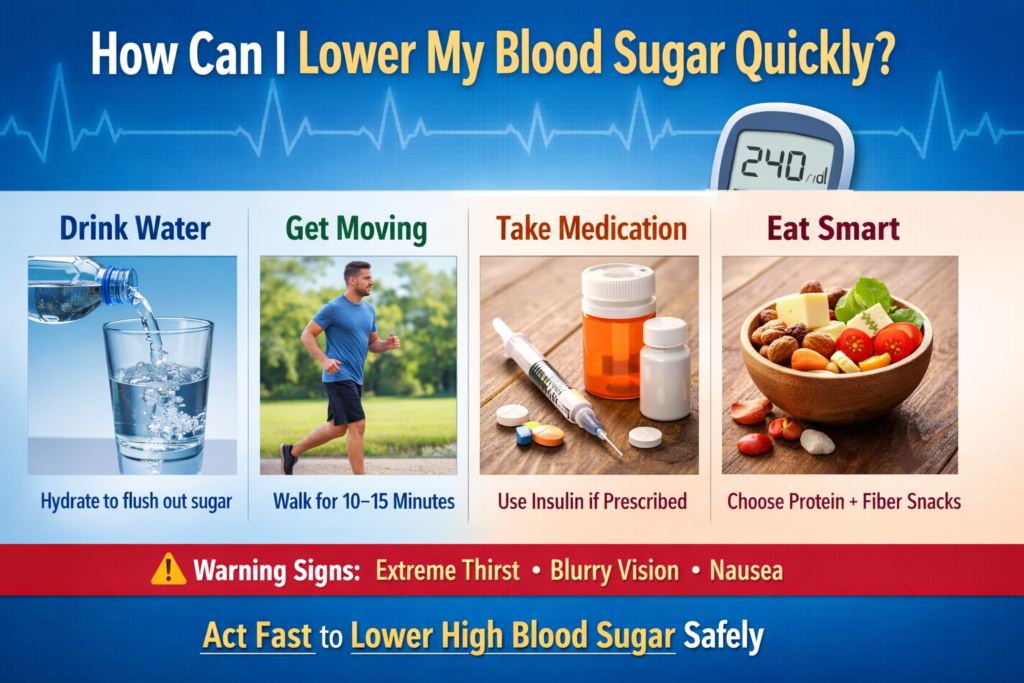
How Can I Lower My Blood Sugar Quickly? If your blood sugar is high, the fastest way to lower it safely is through hydration, light physical activity, and (if prescribed) medication like insulin. These methods work by helping your body either use glucose or remove excess sugar from the bloodstream. High blood sugar—also called hyperglycemia—can happen after eating too many refined carbs, missing medication, stress, or illness. According to the Centers for Disease Control and Prevention, consistently high blood sugar increases the risk of heart disease, kidney damage, and nerve problems. This guide gives you practical, evidence-based steps you can use immediately, within minutes, and over the next 24 hours. What brings down blood sugar immediately? The fastest ways to lower blood sugar immediately are drinking water, taking a short walk, and using prescribed insulin if needed. These methods work quickly because they either: Help your body use glucose (exercise) Help flush excess glucose through urine (hydration) Directly lower glucose (medication) Immediate actions you can take: Drink water (1–2 glasses): Helps the kidneys remove excess glucose Walk for 10–15 minutes: Muscles use glucose for energy Take insulin (if prescribed): Most effective for rapid control Avoid eating more carbs: Prevents further spikes 👉 Research shows that even light activity after meals can reduce post-meal glucose spikes. Can you lower blood sugar in 10 minutes? Yes, you can start lowering blood sugar within 10 minutes, but a significant reduction usually takes 30–60 minutes. The fastest short-term impact comes from movement and hydration. What works in 10 minutes: Brisk walking or climbing stairs Drinking water Deep breathing (reduces stress hormones) What does NOT work instantly: Eating “healthy foods” (takes time to digest) Supplements claiming instant results “Detox” drinks 👉 Exercise begins improving glucose uptake almost immediately because muscles pull sugar from the blood without needing as much insulin. How can I flush sugar out of my system fast? You cannot literally “flush sugar out instantly,” but you can help your body remove excess glucose faster through hydration and urination. What actually works: Drink water regularly Stay hydrated throughout the day Support kidney function naturally What is a myth: Detox drinks Lemon water “flushing sugar.” Herbal cures act instantly 👉 The body naturally regulates sugar through: Insulin Kidneys Liver No shortcut bypasses this system. What drinks bring blood sugar down? The best drinks for lowering blood sugar are water, unsweetened tea, and certain low-calorie beverages that improve insulin sensitivity. Best drinks: Water (most effective) Helps eliminate excess glucose through urine Green tea Contains antioxidants linked to improved insulin sensitivity Black coffee (unsweetened) May improve glucose metabolism ([research it and add it from your own, Insert study]) Apple cider vinegar (diluted) Some studies show it may reduce post-meal glucose spikes Drinks to avoid: Soda Fruit juice Energy drinks Sweetened tea Drink Type Effect on Blood Sugar Water Lowers Green tea Supports control Soda Raises sharply Juice Raises quickly What is the number one snack to lower blood sugar? The best snack to stabilize blood sugar is a combination of protein and fiber, such as nuts or Greek yogurt. These foods slow down digestion and prevent spikes. Top snack options: A handful of almonds or walnuts Greek yogurt (unsweetened) Boiled eggs Peanut butter with apple slices Chia pudding Why these work: Protein slows glucose absorption Fiber reduces spikes Healthy fats improve satiety 👉 According to the American Diabetes Association, balanced snacks help prevent rapid blood sugar fluctuations. How do I lower my blood sugar in 24 hours? You can significantly lower blood sugar within 24 hours by combining diet, hydration, movement, and medication adherence. 24-hour action plan: Morning Drink water Eat a high-protein breakfast Take medications as prescribed Daytime Walk after meals Avoid refined carbs Stay hydrated Evening Eat a light, balanced dinner Avoid late-night snacking Key principles: Reduce carb load Increase activity Stay consistent 👉 Studies show that diet and activity changes can improve glucose levels within a single day. What should you avoid when your blood sugar is high? Avoid anything that causes rapid glucose spikes or worsens insulin resistance. Avoid immediately: Sugary drinks White bread, rice, pasta Fried foods Large meals Skipping medication Why this matters: These foods cause sharp spikes followed by crashes, making control harder. When should you seek medical help for high blood sugar? Seek medical help if blood sugar is persistently above 300 mg/dL or accompanied by symptoms. Warning signs: Extreme thirst Frequent urination Blurred vision Nausea or vomiting Confusion These may indicate serious conditions like diabetic ketoacidosis (DKA). What are the most common mistakes when trying to lower blood sugar fast? The biggest mistakes include relying on myths, skipping medication, and overcorrecting. Common errors: Drinking sugary “health” drinks Ignoring medication Overeating “healthy carbs.” Panic eating Better approach: Stay calm Use proven methods Monitor glucose levels Key Takeaways The fastest way to lower blood sugar is water + movement + medication (if prescribed) You can start lowering it in 10–15 minutes, but the full effect takes longer There is no instant “flush” solution Protein + fiber snacks help stabilize glucose Consistency over 24 hours makes a big difference FAQs How fast can blood sugar drop? Blood sugar can begin dropping within 10–15 minutes, but noticeable changes usually take 30–60 minutes. Does drinking water lower blood sugar immediately? Yes, water helps lower blood sugar by aiding kidney function and glucose excretion. Can exercise lower blood sugar quickly? Yes, even light activity like walking can reduce blood sugar within minutes. What is the fastest natural way to lower blood sugar? Hydration and physical activity are the fastest natural methods. Is fasting good for lowering blood sugar quickly? Short-term fasting may help, but it should be done carefully and not without guidance if you have diabetes. Can I bring my blood sugar down without medication? Yes, mild spikes can often be managed with diet and activity, but medication is necessary for many people. What is dangerously high blood sugar? Levels above 300 mg/dL are considered dangerous and require medical attention. Need Diabetes

How to Lower Blood Sugar Quickly (10-Minute, Immediate & 24-Hour Methods) Read More »