
March 17, 2026

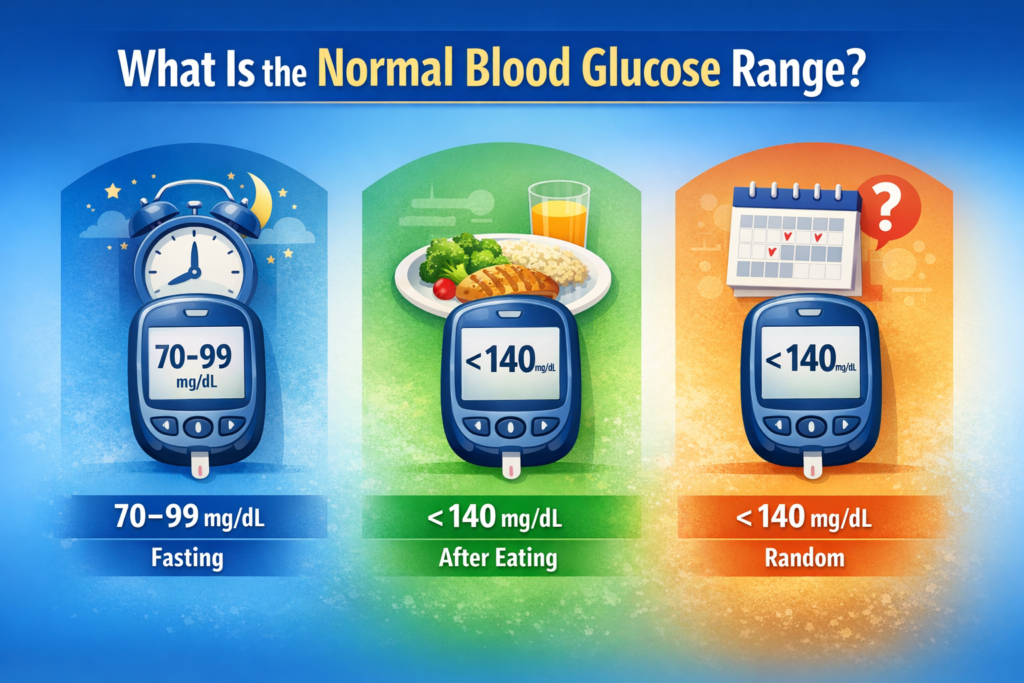
Blood glucose range guide illustration

Normal Blood Glucose Range: Fasting, After Eating & HbA1c Explained

What Is the Normal Blood Glucose Range? Understanding your blood glucose level is one of the most important indicators of your overall health. Whether you’re checking for diabetes, monitoring your diet, or simply being proactive, knowing what “normal” looks like can help you stay in control. The normal blood glucose range for healthy adults is: Fasting: 70–99 mg/dL After eating (2 hours): less than 140 mg/dL Random (any time): usually below 140 mg/dL These values are based on guidelines from trusted authorities like the American Diabetes Association (ADA) and the World Health Organization (WHO). What is blood glucose, and why does it matter? Blood glucose is the amount of sugar (glucose) present in your bloodstream. It is your body’s main source of energy. Glucose comes from: Carbohydrates in food Stored glycogen in the liver Glucose production by the body Your body regulates glucose using insulin, a hormone produced by the pancreas. Why it matters: Too high → risk of diabetes and organ damage Too low → can cause dizziness, confusion, or fainting Stable levels → support energy, brain function, and metabolism What is the normal blood glucose range for healthy adults? Normal blood glucose levels vary depending on timing (fasting, after meals, etc.), but generally stay between 70 and 140 mg/dL. Standard Reference Ranges Condition Normal Range Fasting (8+ hours) 70–99 mg/dL Before meals 70–130 mg/dL 2 hours after meals <140 mg/dL Random <140 mg/dL These ranges apply to individuals without diabetes. What is the normal fasting blood glucose level? A normal fasting blood glucose level is between 70 and 99 mg/dL. Fasting means: No food or drink (except water) for at least 8 hours Why fasting levels matter: They reflect baseline glucose control They are commonly used to diagnose diabetes Interpretation: 70–99 mg/dL → Normal 100–125 mg/dL → Prediabetes 126 mg/dL or higher → Diabetes (confirmed by repeat testing) What is a normal blood sugar level after eating? A normal blood sugar level 2 hours after eating is less than 140 mg/dL. After eating: Glucose rises as food is digested Insulin helps bring levels back down Typical pattern: Peaks within 1 hour Returns to normal within 2–3 hours If levels stay high longer, it may indicate insulin resistance. What is a normal random blood glucose level? A normal random blood glucose level is generally below 140 mg/dL. Random tests: Can be taken at any time Useful for quick screening Important note: A reading of 200 mg/dL or higher, along with symptoms, may indicate diabetes. What are the blood glucose ranges for prediabetes and diabetes? Blood glucose ranges are used to classify metabolic health as normal, prediabetes, or diabetes. Comparison Table Category Fasting (mg/dL) 2-hour OGTT (mg/dL) HbA1c (%) Normal 70–99 <140 <5.7% Prediabetes 100–125 140–199 5.7–6.4% Diabetes ≥126 ≥200 ≥6.5% (Source: American Diabetes Association) What is the HbA1c normal range? A normal HbA1c level is below 5.7%. HbA1c measures: Average blood glucose over 2–3 months Ranges: <5.7% → Normal 5.7–6.4% → Prediabetes ≥6.5% → Diabetes This test is widely used because it reflects long-term control. How do blood glucose levels change throughout the day? Blood glucose naturally fluctuates based on food, activity, and hormones. Typical daily pattern: Morning (fasting): lowest stable level After meals: rises temporarily Between meals: stabilizes Night: may drop slightly Even healthy individuals experience fluctuations. What factors affect blood glucose levels? Multiple internal and external factors influence blood glucose levels. Key factors include: 1. Diet High-carb foods increase glucose quickly Fiber slows absorption 2. Physical activity Exercise lowers blood glucose Improves insulin sensitivity 3. Hormones Insulin lowers glucose Cortisol and adrenaline increase it 4. Stress Emotional or physical stress can raise levels 5. Medications Steroids may increase glucose Insulin lowers it 6. Illness Infection can elevate blood sugar How is blood glucose measured? Blood glucose can be measured using home devices or lab tests. Common methods: 1. Glucometer Finger-prick test Instant results 2. Continuous Glucose Monitor (CGM) Tracks levels throughout the day Useful for diabetics 3. Laboratory tests Fasting plasma glucose (FPG) Oral glucose tolerance test (OGTT) HbA1c Each method provides different insights. What are the symptoms of high and low blood sugar? High and low blood sugar levels produce distinct symptoms. High blood sugar (hyperglycemia): Increased thirst Frequent urination Fatigue Blurred vision Low blood sugar (hypoglycemia): Shaking Sweating Dizziness Confusion Severe cases require immediate medical attention. When should you worry about your blood glucose levels? You should be concerned if your blood glucose consistently falls outside normal ranges. Warning signs: Fasting glucose above 100 mg/dL repeatedly Post-meal levels above 140 mg/dL frequently Random readings above 200 mg/dL Symptoms of hypo/hyperglycemia According to the CDC, approximately 98 million U.S. adults—more than 1 in 3—have prediabetes, and over 80% are unaware of their condition. What are common mistakes when interpreting blood glucose levels? Misinterpreting blood glucose readings can lead to unnecessary worry or a missed diagnosis. Common mistakes: Ignoring timing (fasting vs after meals) Relying on a single reading Not considering symptoms Using outdated reference ranges Self-diagnosing without medical advice Always interpret results in context. Key Takeaways About Normal Blood Glucose Normal fasting glucose: 70–99 mg/dL Normal after meals: less than 140 mg/dL HbA1c normal: below 5.7% Levels vary naturally throughout the day Consistently high or low readings need medical attention Lifestyle plays a major role in glucose control FAQs About Normal Blood Glucose Range What is a dangerously high blood sugar level? A level above 300 mg/dL is considered dangerously high and requires urgent medical attention. Is 110 mg/dL fasting normal? No, 110 mg/dL falls into the prediabetes range. What is normal blood sugar by age? Normal ranges are generally the same for adults, though targets may vary slightly for older individuals. Is a 140 blood sugar after eating normal? Yes, it is the upper limit of normal 2 hours after eating. Can stress raise blood sugar levels? Yes, stress hormones like cortisol can increase blood glucose. How often should I check my blood sugar? If healthy, occasional testing is enough. If diabetic, follow your

Normal Blood Glucose Range: Fasting, After Eating & HbA1c Explained Read More »

How Does Blood Sugar Work A Simple Guide to Glucose, Insulin, and Health

How Does Blood Sugar Work? A Simple Guide to Glucose, Insulin, and Health

How Does Blood Sugar Work in the Human Body? Blood sugar, also called blood glucose, is the main source of energy for your body. It comes from the food you eat and is carefully controlled by hormones to keep your body functioning properly. Understanding how blood sugar works helps you prevent energy crashes, avoid chronic diseases like diabetes, and maintain overall health. The process involves multiple organs, hormones, and feedback systems working together continuously. What is blood sugar, and why is it important? Blood sugar is the amount of glucose circulating in your bloodstream, and it serves as the primary fuel for your body’s cells. Glucose is essential because: It powers the brain, which relies heavily on glucose for energy It fuels muscles during movement It supports basic cellular functions According to the World Health Organization (WHO), maintaining balanced blood glucose is critical for preventing metabolic diseases like diabetes. How does glucose enter the bloodstream? Glucose enters the bloodstream mainly through the digestion of carbohydrates. When you eat foods like: Bread, rice, and pasta Fruits and vegetables Sugary foods Your body breaks them down into glucose during digestion. This glucose then enters the bloodstream through the small intestine. Process step-by-step: Carbohydrates are digested into simple sugars Glucose is absorbed into the blood Blood sugar levels rise How does insulin control blood sugar levels? Insulin is a hormone that lowers blood sugar by helping cells absorb glucose from the bloodstream. It is produced by the pancreas and acts like a “key” that unlocks cells so glucose can enter. What insulin does: Moves glucose from the blood into the cells Signals the liver to store excess glucose Prevents blood sugar from rising too high Without enough insulin, glucose stays in the bloodstream instead of being used for energy. What role does glucagon play in blood sugar regulation? Glucagon is a hormone that raises blood sugar when it drops too low. While insulin lowers glucose, glucagon does the opposite to maintain balance. Glucagon actions: Signals the liver to release stored glucose Converts glycogen into glucose Prevents dangerously low blood sugar This balance between insulin and glucagon is called glucose homeostasis. How do cells use glucose for energy? Cells convert glucose into energy through a process called cellular respiration. Basic steps: Glucose enters the cell It is broken down in mitochondria Energy (ATP) is produced This energy is used for: Muscle contraction Brain activity Organ function How does the body maintain stable blood sugar levels? The body maintains stable blood sugar through a feedback system involving hormones and organs. Key components: Pancreas: releases insulin and glucagon Liver: stores and releases glucose Bloodstream: transports glucose Balance system: After eating → insulin lowers sugar During fasting → glucagon raises sugar This system works constantly to keep blood sugar within a safe range. What are normal blood sugar levels? Normal blood sugar levels vary depending on timing (fasting vs after meals). Condition Normal Range Fasting (8 hours) 70–99 mg/dL After meals (2 hours) Less than 140 mg/dL According to the American Diabetes Association (ADA): Prediabetes: 100–125 mg/dL (fasting) Diabetes: 126 mg/dL or higher (fasting) What happens when blood sugar is too high? High blood sugar (hyperglycemia) occurs when glucose builds up in the bloodstream. Common causes: Too much food (especially sugar/carbs) Insulin resistance Lack of insulin Symptoms: Increased thirst Frequent urination Fatigue Blurred vision Long-term risks: Heart disease Kidney damage Nerve damage According to the International Diabetes Federation (IDF), over 537 million adults worldwide live with diabetes (2021 data). What happens when blood sugar is too low? Low blood sugar (hypoglycemia) happens when glucose drops below normal levels. Common causes: Skipping meals Excess insulin or medication Intense exercise Symptoms: Shaking Sweating Confusion Dizziness Severe hypoglycemia can be life-threatening if not treated quickly. What causes blood sugar imbalances like diabetes? Blood sugar imbalance occurs when insulin production or response is disrupted. Main types: Type 1 diabetes: Autoimmune condition The body stops producing insulin Type 2 diabetes: Insulin resistance Often linked to lifestyle factors Other causes: Hormonal disorders Pancreatic damage Genetics What factors affect blood sugar levels daily? Blood sugar changes throughout the day based on lifestyle and biological factors. Key influences: Diet (carbohydrate intake) Physical activity Stress (raises cortisol) Sleep quality Illness For example: Exercise lowers blood sugar Stress hormones can raise it How can you keep blood sugar levels stable? You can maintain healthy blood sugar with consistent habits. Effective strategies: 1. Balanced diet Include fiber, protein, and healthy fats Avoid excessive refined sugars 2. Regular exercise Improves insulin sensitivity Helps glucose enter cells 3. Consistent meal timing Prevents spikes and crashes 4. Stress management Reduces hormone-related spikes 5. Sleep Poor sleep increases insulin resistance What are common myths about blood sugar? Many people misunderstand how blood sugar works. Myth vs Reality: Myth Reality Sugar alone causes diabetes Lifestyle + genetics play a bigger role Only diabetics need to worry Everyone benefits from stable glucose Carbs are bad Complex carbs are essential Symptoms always appear High blood sugar can be silent What are the key takeaways about blood sugar? Blood sugar is your body’s main energy source Insulin lowers blood sugar; glucagon raises it The pancreas and liver regulate glucose balance Both high and low levels can be dangerous Lifestyle habits strongly influence blood sugar FAQs about blood sugar What is the main function of blood sugar? Blood sugar provides energy to cells, especially the brain and muscles. Why does blood sugar rise after eating? Because carbohydrates are broken down into glucose and absorbed into the bloodstream. What hormone lowers blood sugar? Insulin lowers blood sugar by helping cells absorb glucose. What happens if insulin doesn’t work properly? Glucose stays in the blood, leading to high blood sugar and possibly diabetes. Can stress affect blood sugar? Yes, stress hormones like cortisol can raise blood sugar levels. How quickly does blood sugar change? It can change within minutes after eating, exercising, or experiencing stress. Is low blood sugar dangerous? Yes, severe hypoglycemia can lead to confusion, unconsciousness,

How Does Blood Sugar Work? A Simple Guide to Glucose, Insulin, and Health Read More »