
What Does Insulin Do? Functions, Effects, and Why It Matters for Your Health
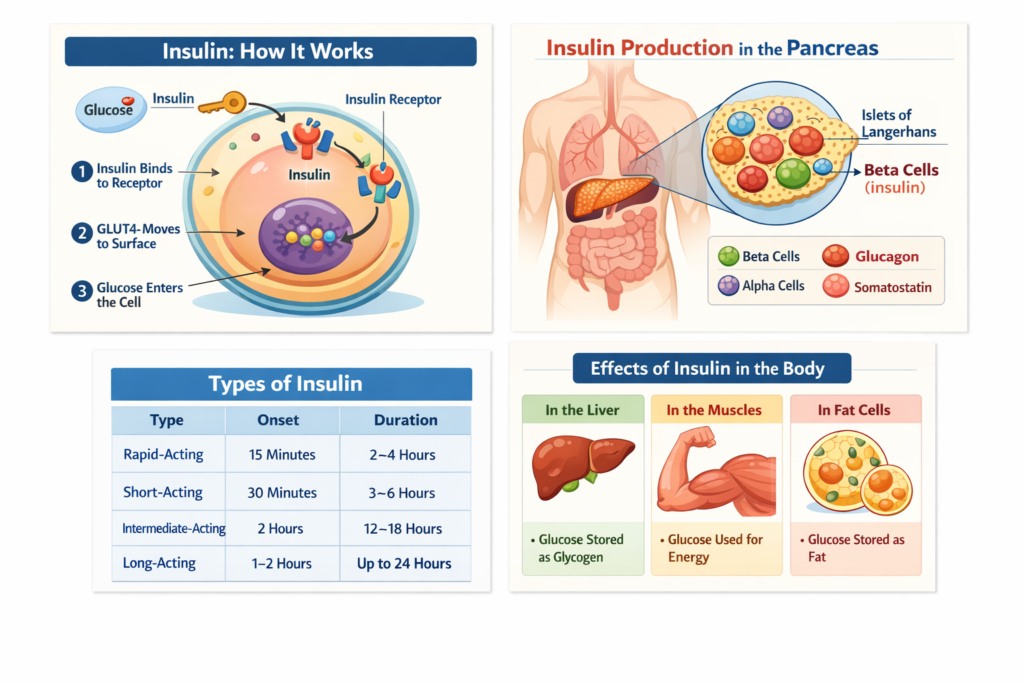
What Does Insulin Do? Insulin is a hormone that controls how the body uses and stores glucose (blood sugar). Its main job is to help cells absorb glucose from the bloodstream so the body can use it for energy or store it for later. Without insulin, glucose cannot efficiently enter most cells. As a result, sugar builds up in the blood, which can lead to serious health problems such as diabetes. Insulin is essential for survival because it regulates the body’s energy system. It helps maintain stable blood sugar levels, supports metabolism, and enables cells to function properly. Understanding what insulin does helps explain why conditions like diabetes occur and why maintaining healthy insulin function is important for overall health. What Is Insulin and Why Is It Important? Insulin is a hormone produced by the pancreas that regulates blood sugar levels and allows the body to use glucose for energy. Hormones act as chemical messengers in the body. Insulin signals cells to take in glucose from the bloodstream after eating. Key roles of insulin include: Lowering blood sugar levels Allowing cells to absorb glucose Helping store excess glucose Regulating fat metabolism Supporting protein synthesis Without insulin, glucose cannot enter most cells, which leads to dangerously high blood sugar levels (hyperglycemia). Where Is Insulin Produced in the Body? Insulin is produced in the beta cells of the pancreas, a gland located behind the stomach. The pancreas has two main functions: Producing digestive enzymes Releasing hormones that regulate blood sugar Within the pancreas are clusters of cells called islets of Langerhans. These contain several hormone-producing cells: Cell Type Hormone Produced Function Beta cells Insulin Lowers blood sugar Alpha cells Glucagon Raises blood sugar Delta cells Somatostatin Regulates hormones Beta cells release insulin primarily when blood glucose levels rise, such as after eating carbohydrates. How Does Insulin Control Blood Sugar Levels? Insulin controls blood sugar by helping glucose move from the bloodstream into cells. When blood glucose rises after a meal, the pancreas releases insulin. Insulin signals body cells to absorb glucose so the blood sugar level returns to normal. The process works like a key unlocking a door. Glucose is the energy source Cells need glucose to function Insulin unlocks the cell so glucose can enter Without insulin, glucose remains trapped in the bloodstream. How Does Insulin Help Cells Absorb Glucose? Insulin activates proteins called glucose transporters that allow glucose to enter cells. One important transporter is GLUT4, found in muscle and fat cells. The process works like this: Blood sugar rises after eating. The pancreas releases insulin. Insulin binds to insulin receptors on cells. GLUT4 transporters move to the cell surface. Glucose enters the cell. This process supplies energy to tissues throughout the body. How Does Insulin Lower Blood Sugar After Eating? Insulin lowers blood sugar through several coordinated actions. After a meal, insulin: Moves glucose into muscle cells Stores glucose in the liver as glycogen Prevents the liver from releasing more glucose Promotes fat storage in fat cells These actions quickly stabilize blood sugar levels. What Happens in the Body When Insulin Is Released? When insulin is released, the body shifts into energy storage mode. Major physiological changes include: Glucose uptake increases Glycogen synthesis increases Fat storage increases Blood glucose decreases This process prevents blood sugar from rising too high after meals. How Does Insulin Affect the Liver, Muscles, and Fat Cells? Insulin influences several major organs that control metabolism. Each tissue responds differently to insulin. How Does Insulin Affect the Liver? In the liver, insulin promotes glucose storage. The liver converts excess glucose into glycogen, a stored form of sugar. Insulin also: Stops the liver from releasing glucose Reduces glucose production Encourages fat synthesis when glycogen stores are full How Does Insulin Affect Muscle Cells? Muscle cells use insulin to absorb glucose for energy. Muscles can either: Burn glucose immediately for energy Store it as glycogen for later use During exercise, muscles may absorb glucose even without insulin. How Does Insulin Affect Fat Cells? Insulin encourages fat cells to store energy. It does this by: Moving glucose into fat cells Converting excess glucose into fatty acids Preventing fat breakdown This process helps the body store energy for future use. How Does Insulin Affect Carbohydrate, Fat, and Protein Metabolism? Insulin plays a central role in metabolism. It regulates how the body processes nutrients. Nutrient Type Effect of Insulin Carbohydrates Promotes glucose uptake and glycogen storage Fats Encourages fat storage and reduces fat breakdown Proteins Supports protein synthesis and muscle growth Because insulin affects all three macronutrients, it is one of the body’s most important metabolic hormones. What Happens When the Body Does Not Produce Enough Insulin? When the body produces little or no insulin, glucose cannot enter cells properly. This causes high blood sugar (hyperglycemia). Over time, this can damage: Blood vessels Nerves Kidneys Eyes Heart This condition occurs in Type 1 diabetes, where the immune system destroys pancreatic beta cells. People with Type 1 diabetes require insulin injections to survive. What Is Insulin Resistance and Why Does It Occur? Insulin resistance occurs when body cells stop responding effectively to insulin. The pancreas tries to compensate by producing more insulin, but eventually blood sugar rises. Common causes include: Obesity Sedentary lifestyle Poor diet Genetic factors Metabolic syndrome Insulin resistance is a major factor in Type 2 diabetes. How Is Insulin Related to Diabetes? Diabetes occurs when insulin is absent, insufficient, or ineffective. There are two main types. Type Cause Insulin Status Type 1 diabetes Autoimmune destruction of beta cells No insulin production Type 2 diabetes Insulin resistance Insulin is present but ineffective Both conditions lead to high blood sugar and require medical management. What Types of Insulin Are Used in Medicine? People with diabetes may use synthetic insulin to control blood sugar. Common types include: Type Onset Duration Rapid-acting insulin 15 minutes 2–4 hours Short-acting insulin 30 minutes 3–6 hours Intermediate insulin 2 hours 12–18 hours Long-acting insulin Several hours Up to 24 hours Doctors choose insulin types depending
What Does Insulin Do? Functions, Effects, and Why It Matters for Your Health Read More »