

March 13, 2026

Checking blood sugar_ understanding type 2 diabetes

What Causes Type 2 Diabetes? Risk Factors, Insulin Resistance & Prevention

What Causes Type 2 Diabetes? Type 2 diabetes develops when the body becomes resistant to insulin or when the pancreas cannot produce enough insulin to keep blood sugar levels normal. Over time, this leads to high blood glucose levels. Unlike Type 1 diabetes, which is an autoimmune disease, Type 2 diabetes is strongly influenced by lifestyle, genetics, and metabolic health. It is also the most common type of diabetes, accounting for about 90–95% of all diagnosed diabetes cases worldwide, according to the Centers for Disease Control and Prevention (CDC). Understanding what causes Type 2 diabetes can help people identify risk factors early and take steps to reduce their risk. What Is Type 2 Diabetes? Type 2 diabetes is a chronic metabolic disease that affects how the body regulates blood sugar (glucose). Glucose is the body’s primary source of energy. Insulin, a hormone produced by the pancreas, helps move glucose from the bloodstream into cells. In people with Type 2 diabetes: Cells become resistant to insulin The pancreas struggles to produce enough insulin Blood glucose levels rise According to CDC data, about 15.8% of U.S. adults had diabetes between 2021 and 2023, including many undiagnosed individuals. This makes diabetes one of the most common chronic diseases worldwide. What Is the Main Cause of Type 2 Diabetes? The main cause of Type 2 diabetes is insulin resistance combined with declining insulin production. The National Institute of Diabetes and Digestive and Kidney Diseases (NIDDK) explains that Type 2 diabetes occurs when the pancreas does not make enough insulin and the body cannot use insulin effectively. The disease usually develops gradually through several stages: Cells become resistant to insulin The pancreas produces more insulin to compensate Blood sugar begins to rise Insulin production declines Type 2 diabetes develops This process can occur slowly over many years. How Does Insulin Resistance Lead to Type 2 Diabetes? Insulin resistance occurs when cells in the muscles, liver, and fat tissue stop responding properly to insulin. As a result, glucose remains in the bloodstream instead of entering cells to be used as energy. The pancreas initially compensates by producing more insulin. However, over time, the pancreas becomes unable to keep up with demand. Eventually, blood sugar levels increase and Type 2 diabetes develops. What Is Insulin Resistance? Insulin resistance means the body’s cells do not respond effectively to insulin’s signal to absorb glucose from the blood. According to the CDC, when insulin resistance occurs, the pancreas must produce more insulin to maintain normal blood sugar levels. Over time, this increased demand places stress on the pancreas. Common contributors to insulin resistance include: Excess body fat Chronic inflammation Physical inactivity Hormonal changes How Do Cells Become Resistant to Insulin? Cells become resistant to insulin due to metabolic and hormonal changes that interfere with insulin signaling. Research suggests several biological factors contribute to this process: Excess abdominal fat Chronic low-grade inflammation Hormonal imbalances Dysfunction in cellular energy systems These factors reduce the ability of insulin receptors to respond to insulin. How Do Genetics Influence Type 2 Diabetes Risk? Genetics plays an important role in determining a person’s risk of developing Type 2 diabetes. According to NIDDK research, Type 2 diabetes is a polygenic disease, meaning multiple genes contribute to susceptibility. However, genetics alone does not cause the disease. Lifestyle factors also influence whether diabetes develops. Is Type 2 Diabetes Hereditary? Yes. Type 2 diabetes often runs in families. The CDC identifies having a parent, brother, or sister with Type 2 diabetes as one of the strongest risk factors. Family members may share both genetic traits and lifestyle habits that influence risk. Which Genes Are Linked to Type 2 Diabetes? Researchers have identified several genes associated with increased diabetes risk. Examples include: TCF7L2 — affects insulin secretion PPARG — regulates fat cell metabolism KCNJ11 — influences insulin release from beta cells These genes affect insulin production and glucose metabolism. However, they usually interact with environmental and lifestyle factors. How Do Lifestyle Factors Contribute to Type 2 Diabetes? Lifestyle habits strongly influence the development of insulin resistance and Type 2 diabetes. Key factors include: Excess body weight Lack of physical activity Unhealthy dietary patterns Poor sleep habits When combined, these factors significantly increase diabetes risk. Does Obesity Increase the Risk of Type 2 Diabetes? Yes. Obesity is one of the strongest predictors of Type 2 diabetes. Excess body fat — particularly around the abdomen — interferes with insulin signaling and increases inflammation. CDC data show that diabetes prevalence increases significantly as body weight increases. However, not everyone with obesity develops diabetes, and some people with a normal weight can develop it. How Does Physical Inactivity Affect Blood Sugar? Physical inactivity reduces the body’s ability to regulate glucose. Exercise helps muscles absorb glucose without requiring large amounts of insulin. According to the CDC, people who are physically active fewer than three times per week have a higher risk of developing Type 2 diabetes. Regular physical activity improves insulin sensitivity and metabolic health. Can Diet Increase the Risk of Type 2 Diabetes? Diet plays a major role in metabolic health. Long-term dietary patterns that promote weight gain and insulin resistance can increase diabetes risk. Higher-risk dietary patterns often include: Sugary beverages Highly processed foods Refined carbohydrates Low fiber intake Healthier eating patterns include: Whole grains Fruits and vegetables Lean protein Healthy fats NIDDK emphasizes that healthy eating habits are a key part of diabetes prevention. What Medical Conditions Increase the Risk of Type 2 Diabetes? Several medical conditions increase diabetes risk because they are closely related to insulin resistance. Common conditions include: Prediabetes Polycystic ovary syndrome (PCOS) High blood pressure High cholesterol Metabolic syndrome Prediabetes is especially important because it indicates that blood sugar levels are already higher than normal. Who Is Most at Risk of Developing Type 2 Diabetes? Certain groups have a higher risk of developing Type 2 diabetes. Major risk factors include: Age 45 or older Family history of diabetes Overweight or obesity Physical inactivity History of gestational diabetes The

What Causes Type 2 Diabetes? Risk Factors, Insulin Resistance & Prevention Read More »
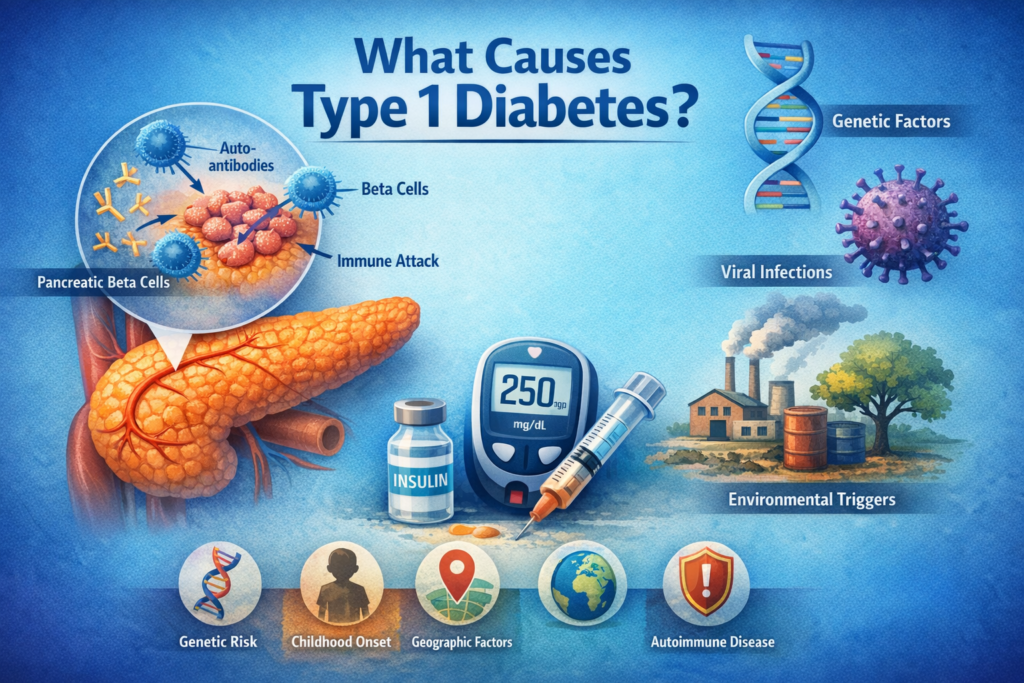
What triggers type 1 diabetes

What Causes Type 1 Diabetes? Genetics, Immune System, and Risk Factors Explained

What Causes Type 1 Diabetes? Type 1 diabetes is primarily caused by an autoimmune reaction in which the body’s immune system mistakenly attacks insulin-producing cells in the pancreas. This destruction prevents the body from producing enough insulin to regulate blood sugar. Unlike Type 2 diabetes, Type 1 diabetes is not caused by lifestyle, diet, or weight. Instead, it develops through a combination of genetic susceptibility and environmental triggers that activate the immune system. Understanding the causes of Type 1 diabetes helps individuals identify risk factors, understand how the disease develops, and follow ongoing research on prevention and treatment. What Is Type 1 Diabetes? Type 1 diabetes is an autoimmune disease that destroys insulin-producing cells in the pancreas. Insulin is a hormone that allows glucose (sugar) in the bloodstream to enter cells and be used for energy. Without insulin, blood sugar levels rise to dangerous levels. Key characteristics of Type 1 diabetes The body produces little or no insulin The immune system attacks pancreatic beta cells Blood glucose levels become elevated Insulin therapy is required for life Type 1 diabetes often develops in children, teenagers, or young adults, which is why it was historically called juvenile diabetes. However, it can occur at any age. What Is the Main Cause of Type 1 Diabetes? The main cause of Type 1 diabetes is autoimmune destruction of insulin-producing beta cells in the pancreas. In people with this condition, the immune system mistakenly identifies beta cells as harmful and gradually destroys them. As the number of beta cells decreases, the pancreas produces less insulin. Key points about the primary cause It is an autoimmune disease Immune cells attack pancreatic beta cells Insulin production eventually stops Blood glucose becomes difficult to control Type 1 diabetes develops when the immune system destroys the pancreatic beta cells that make insulin. U.S. health agencies describe the disease as an autoimmune condition, and they note that this process can begin months or even years before symptoms appear. Researchers believe the disease usually results from a combination of genetic susceptibility and environmental triggers, rather than one single cause. How Does the Immune System Destroy Insulin-Producing Cells? Type 1 diabetes develops when the immune system attacks the insulin-producing cells inside the pancreas. This immune attack occurs gradually and may start months or years before symptoms appear. The process typically includes Immune system activation Production of autoantibodies Inflammation of pancreatic islets Destruction of beta cells Loss of insulin production When about 80–90% of beta cells are destroyed, symptoms of Type 1 diabetes usually begin. What Role Do Pancreatic Beta Cells Play? Pancreatic beta cells produce insulin, the hormone responsible for controlling blood glucose levels. These cells are located in small clusters called islets of Langerhans inside the pancreas. Beta cells perform several essential functions Detect rising blood sugar levels Release insulin into the bloodstream Help cells absorb glucose for energy Maintain stable blood glucose levels When beta cells are destroyed, the body loses its ability to regulate blood sugar naturally. What Are Islet Autoantibodies? Islet autoantibodies are immune proteins that attack the insulin-producing cells of the pancreas. These antibodies are often detectable before Type 1 diabetes symptoms appear. Common autoantibodies include: GAD antibodies (Glutamic Acid Decarboxylase) IA-2 antibodies Insulin autoantibodies ZnT8 antibodies Doctors sometimes use these markers to identify people at higher risk of developing Type 1 diabetes. One of the clearest early markers of future Type 1 diabetes is the presence of islet autoantibodies. NIDDK reports that people with two or more diabetes-related autoantibodies are at high risk for progression, and these antibodies can appear before any symptoms. Major autoantibodies include those against insulin, GAD65, IA-2, and ZnT8. Is Type 1 Diabetes Genetic? Type 1 diabetes has a genetic component, but genes alone do not cause the disease. People inherit certain genes that increase susceptibility to autoimmune reactions affecting the pancreas. However, many individuals with genetic risk never develop the disease. Which Genes Are Linked to Type 1 Diabetes? Several genes related to the immune system are associated with increased risk. The most important genes belong to the Human Leukocyte Antigen (HLA) system. Key genes linked to Type 1 diabetes HLA-DR3 HLA-DR4 HLA-DQ genes These genes influence how the immune system recognizes and responds to cells in the body. Research consistently shows that HLA-region genes are the strongest known genetic risk factors for Type 1 diabetes. The American Diabetes Association notes that HLA-DR3 and HLA-DR4 are especially associated with risk in many White populations, while NIDDK also states that Type 1 diabetes is a complex disorder caused by multiple genetic and environmental factors acting together. Does Family History Increase Risk? Yes. Family history slightly increases the likelihood of developing Type 1 diabetes. However, most people diagnosed with Type 1 diabetes do not have a close family member with the condition. Approximate risk estimates Family Relationship Estimated Risk General population ~0.4% Father with Type 1 diabetes ~6–9% Mother with Type 1 diabetes ~1–4% Sibling with Type 1 diabetes ~5–7% Family history raises risk, but it does not make Type 1 diabetes inevitable. NIDDK’s Diabetes in America estimates the lifetime risk by age 20 at about 1 in 300 in the general population, compared with about 1 in 40 for children of mothers with Type 1 diabetes and about 1 in 15 for children of fathers with Type 1 diabetes. Risk for siblings ranges from about 1 in 12 to 1 in 35, depending on other factors. What Environmental Triggers May Contribute to Type 1 Diabetes? Environmental triggers may activate the autoimmune process in genetically susceptible individuals. These triggers do not directly cause the disease but may initiate the immune system attack on beta cells. Possible environmental factors include: Viral infections Early childhood exposures Gut microbiome changes Environmental toxins Can Viral Infections Trigger Type 1 Diabetes? Some research suggests that viral infections may trigger the autoimmune response that leads to Type 1 diabetes. Viruses may damage beta cells or alter immune system behavior. Possible viral triggers include: Enteroviruses Coxsackievirus Rubella virus Cytomegalovirus Viruses

What Causes Type 1 Diabetes? Genetics, Immune System, and Risk Factors Explained Read More »