New Influenza Variant Linked to Rise in Severe Flu Cases
Key Summary: New Influenza Variant (Subclade K)
-
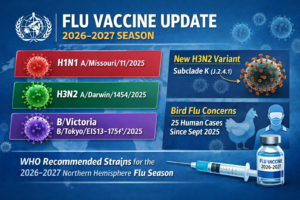
A new influenza A (H3N2) variant, known as subclade K, is linked to rising flu cases and hospitalizations in the U.S., Canada, the U.K., Japan, and Australia
-
Health experts say the variant is now dominant in areas with active influenza spread
-
Subclade K emerged after this season’s flu vaccine was developed, raising concerns about reduced vaccine match
-
Experts stress the variant shows antigenic drift, not antigenic shift, meaning it is not considered pandemic-level
-
The current flu vaccine may be less effective at preventing infection, but it still offers strong protection against severe illness and death
-
CDC data shows influenza activity is increasing nationwide, with 89% of recent samples belonging to subclade K
-
Some regions, including Texas, are seeing rising hospitalizations, especially among adults aged 65 and older
-
Severe flu seasons can occur back-to-back, though they remain relatively uncommon
-
Medical experts emphasize that it is not too late to get vaccinated
-
Public health officials urge continued vaccination, monitoring of symptoms, and preventive measures

Overview: A Mutated Flu Strain Raises Global Concern
Health experts are closely monitoring a new influenza A (H3N2) variant, known as subclade K, which appears to be contributing to a rise in flu cases and hospitalizations across several countries, including the United States, the United Kingdom, Canada, Japan, and Australia.
Public health officials say this emerging variant may help explain why the current flu season is becoming more severe in some regions.
What Is Subclade K?
Subclade K is a mutated form of the H3N2 influenza A virus, a strain historically associated with more intense flu seasons. According to infectious disease experts, this variant is now dominant in areas experiencing significant influenza activity.
Dr. Andrew Pekosz, a professor of molecular microbiology and immunology at the Johns Hopkins Bloomberg School of Public Health, said the variant is being detected widely wherever influenza is spreading in the U.S.
Why Experts Are Watching This Variant Closely
One major concern is that subclade K emerged after the current flu vaccine was developed, meaning the vaccine may not be a perfect match.
Key concerns include:
-
Genetic mutations that may allow the virus to partially evade immune protection
-
Rapid spread across multiple countries
-
Possible links to increased hospitalizations, particularly among older adults
However, experts emphasize that the variant represents antigenic drift, a gradual evolutionary change, rather than antigenic shift, which is associated with pandemics.
Does the Current Flu Vaccine Still Work?
While the mutations in subclade K may reduce how well the vaccine prevents infection, health experts agree the flu shot still offers important protection, especially against severe illness, hospitalization, and death.
“The mutations may allow the virus to evade some—but not all—vaccine-induced protection,” Dr. Pekosz explained. He added that researchers are still determining whether the variant itself causes more severe disease or if rising severity is simply due to higher overall case numbers.
Dr. Robert Hopkins, medical director of the National Foundation for Infectious Diseases, echoed this view, noting that influenza remains notoriously difficult to predict.
Current Situation in the United States
According to the U.S. Centers for Disease Control and Prevention (CDC), influenza activity is increasing nationwide.
CDC highlights for early December:
-
Only four states currently report high or very high flu-like illness activity
-
89% of flu samples collected since late September belong to subclade K
-
National hospitalization rates remain approximately 7 per 100,000, similar to past seasons
That said, some states are seeing changes. Texas, for example, has reported rising hospitalizations, particularly among people aged 65 and older, potentially linked to the new variant.
Lessons From Recent Severe Flu Seasons
The 2024–2025 flu season ranked among the most severe in decades. While consecutive severe seasons are uncommon, health experts stress they are not unprecedented.
High circulation of aggressive strains like H3N2, combined with lower immunity and vaccine mismatches, can contribute to challenging flu years.
Public Health Message: Don’t Delay Vaccination
Despite uncertainties surrounding subclade K, experts agree on one point: vaccination still matters.
“It is not too late to get a flu shot,” Dr. Pekosz said, stressing that even partial protection can significantly reduce serious outcomes.
Public health officials continue to recommend:
-
Getting vaccinated as soon as possible
-
Monitoring symptoms closely, especially in older adults
-
Practicing basic prevention, such as handwashing and staying home when ill
What Happens Next?
Researchers are actively studying whether subclade K leads to more severe disease on an individual level or whether its impact is primarily due to widespread transmission.
As the flu season progresses toward its typical peak in January and February, health authorities say surveillance and vaccination will remain critical tools in reducing the burden of illness.