What Makes Diabetes Worse? Comprehensive Guide to Triggers, Worst Foods, and Safe Management Rules
Diabetes doesn’t worsen overnight—it happens gradually when blood sugar stays uncontrolled for long periods. The biggest drivers are diet, lifestyle habits, and inconsistent management.
If you understand what triggers blood sugar spikes and insulin resistance, you can prevent complications and live a healthy life.
According to the World Health Organization (WHO), global diabetes prevalence has risen from about 7% in 1990 to 14% in 2022, largely due to poor diet and inactivity. That makes understanding these triggers more important than ever.
What makes diabetes worse over time?
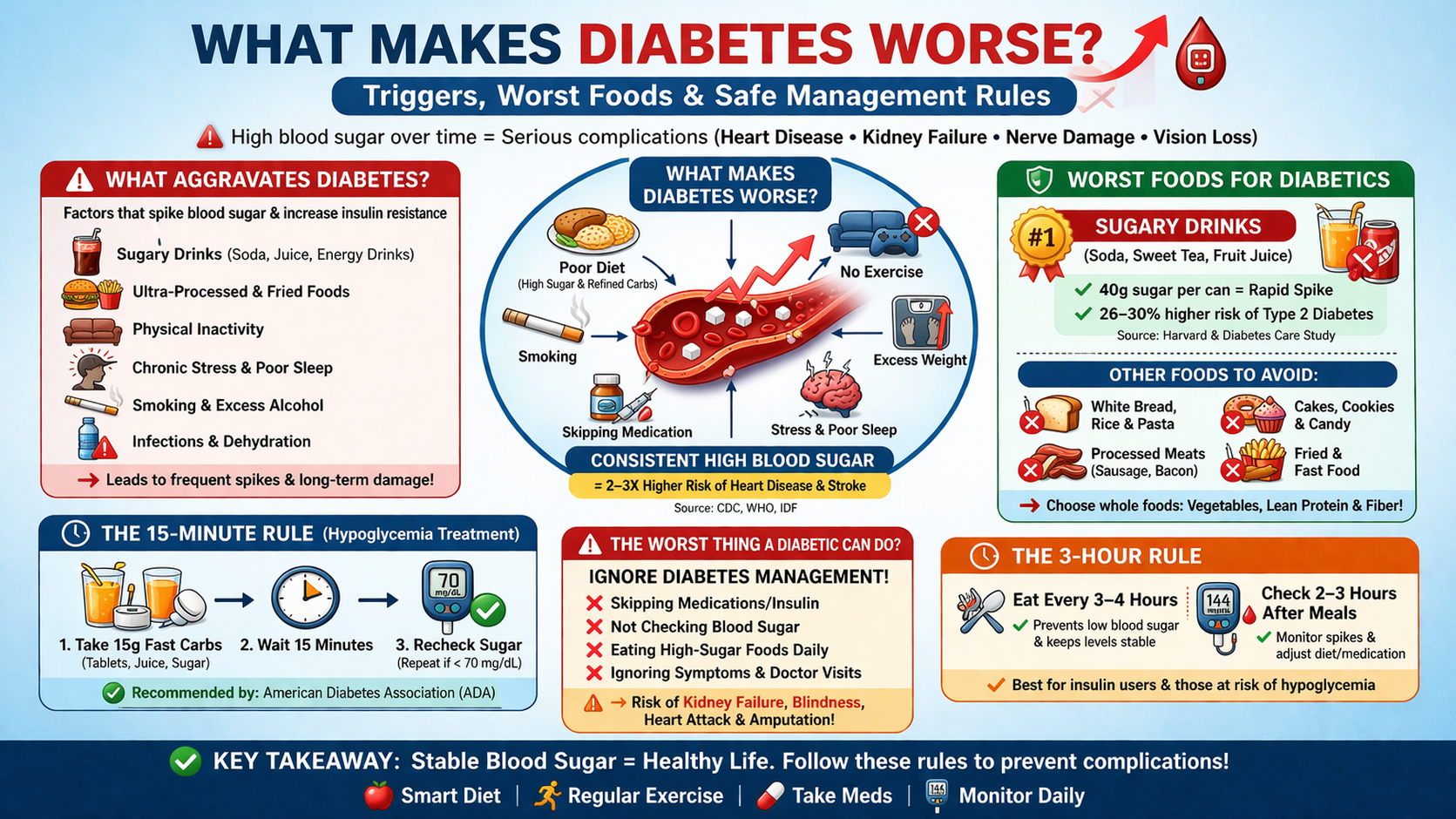
Diabetes worsens when blood sugar remains consistently above target levels, leading to damage in organs like the heart, kidneys, eyes, and nerves.
When glucose stays high:
- Blood vessels become damaged
- Insulin becomes less effective
- Complications develop faster
Key factors that worsen diabetes:
- Frequent high blood sugar (hyperglycemia)
- Poor diet (high sugar and refined carbs)
- Lack of physical activity
- Excess body weight
- Smoking
- Poor sleep
- Skipping medications
📊 Research insight:
The Centers for Disease Control and Prevention (CDC) states that people with diabetes are 2–3 times more likely to develop heart disease than those without it.
What aggravates diabetes and causes blood sugar spikes?
Diabetes is aggravated by anything that increases insulin resistance or causes rapid glucose spikes.
These triggers make it harder to keep blood sugar stable.
Common aggravating factors:
- Ultra-processed foods
- Sugary drinks
- Refined carbohydrates
- Stress
- Infections
- Dehydration
- Alcohol (in excess)
Why these factors matter:
- They increase glucose absorption speed
- They reduce insulin sensitivity
- They cause frequent spikes and crashes
How stress plays a role:
Stress hormones like cortisol increase blood sugar levels—even without eating.
What is the number one worst food for diabetics?
The worst food group for diabetics is sugary drinks, including soda, sweetened tea, energy drinks, and fruit juices.
Why sugary drinks are harmful:
- They contain high amounts of sugar (≈40g per soda)
- They are absorbed very quickly
- They lack fiber and protein
Result:
- Rapid glucose spikes
- Increased insulin demand
- Higher long-term risk
📊 Research finding:
A meta-analysis published in Diabetes Care found that people consuming high amounts of sugary drinks had about a 26–30% higher risk of developing type 2 diabetes.
Why do sugary drinks spike blood sugar faster than solid foods?
Liquids digest faster because they require little breakdown, leading to immediate glucose absorption.
In contrast:
- Solid foods digest more slowly
- Fiber slows sugar release
- Protein reduces spikes
What foods should you avoid if you have diabetes?
People with diabetes should avoid foods that cause rapid blood sugar spikes or worsen insulin resistance.
High-risk food categories:
| Food Type | Examples | Why It’s Harmful |
|---|---|---|
| Sugary drinks | Soda, juice, energy drinks | Rapid glucose spikes |
| Refined carbs | White bread, rice, pasta | High glycemic index |
| Sweets | Cakes, cookies, candy | Sugar + refined flour |
| Processed meats | Sausages, bacon | Linked to insulin resistance |
| Fried foods | Fast food, fries | High fat + inflammation |
Additional foods to limit:
- Sweetened yogurt
- Breakfast cereals (processed)
- Packaged snacks
📊 Evidence:
A study in The BMJ found that higher consumption of refined grains is associated with increased diabetes risk.
What is the 15-minute rule in diabetes?
The 15-minute rule is used to treat mild hypoglycemia (low blood sugar) safely.
How it works:
- Take 15 grams of fast-acting carbs
- Glucose tablets
- 120 ml juice
- 1 tablespoon sugar or honey
- Wait 15 minutes
- Recheck blood sugar
- Repeat if still below 70 mg/dL
Why it’s important:
- Prevents severe hypoglycemia
- Avoids overcorrecting (which causes spikes)
This method is recommended by the American Diabetes Association (ADA).
What is the 3-hour rule in diabetes?
The 3-hour rule means not going longer than 3–4 hours without eating (for some patients) and checking blood sugar 2–3 hours after meals.
Two common uses:
1. Eating interval rule:
- Prevents low blood sugar
- Keeps glucose stable
2. Post-meal monitoring:
- Check blood sugar after 2–3 hours
- Helps adjust diet or insulin
Why it matters:
Post-meal spikes (postprandial glucose) are linked to:
- Heart disease
- Long-term complications
What is the worst thing a diabetic can do?
The worst thing a diabetic can do is ignore blood sugar management consistently.
Dangerous behaviors include:
- Skipping medications or insulin
- Eating high-sugar foods regularly
- Not monitoring blood glucose
- Ignoring symptoms
- Avoiding medical care
Why this is dangerous:
- Leads to chronic hyperglycemia
- Increases complication risk
📊 Global impact:
According to the International Diabetes Federation (IDF), diabetes caused 6.7 million deaths in 2021.
Why is skipping medication dangerous?
Skipping medication disrupts blood sugar control and can lead to severe complications quickly.
It can cause:
- Sudden glucose spikes
- Diabetic ketoacidosis (in type 1)
- Organ damage over time
How do lifestyle habits affect diabetes control?
Lifestyle habits directly influence blood sugar, insulin sensitivity, and overall disease progression.
Positive habits:
- Regular exercise
- Balanced diet
- Adequate sleep
- Stress management
Negative habits:
- Sedentary lifestyle
- Smoking
- Chronic stress
- Sleep deprivation
📊 Research insight:
The Diabetes Prevention Program (NIH study) showed lifestyle changes reduced diabetes risk by 58%.
What are the long-term risks of poorly controlled diabetes?
Uncontrolled diabetes leads to serious complications affecting multiple organs.
Major complications:
- Heart disease
- Stroke
- Kidney failure
- Vision loss
- Nerve damage
- Amputations
Why complications happen:
- High glucose damages blood vessels
- Inflammation increases
- Organs lose function
Key Takeaways
- Diabetes worsens due to high blood sugar over time
- Sugary drinks are the worst dietary trigger
- Lifestyle habits play a major role
- The 15-minute rule treats low blood sugar
- The 3-hour rule helps maintain stability
- Ignoring management is the most dangerous behavior
FAQs
What causes sudden spikes in blood sugar?
Sudden spikes are caused by sugary foods, stress, illness, or skipping medication.
Can stress worsen diabetes?
Yes, stress increases cortisol, which raises blood sugar levels.
Is fruit bad for diabetes?
Whole fruit is generally safe in moderation, but fruit juice should be limited.
How often should diabetics eat?
Many people benefit from eating every 3–4 hours, but this depends on treatment plans.
What is a safe blood sugar level?
Typically, 70–130 mg/dL before meals and less than 180 mg/dL after meals (ADA guidelines).
Can diabetes be reversed?
Type 2 diabetes can sometimes be put into remission with lifestyle changes.
Conclusion
Managing diabetes is not just about avoiding sugar—it’s about controlling daily habits, diet, and consistency. Small changes can prevent serious complications and dramatically improve quality of life.