
What Are the Warning Signs, A1C Levels, and Key Indicators of Diabetes?
Diabetes is one of the most common chronic diseases worldwide, and many people live with it for years without knowing. According to the World Health Organization, over 420 million people globally have diabetes, and a significant portion remains undiagnosed.
The most important thing to understand is this: diabetes often starts silently but gives warning signs if you know what to look for. This guide breaks down those signs, explains A1C levels, and helps you recognize when to take action.
What are the 20 warning signs of diabetes?
The 20 warning signs of diabetes include frequent urination, excessive thirst, fatigue, blurred vision, and slow-healing wounds. These symptoms happen because high blood sugar disrupts normal body functions.
Common early and advanced warning signs:
- Frequent urination (polyuria)
- Excessive thirst (polydipsia)
- Increased hunger (polyphagia)
- Unexplained weight loss
- Fatigue or weakness
- Blurred vision
- Slow-healing wounds
- Frequent infections
- Dry skin
- Tingling or numbness in hands/feet
- Dark patches on skin (acanthosis nigricans)
- Irritability
- Headaches
- Bad breath (fruity smell in severe cases)
- Nausea or vomiting
- Recurrent yeast infections
- Reduced concentration
- Increased nighttime urination
- Erectile dysfunction (in men)
- Vision changes over time
Why these occur:
High blood glucose damages blood vessels and nerves, leading to widespread symptoms across multiple body systems.
What are the early warning signs vs late symptoms of diabetes?
Early signs are subtle (thirst, fatigue), while late symptoms involve complications like nerve damage and vision loss.
Early signs:
- Mild fatigue
- Increased thirst
- Slight weight changes
- Frequent urination
Late-stage symptoms:
- Nerve pain (neuropathy)
- Vision problems (retinopathy)
- Kidney issues
- Chronic infections
Key insight: Early detection can prevent most complications.
What do the 5 C’s of diabetes mean?
The 5 C’s of diabetes are common symptoms: excessive urination, thirst, hunger, fatigue, and blurry vision.
The 5 C’s explained:
- Constant urination → kidneys remove excess sugar
- Constant thirst → dehydration from fluid loss
- Constant hunger → cells lack usable glucose
- Chronic fatigue → low energy utilization
- Cloudy vision → fluid shifts in eye lenses
These are classic textbook indicators doctors use for initial screening.
What does undiagnosed diabetes feel like?
Undiagnosed diabetes often feels like persistent fatigue, brain fog, and unexplained body changes that don’t improve.
Common experiences:
- Always tired, even after rest
- Feeling “off” or mentally slow
- Frequent infections
- Increased thirst without a clear cause
- Subtle weight loss or gain
Important: Many people ignore these symptoms because they develop gradually.
What is the A1C level for diabetes diagnosis?
An A1C level of 6.5% or higher is used to diagnose diabetes.
According to the American Diabetes Association:
| A1C Level | Meaning |
|---|---|
| Below 5.7% | Normal |
| 5.7% – 6.4% | Prediabetes |
| 6.5% or higher | Diabetes |
What A1C measures:
It reflects your average blood sugar over the past 2–3 months, not just a single reading.
What is a normal A1C vs prediabetes vs diabetes?
A normal A1C is below 5.7%, while diabetes starts at 6.5% or higher.
Quick comparison:
- Normal: < 5.7%
- Prediabetes: 5.7–6.4%
- Diabetes: ≥ 6.5%
Why it matters:
Even prediabetes significantly increases the risk of developing full diabetes if not addressed.
What is the A1C goal for a 70-year-old?
For most healthy adults aged 70, the A1C goal is typically below 7.0–7.5%, depending on overall health.
Individualized targets:
- Healthy older adults: < 7–7.5%
- Multiple conditions: < 8%
- Frail individuals: < 8–8.5%
Why goals differ:
Older adults are at higher risk of hypoglycemia (low blood sugar), so targets are slightly relaxed.
How does A1C vary by age and health condition?
A1C targets become less strict with age and comorbidities to balance safety and control.
Factors affecting A1C goals:
- Life expectancy
- Risk of hypoglycemia
- Heart disease
- Kidney function
- Medication type
Key idea: Diabetes care is personalized, not one-size-fits-all.
What are the newer research-based subtypes of diabetes?
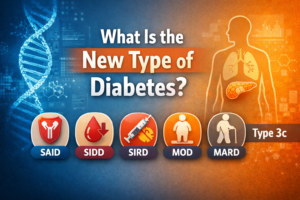
Newer research-based subtypes of diabetes are five biologically distinct clusters identified in adults with newly diagnosed diabetes: SAID, SIDD, SIRD, MOD, and MARD. These clusters were proposed to move beyond the simple “type 1 vs. type 2” model by grouping people according to autoimmune status, insulin production, insulin resistance, age at diagnosis, body size, and blood sugar control.
The five cluster-based subtypes are:
- SAID (Severe Autoimmune Diabetes): This group resembles classic autoimmune diabetes. People in this cluster tend to have positive GAD antibodies, an earlier onset, poor insulin production, and a clinical picture similar to type 1 diabetes or LADA.
- SIDD (Severe Insulin-Deficient Diabetes): This subtype is marked by low insulin secretion and high HbA1c at diagnosis. Research has linked it to poorer glucose control and a higher risk of diabetic retinopathy.
- SIRD (Severe Insulin-Resistant Diabetes): This group is defined by marked insulin resistance. Follow-up studies have found that it is associated with a higher risk of diabetic kidney disease and fatty liver–related complications.
- MOD (Mild Obesity-Related Diabetes): This subtype usually includes people with obesity but without the same degree of severe insulin resistance seen in SIRD. It is generally considered a milder phenotype than the severe subgroups.
- MARD (Mild Age-Related Diabetes): This cluster tends to appear in older adults and usually has a comparatively milder metabolic profile at diagnosis.
This classification matters because different clusters appear to carry different risks for complications and may eventually support more personalized treatment. In the original Lancet study, the authors concluded that this five-cluster model could be a first step toward precision medicine in diabetes, because disease progression and complication risk were not the same across all groups.
At the same time, these clusters are not the standard day-to-day diagnostic system used in routine clinical guidelines. Current ADA classification still organizes diabetes into major clinical categories such as type 1 diabetes, type 2 diabetes, gestational diabetes, and other specific types due to other causes, including monogenic diabetes and diabetes caused by exocrine pancreatic disease or medications.
How are modern classifications of diabetes changing?
Modern research is shifting diabetes classification from 3 types to multiple subgroups based on biology.
Key changes:
- Focus on insulin resistance vs deficiency
- Use of genetic and metabolic markers
- More precise treatment approaches
Insight: Diabetes is not a single disease—it’s a spectrum.
When should you see a doctor for diabetes symptoms?
You should see a doctor if you experience persistent symptoms like frequent urination, thirst, or fatigue for more than a few weeks.
Seek immediate evaluation if:
- Symptoms worsen quickly
- You experience weight loss without trying
- You have blurred vision or numbness
- You have a family history of diabetes
What are the biggest misconceptions about diabetes symptoms?
The biggest misconception is that diabetes always causes obvious symptoms—it often doesn’t.
Common myths:
- “I’ll feel it if I have diabetes” → often false
- “Only overweight people get diabetes” → incorrect
- “Sugar alone causes diabetes” → oversimplified
Key Takeaways
- Diabetes often starts with subtle symptoms that are easy to miss
- The 5 C’s are classic early warning signs
- A1C ≥ 6.5% indicates diabetes
- Older adults have slightly higher A1C targets
- New research shows diabetes has multiple subtypes
- Early detection can prevent serious complications
FAQs
What is the earliest sign of diabetes?
Frequent urination and increased thirst are usually the earliest signs.
Can you have diabetes without symptoms?
Yes, many people have had diabetes for years without noticeable symptoms.
How fast does diabetes develop?
Type 2 diabetes develops gradually over the years, while type 1 can appear quickly.
Is A1C more important than fasting glucose?
A1C gives a long-term average, making it more reliable for diagnosis.
What is A1C dangerous?
An A1C above 9% is considered poorly controlled and increases complication risk.
Can diabetes be reversed?
Prediabetes and early type 2 diabetes can sometimes be reversed with lifestyle changes.
At what age is diabetes most common?
Type 2 diabetes is most common after age 40, but it’s increasingly seen in younger people.