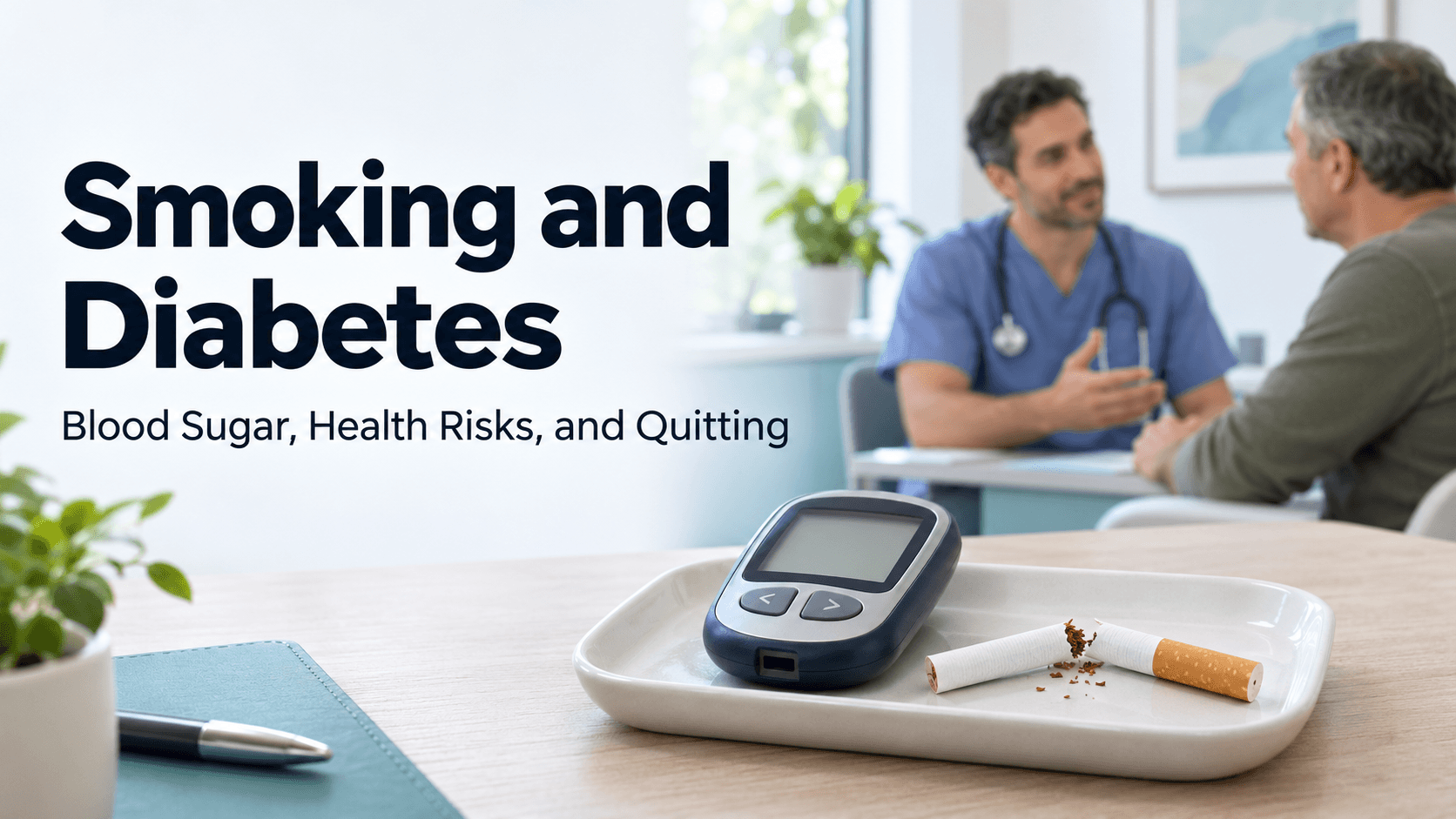
Smoking and Diabetes: Effects on Blood Sugar, Health Risks, and Quitting
Smoking increases the risk of type 2 diabetes and can make blood sugar harder to manage if you already have diabetes. It also adds to the risk of heart disease, poor circulation, and other complications. Quitting benefits your health even if your blood sugar doesn’t improve right away. CDC
Does Smoking Increase the Risk of Type 2 Diabetes?
Yes. According to the CDC, people who smoke have a 30% to 40% higher risk of developing type 2 diabetes than people who don’t smoke. This is a relative increase, not a prediction of any one person’s chance of developing diabetes. Risk also rises with the amount smoked. CDC
Nicotine can raise blood sugar, and chemicals in cigarette smoke contribute to inflammation. Both can make it harder for the body to regulate blood sugar. This is one way smoking can contribute to insulin resistance, which means the body responds less effectively to the insulin it makes. CDC
How Does Smoking Affect Blood Sugar if You Have Diabetes?
Smoking can make blood sugar harder to keep within your target range. Nicotine can raise glucose levels, and some people who smoke and use insulin may need more insulin to manage their glucose. That does not mean you should adjust your dose on your own. If your readings change after you cut back or quit, share the pattern with your diabetes care team so they can advise you on monitoring and medication. CDC
What Diabetes Complications Can Smoking Make Worse?
Smoking adds to the risk of complications that already occur more often in people with diabetes. The combination is especially concerning for the heart and blood vessels. CDC
| Complication | Why smoking matters |
|---|---|
| Heart and blood vessel disease | Smoking adds to the cardiovascular risk associated with diabetes. |
| Foot problems | Poor circulation can make wounds harder to heal and increase the risk of serious foot complications. |
| Kidney disease | People with diabetes who smoke are more likely to develop kidney complications. |
| Vision loss | Smoking adds to the risk of serious diabetes-related eye problems. |
What Happens to Blood Sugar After You Quit Smoking?
Blood sugar can change after quitting, and A1C may not fall immediately. One UK observational study of adults with type 2 diabetes found that A1C rose by an average of about 0.2 percentage points in the first year after quitting and then declined with continued abstinence. That study describes a group average, not what will happen to every person who quits. pubmed.ncbi.nlm.nih.gov
A temporary rise in A1C is a reason to review your diabetes care plan, not a reason to start smoking again. If you use insulin or another medication that can cause low blood sugar, ask your care team whether to check your glucose more often while you quit. CDC
What Is the Best Way to Quit Smoking if You Have Diabetes?
Quitting support that combines counseling and medication is the approach recommended by the American Diabetes Association. Counseling can help you plan for triggers and cravings, while a clinician or pharmacist can help you choose an option such as nicotine replacement therapy or a prescription quit-smoking medicine. diabetesjournals.org
A useful first step is to tell your diabetes care team that you plan to quit. Ask about cessation support and agree on what to do if your glucose readings start running higher or lower than usual.
Frequently Asked Questions
Does smoking cause type 1 diabetes?
The established link discussed here is with type 2 diabetes, not type 1. If you already have type 1 diabetes, quitting still matters because smoking can make glucose management harder and increase the risk of complications. CDC
Is vaping recommended for people with diabetes who want to quit?
The American Diabetes Association advises people with diabetes to avoid vaping, including as a way to stop smoking cigarettes. It recommends counseling and cessation medication instead. diabetesjournals.org
Conclusion
Smoking raises the risk of developing type 2 diabetes and makes existing diabetes harder to manage. If you’re ready to quit, make a plan that covers both how to handle cravings and how to monitor your blood sugar. You don’t need to wait for your A1C to improve to benefit from quitting.