12 Essential Care Guidelines for a Child Newly Diagnosed With Type 1 Diabetes
A child newly diagnosed with type 1 diabetes needs immediate insulin treatment, regular blood glucose monitoring, balanced nutrition, and ongoing care from a pediatric diabetes team. Parents and caregivers must also learn how to recognize low blood sugar, prevent diabetic ketoacidosis (DKA), and manage diabetes safely at home and school.
According to the American Diabetes Association’s 2026 Standards of Care, children with type 1 diabetes should receive individualized treatment, diabetes education, and access to appropriate glucose monitoring technology.
Although a new diagnosis can feel overwhelming, children with type 1 diabetes can grow, attend school, participate in sports, and lead active lives with appropriate treatment and support.
What Are the Recommended Guidelines for Caring for a Newly Diagnosed Child With Type 1 Diabetes?
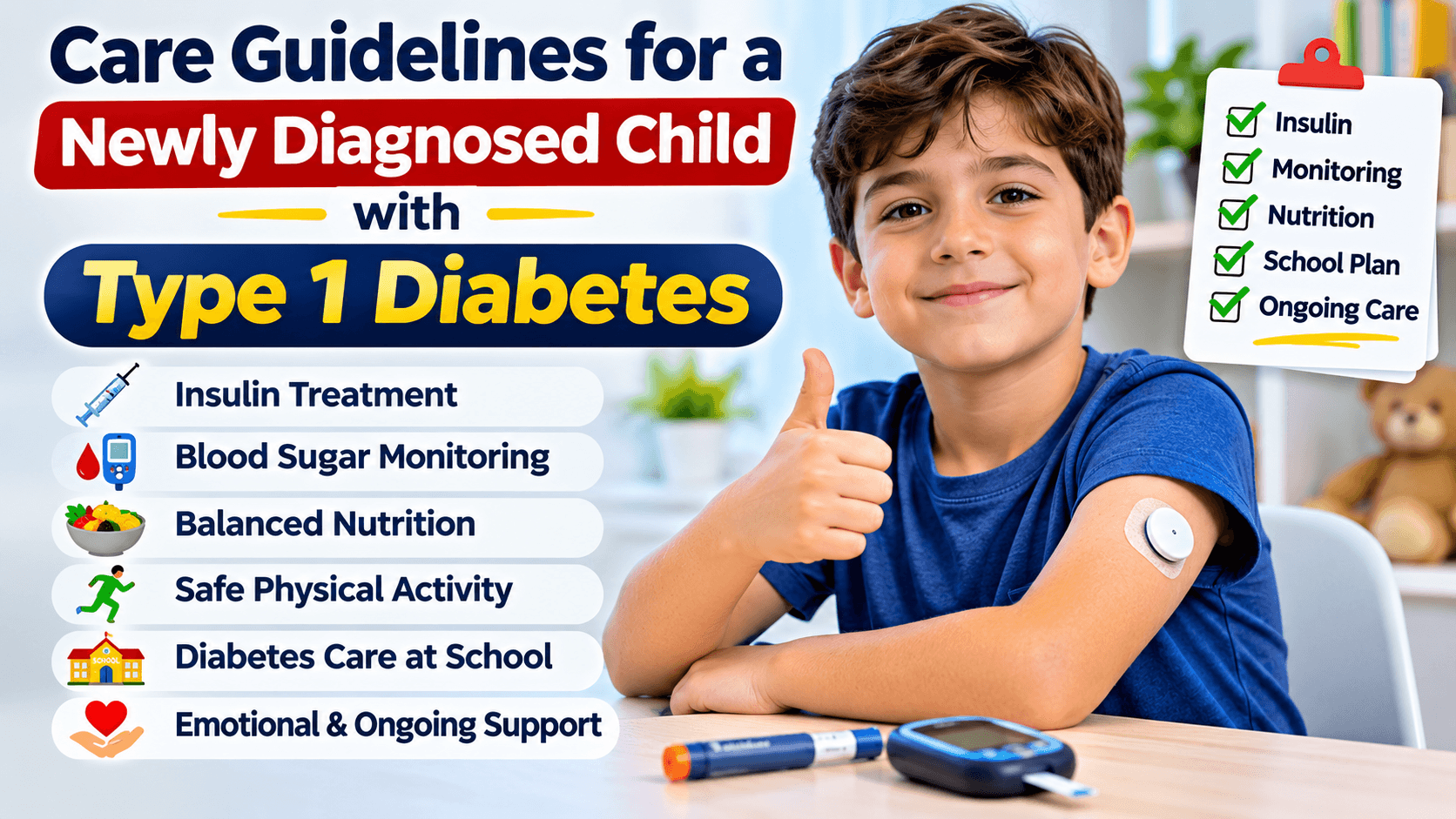
The 12 essential care guidelines include:
- Begin insulin treatment promptly.
- Monitor blood glucose regularly.
- Establish individualized glucose targets.
- Provide balanced meals and carbohydrate-counting education.
- Recognize and treat low blood sugar.
- Monitor ketones and prevent diabetic ketoacidosis.
- Create a diabetes sick-day management plan.
- Consider continuous glucose monitoring and insulin pumps.
- Support regular physical activity.
- Develop a diabetes care plan for school.
- Provide emotional and psychological support.
- Schedule ongoing diabetes appointments and health screenings.
Each guideline helps protect the child’s immediate safety while supporting healthy growth and long-term diabetes management.
1. How Should Insulin Treatment Begin After Diagnosis?
Insulin treatment should begin promptly under medical supervision because children with type 1 diabetes produce little or no insulin.
Most children require a combination of background insulin and additional insulin for meals. Treatment may involve multiple daily injections or an insulin pump.
A pediatric endocrinologist determines the insulin regimen based on the child’s age, weight, blood glucose levels, eating patterns, and individual needs.
Parents should learn how to administer insulin, calculate prescribed doses, store supplies, and recognize potential dosing errors.
Insulin must not be stopped without medical guidance, even when a child is ill or eating less.
2. How Often Should a Newly Diagnosed Child Check Blood Sugar?
Children with type 1 diabetes need frequent glucose monitoring throughout the day and night.
The ADA recommends offering continuous glucose monitoring (CGM) at diagnosis or as soon as possible when the child and caregivers can use the technology safely.
When CGM is unavailable, finger-stick blood glucose measurements are commonly performed before meals, at bedtime, during illness, around physical activity, and whenever symptoms suggest abnormal glucose levels.
A blood glucose meter should remain available even when CGM is used, particularly if symptoms do not match sensor readings.
Monitoring helps caregivers recognize glucose patterns and make treatment decisions according to the child’s prescribed care plan.
3. What Blood Sugar Levels Should a Child With Type 1 Diabetes Maintain?
Glucose goals should be individualized according to the child’s age, health, treatment, and risk of hypoglycemia.
For most children and adolescents with diabetes, the ADA recommends an HbA1c goal below 7%.
For many children using CGM, a common goal is to spend more than 70% of the time within the glucose range of 70–180 mg/dL (3.9–10.0 mmol/L), when this can be achieved safely.
Some children need different targets, particularly those with recurrent severe hypoglycemia, difficulty recognizing low blood sugar, or limited access to diabetes technology.
Parents should discuss individualized targets with the child’s diabetes team rather than attempting to maintain the same glucose level throughout the day.
4. What Should a Newly Diagnosed Child With Type 1 Diabetes Eat?
Children with type 1 diabetes should eat balanced, age-appropriate meals that support normal growth and development.
A healthy eating pattern can include:
- Vegetables and whole fruits.
- Whole grains and fiber-rich carbohydrates.
- Lean proteins, eggs, and legumes.
- Milk, yogurt, or appropriate alternatives.
- Nuts, seeds, and other sources of healthy fats.
- Water instead of frequent sugar-sweetened beverages.
Carbohydrate counting is particularly important because carbohydrates influence blood glucose and mealtime insulin requirements.
A registered dietitian experienced in pediatric diabetes can teach families how to plan meals, estimate carbohydrate portions, and adjust meal-related insulin according to prescribed instructions.
Children with type 1 diabetes do not need to eliminate carbohydrates or follow a restrictive weight-loss diet.
5. How Should Parents Treat Low Blood Sugar?
Low blood sugar, or hypoglycemia, generally means a glucose level below 70 mg/dL (3.9 mmol/L).
Common symptoms include shakiness, sweating, hunger, headache, irritability, dizziness, and difficulty concentrating.
For an alert child who can swallow safely, treatment usually involves fast-acting carbohydrates followed by another glucose check after 15 minutes.
The amount of carbohydrate depends on the child’s age and prescribed care plan. Young children may need less than the standard adult amount of 15 grams.
If the child becomes unconscious, has a seizure, or cannot swallow safely, caregivers should administer prescribed emergency glucagon and call emergency services.
Never give food or drink by mouth to an unconscious child.
6. How Can Parents Prevent Diabetic Ketoacidosis?
Diabetic ketoacidosis (DKA) is a potentially life-threatening condition that develops when insufficient insulin causes ketones to accumulate in the blood.
Warning signs include:
- Persistent high blood glucose.
- Nausea or repeated vomiting.
- Abdominal pain.
- Excessive thirst and urination.
- Fruity-smelling breath.
- Rapid or deep breathing.
- Unusual sleepiness or confusion.
Families should have blood or urine ketone-testing supplies and understand when testing is necessary, particularly during illness or persistent hyperglycemia.
Missed insulin doses and insulin pump failures can increase DKA risk.
A child with repeated vomiting, difficulty breathing, confusion, or high ketones requires emergency medical assessment.
7. What Should Parents Do When a Child With Type 1 Diabetes Is Sick?
Children with type 1 diabetes need an individualized sick-day plan because infections and other illnesses can change insulin requirements.
Parents should monitor glucose more frequently, check ketones as instructed, encourage appropriate fluids, and contact the diabetes team when necessary.
Illness can increase blood glucose even when a child eats very little.
Background insulin generally remains necessary, although doses may need adjustment under the child’s prescribed sick-day plan.
Urgent medical assessment is needed if the child cannot keep fluids down, develops significant ketones, experiences persistent vomiting, or shows signs of DKA.
8. Should a Newly Diagnosed Child Use a Continuous Glucose Monitor or Insulin Pump?
Continuous glucose monitoring and automated insulin delivery systems are recommended options for many children with type 1 diabetes.
A CGM measures glucose in the fluid beneath the skin and provides readings, trends, and alerts.
An automated insulin delivery system combines CGM information with a compatible insulin pump to adjust insulin delivery within programmed limits.
The ADA’s 2026 guidance recommends offering these technologies to children who can use them safely with appropriate caregiver support.
However, technology does not replace diabetes education. Families must still learn how to recognize device problems, confirm questionable readings, and administer backup insulin when necessary.
9. Can Children With Type 1 Diabetes Exercise and Play Sports?
Yes. Children with type 1 diabetes should be encouraged to participate in regular physical activity.
Exercise supports cardiovascular health, physical development, emotional well-being, and overall fitness.
However, physical activity can lower or sometimes raise blood glucose, depending on its intensity, duration, and the child’s insulin levels.
Parents should follow individualized recommendations for checking glucose, carrying fast-acting carbohydrates, and adjusting food or insulin when appropriate.
Coaches, teachers, and other supervising adults should know how to recognize and respond to hypoglycemia.
10. What Diabetes Care Plan Should a Child Have at School?
Every child with type 1 diabetes should have an individualized school diabetes management plan.
In the United States, this is commonly called a Diabetes Medical Management Plan (DMMP).
The plan should explain:
- When and how glucose is monitored.
- Who helps administer insulin.
- How low and high glucose levels are treated.
- Where emergency glucagon is stored.
- What to do during meals, sports, and school trips.
- When parents or emergency services should be contacted.
School staff should receive appropriate training, particularly when a young child cannot manage diabetes independently.
Children should have reasonable access to necessary diabetes supplies, food, water, and bathroom breaks.
11. How Can Parents Support a Child Emotionally After Diagnosis?
A new type 1 diabetes diagnosis can affect a child’s emotions, confidence, and daily routine.
Some children may experience fear of injections, frustration about glucose checks, anxiety about school, or embarrassment about diabetes devices.
Parents can help by explaining diabetes in age-appropriate language, encouraging questions, and involving children gradually in manageable care tasks.
Avoid blaming a child for unexpected glucose readings.
Professional psychological support may be helpful when diabetes-related distress, anxiety, depression, or treatment avoidance interferes with daily functioning.
The ADA recommends including psychosocial assessment and support in pediatric diabetes care.
12. How Often Should a Child Visit the Diabetes Care Team?
Children with type 1 diabetes need regular follow-up appointments to assess glucose management, growth, development, and treatment needs.
Follow-up is usually especially frequent immediately after diagnosis, when insulin requirements may change quickly. Once care is established, many children attend diabetes reviews approximately every three months.
Appointments may include HbA1c testing, CGM data review, insulin adjustments, nutrition education, and assessment of emotional well-being.
Children should also receive age-appropriate screening for conditions associated with type 1 diabetes, including thyroid disease and celiac disease.
Screening for cholesterol abnormalities, kidney disease, and diabetic eye complications depends on age, diabetes duration, and individual risk factors.
What Should Parents Do During the First Week After Diagnosis?
During the first week, parents should focus on learning essential diabetes management skills rather than trying to achieve perfect glucose readings.
A practical checklist includes:
-
Obtain the prescribed insulin and learn how to administer it.
-
Learn how to check glucose and interpret the readings.
-
Obtain fast-acting carbohydrates and prescribed emergency glucagon.
-
Learn when and how to check ketones.
-
Receive written instructions for illness and emergencies.
-
Arrange follow-up with the pediatric diabetes team.
-
Inform school or childcare staff about the diagnosis.
-
Keep emergency contact numbers readily available.
Before leaving the hospital or initial diabetes education program, caregivers should be able to demonstrate essential insulin administration, glucose monitoring, and emergency-response skills.
What Is the Honeymoon Phase of Type 1 Diabetes?
The honeymoon phase is a temporary period after diagnosis when the pancreas continues producing some insulin.
During this period, a child may need less injected insulin, and glucose levels may become easier to manage.
The honeymoon phase can last for weeks or months, although its duration varies considerably.
It does not mean type 1 diabetes has disappeared or been cured.
Insulin requirements should be reviewed with the diabetes team, as giving too much insulin during this phase can increase the risk of hypoglycemia.
What Are the Most Important Diabetes Emergency Signs in Children?
Parents should know the difference between situations that require routine advice and those needing emergency treatment.
| Warning sign | Recommended action |
|---|---|
| Glucose below 70 mg/dL, child alert and able to swallow | Treat with the prescribed amount of fast-acting carbohydrate and recheck |
| Severe confusion, seizure, unconsciousness, or inability to swallow | Give prescribed glucagon and call emergency services |
| Persistent high glucose or ketones | Follow the written ketone plan and contact the diabetes team |
| Vomiting, deep breathing, fruity breath, or marked drowsiness | Seek emergency medical care immediately |
| Insulin pump failure | Use the prescribed backup insulin plan and contact the diabetes team |
These are general precautions. The child’s individualized emergency instructions take priority.
Frequently Asked Questions
Can a newly diagnosed child with type 1 diabetes live a normal life?
Yes. With insulin therapy, regular glucose monitoring, education, and appropriate support, children with type 1 diabetes can attend school, play sports, travel, and participate in everyday activities.
Does a child with type 1 diabetes need insulin every day?
Yes. Type 1 diabetes requires ongoing insulin replacement because the pancreas cannot produce enough insulin. Insulin should not be stopped without medical guidance.
Can type 1 diabetes in children be cured?
There is currently no widely available cure for established type 1 diabetes. Insulin therapy and modern monitoring technology help children manage the condition effectively.
Can a child with type 1 diabetes eat sweets?
Yes, occasional sweets can fit into an individualized eating plan. Families need to consider carbohydrate content, insulin requirements, and the child’s overall nutrition.
Do parents need to check blood sugar at night?
Nighttime glucose monitoring may be necessary, particularly soon after diagnosis, following unusual exercise, during illness, or when hypoglycemia is a concern. CGM alerts can help, but monitoring should follow the child’s care plan.
Is type 1 diabetes caused by eating too much sugar?
No. Type 1 diabetes is an autoimmune disease and is not caused by eating sugar. The immune system attacks insulin-producing cells in the pancreas.
The Bottom Line
Caring for a newly diagnosed child with type 1 diabetes requires insulin treatment, glucose monitoring, balanced nutrition, emergency preparation, and ongoing medical support.
The ADA’s 2026 recommendations emphasize individualized care, early access to diabetes technology, family education, and age-appropriate psychological support.
Parents should focus on learning the essential management skills, recognizing urgent warning signs, and building a dependable relationship with the pediatric diabetes team.
With appropriate care, children with type 1 diabetes can maintain healthy growth, participate in normal childhood activities, and develop the confidence to manage their condition as they get older.
Medical Sources and References
- American Diabetes Association — Children and Adolescents: Standards of Care in Diabetes—2026
- American Diabetes Association — Diabetes Technology: Standards of Care in Diabetes—2026
- ISPAD — Clinical Practice Consensus Guidelines 2024
- CDC — Managing Diabetes at School
- CDC — Treatment of Low Blood Sugar
- CDC — Diabetic Ketoacidosis
- CDC — Managing Sick Days
Medical disclaimer: This article provides general educational information and does not replace individualized pediatric diabetes care. Insulin doses, glucose targets, hypoglycemia treatment, and emergency procedures must be determined by the child’s diabetes care team.
Updated: November 10, 2026. Based on ADA 2026 Standards of Care, ISPAD pediatric diabetes guidelines, and CDC clinical education resources.