How Is Type 1 Diabetes Diagnosed? Tests, Symptoms, and Diagnosis Process
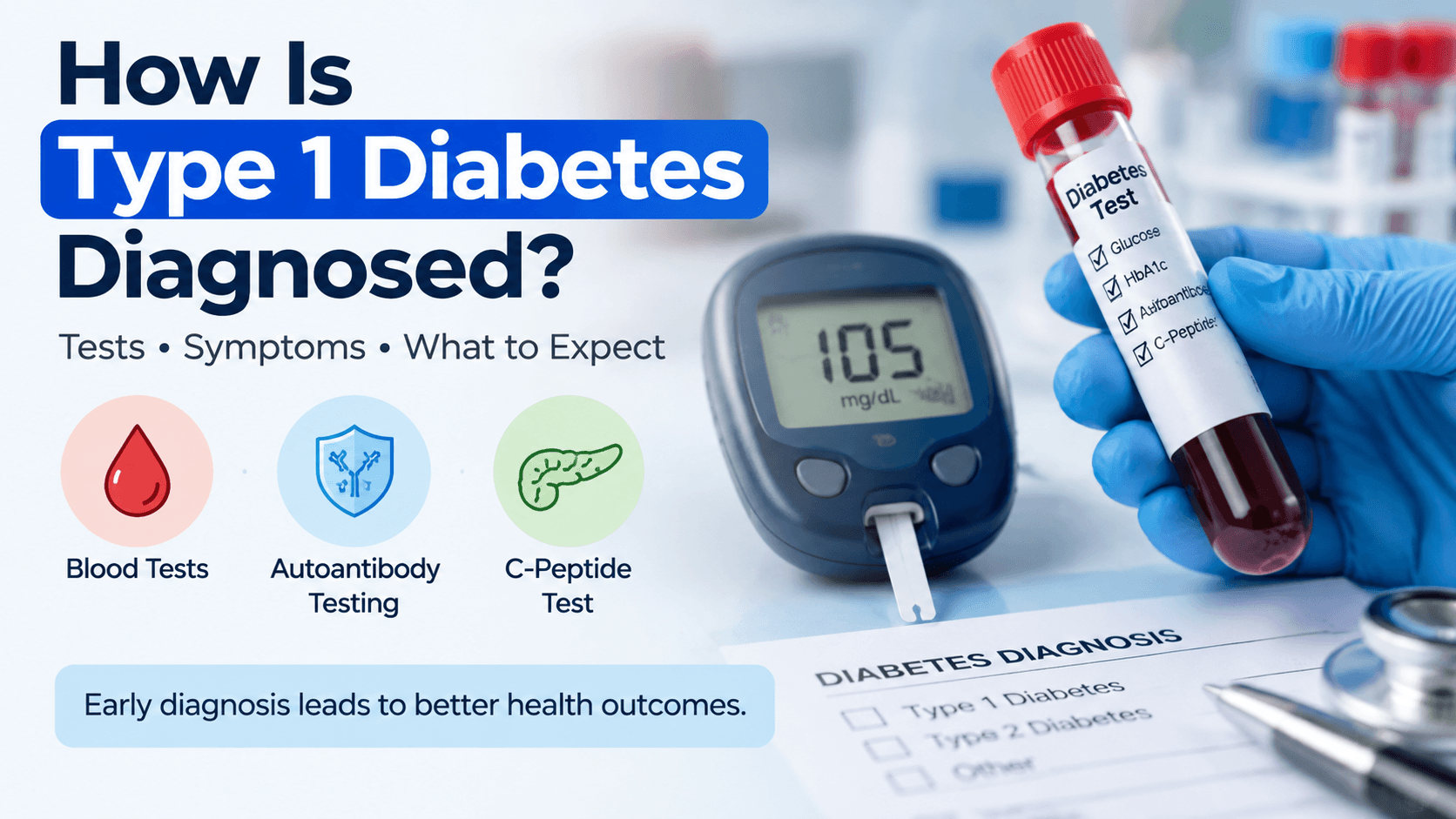
Type 1 diabetes is diagnosed through blood tests that confirm diabetes and additional tests that help identify whether the condition is caused by an autoimmune attack on insulin-producing cells. Doctors usually combine blood glucose testing, symptom evaluation, and tests such as diabetes autoantibodies or C-peptide measurements to classify the condition.
Early diagnosis of type 1 diabetes is important because untreated insulin deficiency can lead to dangerously high blood glucose levels and a life-threatening complication called diabetic ketoacidosis (DKA). Recognizing symptoms and getting appropriate testing can help people begin insulin treatment quickly and safely.
This guide explains how type 1 diabetes is diagnosed, which tests doctors use, how diagnosis differs from type 2 diabetes, and what happens after confirmation.
What Is Type 1 Diabetes Diagnosis?
Type 1 diabetes diagnosis is the process of identifying diabetes caused by an autoimmune loss of insulin-producing pancreatic beta cells. The diagnosis involves confirming high blood glucose levels and determining whether the diabetes pattern is consistent with type 1 diabetes.
Type 1 diabetes occurs when the immune system mistakenly attacks and destroys pancreatic beta cells, which normally produce insulin. Without enough insulin, glucose cannot move effectively from the bloodstream into cells, causing blood sugar levels to rise.
A diagnosis usually includes:
- Confirming diabetes through blood glucose testing
- Evaluating symptoms and medical history
- Checking for diabetes-related autoantibodies
- Assessing insulin production when needed
According to the National Institute of Diabetes and Digestive and Kidney Diseases (NIDDK), type 1 diabetes is an autoimmune disease that results in little or no insulin production. (niddk.nih.gov)
Why Does Identifying Type 1 Diabetes Early Matter?
Early diagnosis matters because type 1 diabetes can progress quickly and requires insulin replacement therapy.
Without diagnosis and treatment, high blood glucose can cause:
- Severe dehydration
- Electrolyte imbalance
- Diabetic ketoacidosis (DKA)
- Hospitalization
Early recognition allows healthcare providers to:
- Start insulin therapy
- Teach glucose monitoring skills
- Reduce the risk of diabetes complications
- Create a long-term diabetes management plan
What Symptoms Can Lead to a Type 1 Diabetes Diagnosis?
Symptoms that lead to a type 1 diabetes diagnosis often appear suddenly and may include increased thirst, frequent urination, unexplained weight loss, fatigue, and blurred vision.
Type 1 diabetes symptoms occur because the body cannot use glucose properly without sufficient insulin.
Common warning signs include:
| Symptom | Why It Happens |
|---|---|
| Excessive thirst | The body loses fluid because excess glucose pulls water into urine |
| Frequent urination | The kidneys remove extra glucose from the blood |
| Unexplained weight loss | The body breaks down fat and muscle for energy |
| Increased hunger | Cells cannot access glucose efficiently |
| Fatigue | Cells lack usable energy |
| Blurred vision | High glucose affects fluid balance in the eyes |
What Are the Common Early Symptoms of Type 1 Diabetes?
The early symptoms of type 1 diabetes may develop over days or weeks, especially when insulin production declines rapidly.
Common early signs include:
- Drinking much more water than usual
- Urinating frequently, including waking at night to urinate
- Sudden weight loss without trying
- Feeling unusually tired
- Increased hunger
- Irritability or mood changes
Children may also show:
- New bed-wetting after being toilet trained
- Reduced energy during play
- Difficulty concentrating at school
What Symptoms May Indicate Diabetic Ketoacidosis?
Diabetic ketoacidosis (DKA) is a serious complication that can occur when type 1 diabetes is untreated or insulin levels become too low.
Symptoms of DKA may include:
- Nausea and vomiting
- Abdominal pain
- Deep or rapid breathing
- Fruity-smelling breath
- Confusion
- Severe weakness
DKA requires urgent medical attention because it can become life-threatening.
Which Tests Are Used to Diagnose Type 1 Diabetes?
Doctors diagnose diabetes using blood glucose tests and may use additional tests to determine whether the diabetes is autoimmune type 1 diabetes.
The main diagnostic tests include:
- Fasting plasma glucose test
- Random plasma glucose test
- HbA1c test
- Oral glucose tolerance test
Additional classification tests may include:
- Diabetes autoantibody testing
- C-peptide testing
How Do Blood Glucose Tests Confirm Diabetes?
Blood glucose tests confirm diabetes by measuring how much glucose is present in the bloodstream.
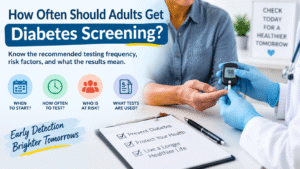
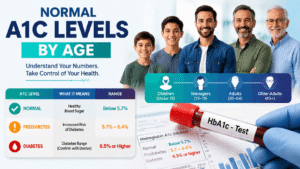
The American Diabetes Association (ADA) recognizes these diagnostic criteria:
| Test | Diabetes Diagnosis Threshold |
|---|---|
| A1C test | 6.5% or higher |
| Fasting plasma glucose | 126 mg/dL (7.0 mmol/L) or higher |
| 2-hour oral glucose tolerance test | 200 mg/dL (11.1 mmol/L) or higher |
| Random plasma glucose with classic symptoms | 200 mg/dL (11.1 mmol/L) or higher |
A healthcare professional may repeat testing to confirm the diagnosis unless symptoms and glucose levels clearly indicate diabetes.
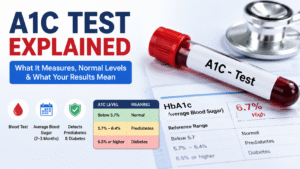
How Does HbA1c Testing Help Diagnose Diabetes?
HbA1c testing estimates average blood glucose levels over approximately the previous two to three months.
The test measures how much glucose has attached to hemoglobin, a protein in red blood cells.
Advantages of HbA1c testing:
- Does not require fasting
- Shows longer-term glucose patterns
- Helps monitor diabetes control after diagnosis
However, HbA1c may not always be reliable in certain situations, such as some blood disorders or conditions affecting red blood cells.
Why Are Autoantibody Tests Used for Type 1 Diabetes?
Autoantibody tests help identify whether the immune system is attacking insulin-producing pancreatic beta cells.
Common type 1 diabetes autoantibodies include:
- Glutamic acid decarboxylase antibodies (GADA)
- Insulin autoantibodies (IAA)
- Insulinoma-associated-2 antibodies (IA-2A)
- Zinc transporter 8 antibodies (ZnT8A)
A positive autoantibody result supports a diagnosis of autoimmune type 1 diabetes.
Autoantibody testing is especially useful when:
- Diabetes develops in adults
- The diabetes type is uncertain
- Doctors need to distinguish type 1 diabetes from type 2 diabetes
When Is C-Peptide Testing Used?
C-peptide testing measures how much insulin the pancreas is producing.
C-peptide is released when the body makes insulin naturally.
Doctors may use C-peptide testing when:
- The diabetes type is unclear
- An adult develops diabetes
- Autoantibody results are uncertain
- Insulin production needs evaluation
Generally:
- Low C-peptide levels suggest reduced insulin production
- Higher C-peptide levels may suggest preserved insulin production
Can Type 1 Diabetes Be Diagnosed Before Symptoms Appear?
Yes, type 1 diabetes can sometimes be detected before symptoms appear through screening for diabetes-related autoantibodies and changes in blood glucose.
Researchers describe type 1 diabetes as having different stages:
| Stage | Description |
|---|---|
| Stage 1 | Autoimmune markers are present, but blood glucose remains normal |
| Stage 2 | Autoimmune markers are present and blood glucose becomes abnormal |
| Stage 3 | Symptoms appear and clinical type 1 diabetes develops |
Early-stage identification may help some people receive monitoring and education before severe symptoms occur.
What Are the Three Stages of Type 1 Diabetes?
The three-stage model explains that type 1 diabetes develops gradually before diagnosis in many cases.
Stage 1
The immune system has started damaging beta cells, but blood glucose remains normal.
Stage 2
Autoimmune activity continues, and blood glucose levels begin showing abnormalities.
Stage 3
The person develops symptoms and meets diagnostic criteria for clinical type 1 diabetes.
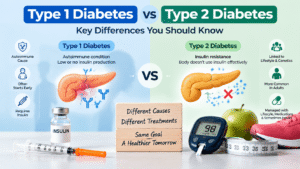
How Do Doctors Tell Type 1 Diabetes From Type 2 Diabetes?
Doctors distinguish type 1 diabetes from type 2 diabetes by evaluating insulin production, autoimmune markers, age of onset, symptoms, and clinical history.
Although both conditions cause high blood glucose, their underlying mechanisms differ.
| Feature | Type 1 Diabetes | Type 2 Diabetes |
|---|---|---|
| Main cause | Autoimmune destruction of beta cells | Insulin resistance and reduced insulin production |
| Insulin production | Usually very low or absent | Often present, especially early |
| Autoantibodies | Often present | Usually absent |
| Typical onset | Often childhood but can occur at any age | More common in adults but can occur in younger people |
| Treatment need | Requires insulin | Lifestyle changes, medications, and sometimes insulin |
Can Adults Develop Type 1 Diabetes?
Yes. Type 1 diabetes can develop at any age, including adulthood.
Adult-onset type 1 diabetes may be confused with type 2 diabetes because symptoms can develop more slowly.
Doctors may use:
- Autoantibody testing
- C-peptide testing
- Clinical history
to determine the correct diagnosis.
What Happens After a Type 1 Diabetes Diagnosis?
After a type 1 diabetes diagnosis, the next steps usually include starting insulin therapy, learning glucose management skills, and creating a diabetes care plan.
People newly diagnosed with type 1 diabetes often receive education about:
- Insulin injections or insulin pump therapy
- Continuous glucose monitoring (CGM)
- Blood glucose targets
- Carbohydrate counting
- Managing exercise and illness
A diabetes care team may include:
- Endocrinologist
- Diabetes educator
- Dietitian
- Primary care provider
What Are Common Misconceptions About Type 1 Diabetes Diagnosis?
Several myths can delay diagnosis or create confusion.
Myth: Type 1 diabetes only affects children
Fact: Type 1 diabetes can occur at any age.
Myth: Eating sugar directly causes type 1 diabetes
Fact: Type 1 diabetes is primarily an autoimmune disease involving immune destruction of pancreatic beta cells.
Myth: A person with type 1 diabetes can manage without insulin
Fact: People with type 1 diabetes require insulin because their bodies cannot produce enough insulin naturally.
What Are the Key Takeaways About Type 1 Diabetes Diagnosis?
- Type 1 diabetes is diagnosed by confirming diabetes and identifying whether the condition is autoimmune.
- Blood glucose tests confirm diabetes.
- Autoantibody tests help identify autoimmune type 1 diabetes.
- C-peptide testing can help assess insulin production.
- Symptoms such as excessive thirst, frequent urination, weight loss, and fatigue should not be ignored.
- Type 1 diabetes can occur in children and adults.
- Early diagnosis reduces the risk of serious complications such as diabetic ketoacidosis.
FAQ: Type 1 Diabetes Diagnosis
How is type 1 diabetes diagnosed?
Type 1 diabetes is diagnosed through blood tests that show diabetes-level blood glucose and additional tests that identify autoimmune markers or reduced insulin production.
What blood test confirms type 1 diabetes?
No single blood test alone confirms every case of type 1 diabetes. Blood glucose tests diagnose diabetes, while autoantibody and C-peptide tests help classify the diabetes type.
What are the first signs of type 1 diabetes?
Common early signs include excessive thirst, frequent urination, unexplained weight loss, increased hunger, fatigue, and blurred vision.
Can type 1 diabetes be diagnosed in adults?
Yes. Type 1 diabetes can develop in adults, and additional testing may be needed to distinguish it from type 2 diabetes.
What glucose level indicates diabetes?
Diabetes is diagnosed when specific thresholds are reached, such as an A1C of 6.5% or higher or fasting plasma glucose of 126 mg/dL or higher.
What is a diabetes autoantibody test?
A diabetes autoantibody test detects immune proteins that attack insulin-producing cells and can support a diagnosis of autoimmune type 1 diabetes.
Can type 1 diabetes be detected before symptoms?
Yes. Some people can be identified before symptoms through autoantibody screening and blood glucose monitoring.
What happens immediately after a type 1 diabetes diagnosis?
Most people begin insulin treatment and receive education about glucose monitoring, nutrition, exercise, and diabetes self-management.
Conclusion
Type 1 diabetes diagnosis involves more than detecting high blood sugar. Doctors combine glucose testing with clinical evaluation and specialized tests to determine whether diabetes is caused by autoimmune insulin loss. Recognizing symptoms early and obtaining proper testing allows timely treatment and reduces the risk of serious complications.