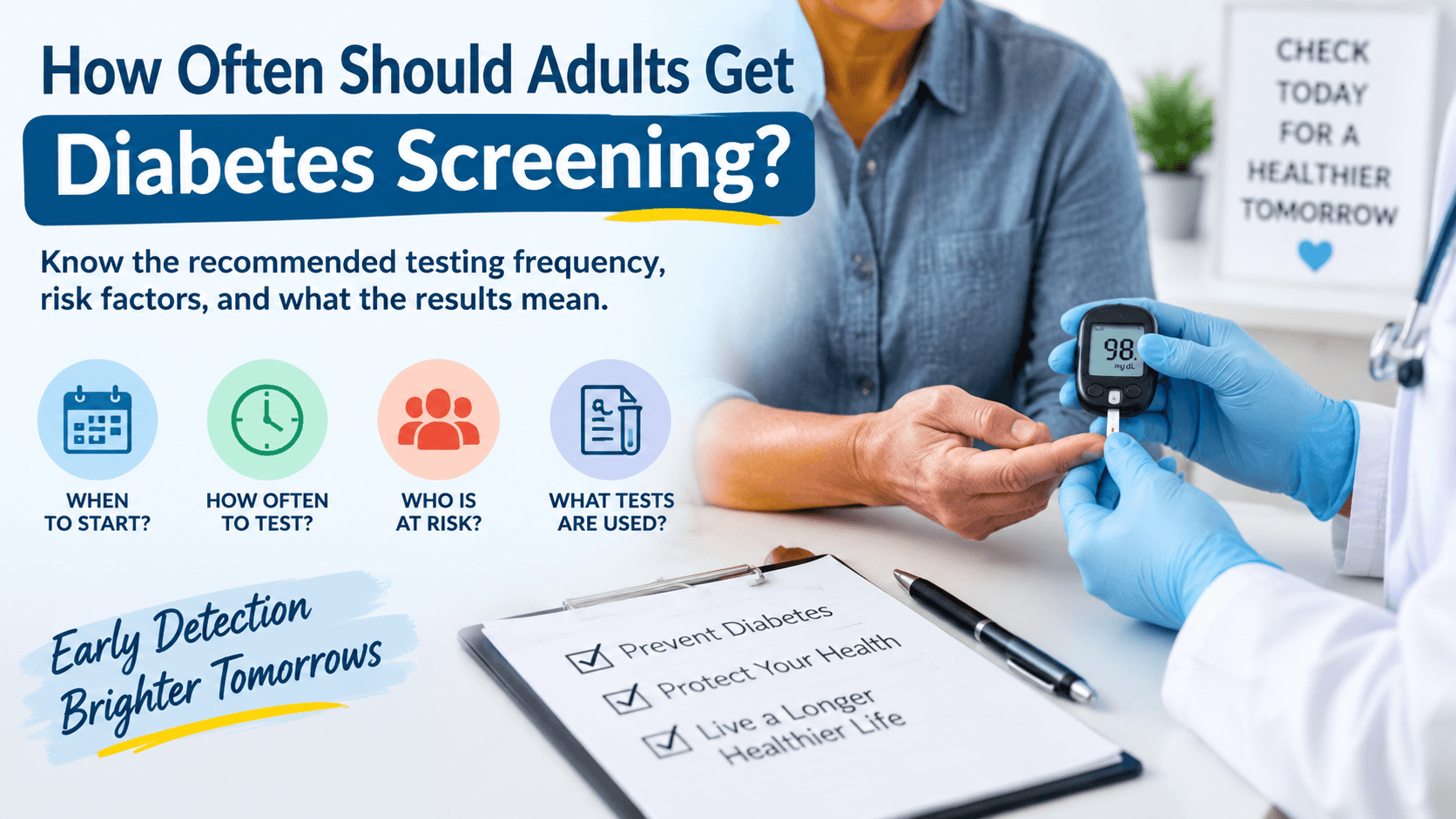
How Often Should Adults Get Diabetes Screening?
Diabetes screening helps detect prediabetes and type 2 diabetes early, often before noticeable symptoms appear. For most adults, diabetes screening should begin by age 35 and should generally be repeated every 3 years if results are normal, according to recommendations from the U.S. Preventive Services Task Force.
However, the ideal screening schedule depends on personal risk factors. Adults with obesity, a family history of diabetes, previous gestational diabetes, high blood pressure, or other risk factors may need earlier or more frequent testing.
Early detection matters because identifying prediabetes or diabetes sooner allows people to make lifestyle changes, receive treatment when needed, and reduce the risk of complications affecting the heart, kidneys, nerves, eyes, and blood vessels.
How Often Should Adults Get Diabetes Screening?
Most adults should get diabetes screening every 3 years after age 35 if previous results are normal, but people with higher diabetes risk may need testing more often.
The recommended frequency depends on:
- Age
- Body weight and BMI
- Family history
- Previous blood glucose results
- Pregnancy history
- Existing medical conditions
- Lifestyle factors
What Is the Recommended Diabetes Screening Schedule for Most Adults?
For adults at average risk:
| Adult group | Recommended screening frequency |
|---|---|
| Adults younger than 35 without risk factors | Screening may not be routinely required |
| Adults age 35 and older | Screen every 3 years if results are normal |
| Adults with prediabetes | Usually yearly monitoring is recommended |
| Adults with high-risk factors | Screening may be needed more frequently |
The exact schedule should be personalized by a healthcare professional based on individual health history.
Why Does Diabetes Screening Frequency Depend on Risk Level?
Diabetes screening frequency depends on risk because some adults are more likely to develop type 2 diabetes than others.
Type 2 diabetes develops when the body becomes less sensitive to insulin or cannot produce enough insulin to maintain normal blood glucose levels. Risk factors can accelerate this process, making earlier detection more important.
Adults with higher risk may benefit from:
- Earlier screening
- More frequent blood glucose testing
- Lifestyle intervention
- Regular monitoring of metabolic health
When Should Adults Start Diabetes Screening?
Adults should generally begin diabetes screening at age 35, even if they feel healthy, because type 2 diabetes can develop without obvious symptoms.
The U.S. Preventive Services Task Force recommends screening adults aged 35 to 70 who have overweight or obesity for prediabetes and type 2 diabetes.
Should Adults Under 35 Get Diabetes Screening?
Adults under 35 may need diabetes screening if they have significant risk factors.
Earlier screening may be appropriate for adults with:
- Family history of type 2 diabetes
- Overweight or obesity
- High blood pressure
- Abnormal cholesterol levels
- History of gestational diabetes
- Polycystic ovary syndrome (PCOS)
- Physical inactivity
- Cardiovascular disease
A younger adult with multiple risk factors may have a higher diabetes risk than an older adult without risk factors.
Why Are Adults With Certain Risk Factors Screened Earlier?
Adults with diabetes risk factors are screened earlier because insulin resistance and elevated blood glucose can develop years before diabetes symptoms appear.
Early screening can identify:
- Prediabetes
- Early type 2 diabetes
- Increased cardiovascular risk
Finding these conditions early creates an opportunity for prevention through:
- Weight management
- Increased physical activity
- Dietary changes
- Medical treatment when appropriate
Who Needs Diabetes Screening More Often?
Adults with increased diabetes risk may need screening more frequently than every three years.
Common high-risk groups include people with:
- Overweight or obesity
- First-degree relatives with diabetes
- Previous gestational diabetes
- Prediabetes
- High blood pressure
- Abnormal cholesterol levels
- Certain racial or ethnic backgrounds with higher diabetes prevalence
How Do Weight and Obesity Affect Screening Frequency?
Overweight and obesity increase the risk of developing insulin resistance, which is a major pathway toward type 2 diabetes.
People with higher BMI may need:
- Earlier screening
- More frequent monitoring
- Additional cardiovascular risk assessment
Body weight is only one factor. A person’s overall health profile determines screening needs.
Which Medical Conditions Increase Diabetes Screening Needs?
Certain medical conditions are associated with higher diabetes risk.
These include:
- Prediabetes
- High blood pressure
- Polycystic ovary syndrome (PCOS)
- History of cardiovascular disease
- Sleep apnea
- Previous gestational diabetes
People with these conditions should discuss personalized screening intervals with their healthcare provider.
Which Tests Are Used for Diabetes Screening?
The main diabetes screening tests measure blood glucose levels or average blood sugar over time.
Common screening tests include:
| Test | What it measures | Fasting required? |
|---|---|---|
| A1C test | Average blood glucose over approximately 2–3 months | No |
| Fasting plasma glucose (FPG) | Blood glucose after fasting | Yes |
| Oral glucose tolerance test (OGTT) | How the body processes glucose after drinking a glucose solution | Yes |
How Does the A1C Test Screen for Diabetes?
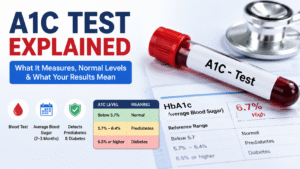
The A1C test measures the percentage of hemoglobin with attached glucose and reflects average blood sugar levels over the previous two to three months.
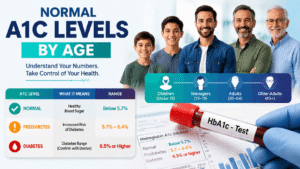
A1C categories:
| A1C level | Interpretation |
|---|---|
| Below 5.7% | Normal |
| 5.7%–6.4% | Prediabetes range |
| 6.5% or higher | Diabetes range |
A diabetes diagnosis usually requires confirmation with repeat testing unless clear symptoms and very high glucose levels are present.
What Is a Fasting Plasma Glucose Test?
A fasting plasma glucose test measures blood sugar after not eating for at least eight hours.
Typical interpretation:
| Fasting glucose | Meaning |
|---|---|
| Below 100 mg/dL | Normal |
| 100–125 mg/dL | Prediabetes range |
| 126 mg/dL or higher | Diabetes range |
This test is commonly used because it is relatively simple and widely available.
When Is an Oral Glucose Tolerance Test Used?
An oral glucose tolerance test measures how the body handles glucose after drinking a glucose-containing beverage.
It is commonly used for:
- Pregnancy-related diabetes testing
- Situations where other tests are unclear
- Certain diagnostic evaluations
How Often Should People With Prediabetes Be Screened?
People with prediabetes are usually screened at least annually because they have a higher chance of progressing to type 2 diabetes.
Prediabetes means blood glucose levels are higher than normal but not yet in the diabetes range.
Lifestyle changes that may reduce progression risk include:
- Losing excess body weight if recommended
- Exercising regularly
- Improving dietary quality
- Managing blood pressure and cholesterol
The Centers for Disease Control and Prevention reports that lifestyle changes can significantly reduce the risk of developing type 2 diabetes among people with prediabetes through structured prevention programs.
What Factors Can Change Your Diabetes Screening Schedule?
Your diabetes screening schedule may change when your health status changes.
Important factors include:
- Weight gain
- New medical diagnoses
- Pregnancy history
- Abnormal previous screening results
- Starting medications that affect glucose levels
Does Family History Affect Diabetes Testing Frequency?
Yes. A family history of type 2 diabetes increases risk and may justify earlier or more frequent screening.
Having a parent or sibling with diabetes can indicate increased genetic susceptibility combined with shared lifestyle factors.
Does Previous Gestational Diabetes Require Follow-Up Screening?
Yes. People who develop gestational diabetes during pregnancy need continued diabetes monitoring after pregnancy.
A history of gestational diabetes increases the long-term risk of developing type 2 diabetes.
Follow-up screening timing should be discussed with a healthcare provider.
What Happens After a Diabetes Screening Test?
The next step depends on whether results are normal, show prediabetes, or indicate diabetes.
What Happens If Your Results Are Normal?
If screening results are normal:
- Continue healthy lifestyle habits
- Repeat screening according to your risk level
- Monitor changes in weight, blood pressure, and health conditions
Most average-risk adults repeat screening every three years after age 35 if results remain normal.
What Happens If Screening Shows Prediabetes?
Prediabetes means glucose levels are elevated but below the diabetes threshold.
Typical next steps include:
- Lifestyle intervention
- Weight management support
- Increased physical activity
- Regular glucose monitoring
Prediabetes is an opportunity to prevent or delay type 2 diabetes.
What Happens If Screening Shows Diabetes?
An abnormal screening result does not always mean a final diagnosis immediately.
Healthcare providers usually:
- Review the test result
- Repeat testing when appropriate
- Confirm diagnosis
- Discuss treatment options
Treatment may include:
- Nutrition changes
- Physical activity
- Medication
- Blood glucose monitoring
What Are Common Mistakes About Diabetes Screening?
Mistake 1: Waiting Until Symptoms Appear
Many people with early diabetes have no noticeable symptoms.
Possible symptoms such as:
- Increased thirst
- Frequent urination
- Fatigue
- Unexplained weight loss
may appear after blood glucose levels have already been elevated.
Mistake 2: Assuming Healthy People Do Not Need Screening
Diabetes screening is preventive care. Feeling healthy does not guarantee normal blood glucose levels.
Routine screening helps detect hidden metabolic problems early.
Mistake 3: Using Home Glucose Checks Instead of Medical Screening
Home glucose monitoring can be useful for people already diagnosed with diabetes, but it is not a substitute for recommended screening tests.
Key Takeaway: How Often Should Adults Check for Diabetes?
Most adults should begin diabetes screening at age 35 and repeat testing approximately every 3 years if results are normal.
People with higher risk factors may need earlier or more frequent screening.
The best screening schedule depends on:
- Personal risk factors
- Previous test results
- Age
- Overall health
Regular screening is one of the simplest ways to identify diabetes early and reduce future health risks.
Frequently Asked Questions About Diabetes Screening Frequency
How often should a healthy adult get diabetes screening?
Healthy adults should generally begin screening at age 35 and repeat testing every three years if results are normal.
Can diabetes screening be done every year?
Yes. Annual screening may be recommended for people with prediabetes or higher diabetes risk.
Is A1C testing enough to screen for diabetes?
A1C is one recommended screening test, but healthcare providers may also use fasting glucose or other tests depending on the situation.
Do people without symptoms need diabetes testing?
Yes. Type 2 diabetes can develop without noticeable symptoms, which is why preventive screening is important.
Should people over 50 get diabetes screening more often?
Age increases diabetes risk, but screening frequency depends on overall risk factors and previous results rather than age alone.
How often should someone with prediabetes be tested?
People with prediabetes are usually monitored at least once a year to check whether blood glucose levels are progressing toward diabetes.
Can diabetes screening prevent diabetes?
Screening itself does not prevent diabetes, but detecting prediabetes allows early lifestyle changes and interventions that can reduce diabetes risk.
Conclusion
Adult diabetes screening frequency depends on individual risk, but regular testing remains an important part of preventive healthcare. Starting screening at the recommended age and following appropriate repeat testing intervals can help identify diabetes early and support better long-term health outcomes.