What Are Normal A1C Levels by Age? A Complete Guide to Healthy Blood Sugar Ranges
A normal A1C level is generally below 5.7% for people without diabetes, but there is no single “normal A1C by age” chart that applies to everyone. Age can influence recommended A1C goals, especially for people with diabetes, but the standard ranges used to diagnose normal blood sugar, prediabetes, and diabetes are generally the same across adults.
The A1C test (hemoglobin A1c or HbA1c) measures average blood glucose levels over the previous approximately 2–3 months. Healthcare professionals use A1C results to diagnose diabetes, identify prediabetes risk, and monitor long-term blood sugar control.
Understanding A1C levels by age requires separating two concepts:
- A1C diagnostic ranges: Used to determine whether someone has normal blood sugar, prediabetes, or diabetes.
- Individual A1C targets: Personalized goals that may change depending on age, health conditions, diabetes duration, and risk of complications.
What Is a Normal A1C Level?
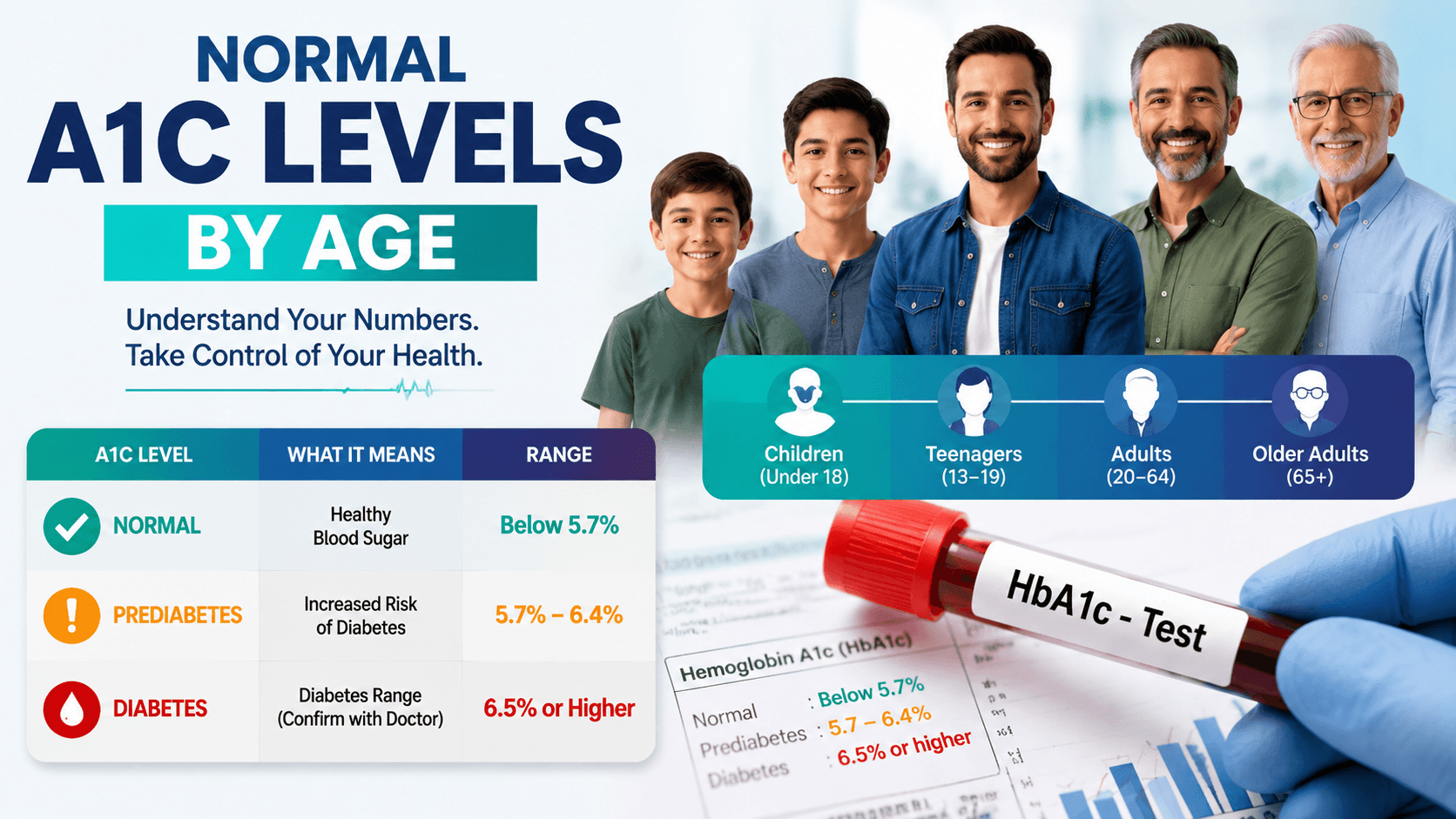
A normal A1C level is below 5.7% in people who do not have diabetes. An A1C result between 5.7% and 6.4% indicates prediabetes, while an A1C of 6.5% or higher may indicate diabetes and requires medical confirmation.
The A1C test is reported as a percentage because it measures the proportion of hemoglobin molecules in the blood that have glucose attached to them.
How Does the A1C Test Measure Average Blood Sugar?
The A1C test measures glycated hemoglobin, which forms when glucose in the bloodstream attaches to hemoglobin inside red blood cells.
Because red blood cells typically live for about three months, A1C provides an estimate of average blood glucose exposure over that period.
A1C is useful because it:
- Does not require fasting
- Shows long-term glucose patterns
- Helps monitor diabetes treatment effectiveness
- Provides information beyond a single blood sugar reading
However, A1C does not show daily glucose fluctuations, such as short-term spikes after meals or episodes of low blood sugar.
What A1C Numbers Are Considered Normal, Prediabetes, and Diabetes?
| A1C Result | Interpretation |
|---|---|
| Below 5.7% | Normal blood sugar range |
| 5.7%–6.4% | Prediabetes range |
| 6.5% or higher | Diabetes range |
These categories are used primarily for diagnosis. A person’s ideal A1C target after diagnosis may be different.
Do Normal A1C Levels Change by Age?
Normal A1C diagnostic ranges do not usually change based only on age. A healthy A1C range for a 30-year-old and a 70-year-old without diabetes is generally interpreted using the same diagnostic thresholds.
However, A1C treatment goals may differ by age because healthcare providers consider overall health, life expectancy, complications, and safety.
For example:
- A healthy older adult with diabetes may have a similar A1C goal to a younger adult.
- An older adult with multiple health conditions may have a less strict target to reduce risks such as hypoglycemia.
What Is a Normal A1C Level for Children and Teenagers?
A normal A1C level for children and teenagers without diabetes is generally below 5.7%, the same diagnostic threshold used for adults.
Children and adolescents with diabetes may have individualized A1C targets based on:
- Age and developmental stage
- Type of diabetes
- Ability to recognize low blood sugar symptoms
- Treatment plan
- Risk of diabetes complications
For young people with type 1 diabetes, maintaining good glucose control is important because diabetes often begins early and requires lifelong management.
What Is a Normal A1C Level for Adults?
A normal A1C level for adults without diabetes is less than 5.7%.
For adults with diabetes, the recommended target depends on individual circumstances. Many adults with diabetes are advised to aim for an A1C around 7% or lower, although goals vary and should be personalized by a healthcare professional.
Factors that influence adult A1C goals include:
- Age
- Diabetes duration
- Presence of complications
- Heart disease risk
- Medication-related low blood sugar risk
- Personal preferences and lifestyle factors
A lower A1C is not automatically better for every person. The safest goal balances glucose control with avoiding harmful side effects.
What Is a Normal A1C Level for Older Adults?
Older adults without diabetes generally use the same normal A1C diagnostic range: below 5.7%.
Older adults with diabetes may have different A1C targets depending on health status.
A healthcare provider may consider:
- Overall health
- Cognitive function
- Kidney function
- History of hypoglycemia
- Ability to manage medications
- Presence of other chronic conditions
For some older adults, aggressively lowering A1C may increase the risk of dangerously low blood sugar. For others who are healthy and independent, a more traditional target may be appropriate.
The American Diabetes Association emphasizes individualized diabetes care rather than using age alone to determine A1C goals.
What Is the Difference Between a Normal A1C Range and a Target A1C Goal?
A normal A1C range describes blood sugar status in people who are not diagnosed with diabetes.
A target A1C goal describes the level a person with diabetes aims to maintain as part of treatment.
These are different concepts.
| Category | Purpose | Example |
|---|---|---|
| Normal A1C range | Determines healthy glucose status | Below 5.7% |
| Prediabetes range | Identifies increased diabetes risk | 5.7%–6.4% |
| Diabetes range | Helps diagnose diabetes | 6.5% or higher |
| Personal target A1C | Guides diabetes management | Often individualized |
Why Do Doctors Individualize A1C Goals?
Doctors personalize A1C goals because diabetes affects people differently.
A strict A1C target may not be appropriate for everyone.
Healthcare providers consider:
- Risk of low blood sugar
- Current medications
- Duration of diabetes
- Other medical conditions
- Age and functional ability
- Expected benefits and risks of treatment
For example:
A younger adult with newly diagnosed diabetes may benefit from maintaining tighter glucose control to reduce long-term complications.
An older adult with multiple medical conditions may benefit from a less aggressive target to avoid dangerous hypoglycemia.
What Factors Affect an Individual A1C Target?
Age is only one factor.
Other important factors include:
Diabetes Type
People with:
- Type 1 diabetes
- Type 2 diabetes
- Gestational diabetes
may have different management approaches.
Health Conditions
Conditions that may influence A1C goals include:
- Kidney disease
- Heart disease
- Neurological conditions
- Cognitive impairment
Risk of Hypoglycemia
Some diabetes medications can cause low blood sugar.
A lower A1C target may increase risk if it requires intensive treatment.
Lifestyle and Treatment Ability
Doctors also consider:
- Diet patterns
- Exercise habits
- Medication consistency
- Access to healthcare support
What A1C Level Is Considered Healthy for People Without Diabetes?
A healthy A1C level for people without diabetes is below 5.7%.
A1C results closer to the upper end of the normal range may indicate increased future diabetes risk, especially when combined with other risk factors.
Risk factors for developing type 2 diabetes include:
- Family history of diabetes
- Overweight or obesity
- Physical inactivity
- History of gestational diabetes
- High blood pressure
A normal A1C does not guarantee that diabetes risk is impossible, but it suggests average blood glucose levels are currently within the normal range.
What A1C Level Indicates Prediabetes or Diabetes?
An A1C of 5.7% to 6.4% indicates prediabetes, while an A1C of 6.5% or higher indicates diabetes when confirmed according to clinical guidelines.
What Does an A1C Between 5.7% and 6.4% Mean?
This range means blood glucose levels are higher than normal but not yet in the diabetes range.
Prediabetes increases the risk of developing type 2 diabetes.
Lifestyle changes that may help include:
- Increasing physical activity
- Improving dietary quality
- Maintaining a healthy weight
- Following medical recommendations
What Does an A1C of 6.5% or Higher Mean?
An A1C of 6.5% or higher suggests diabetes.
A healthcare provider may use additional testing or repeat testing to confirm the diagnosis, especially when symptoms are not present.
What Are Typical A1C Goals for People With Diabetes?
Many adults with diabetes have an A1C goal of around 7% or lower, but targets vary depending on individual health factors.
A personalized target may be:
- Lower for some healthy adults
- Higher for some people at increased risk of complications from treatment
The goal is not simply the lowest possible number. The goal is safe and effective glucose management.
How Does A1C Compare With Daily Blood Sugar Readings?
A1C and daily glucose testing measure different aspects of blood sugar.
| Measurement | What It Shows |
|---|---|
| A1C | Average blood glucose over several months |
| Finger-stick glucose | Blood sugar at a specific moment |
| Continuous glucose monitor (CGM) | Real-time glucose patterns |
Someone can have an acceptable A1C while still experiencing significant glucose highs and lows, which is why healthcare providers may use multiple measurements.
How Is A1C Converted to Estimated Average Glucose (eAG)?
A1C can be converted into an estimated average glucose value.
Approximate examples:
| A1C | Estimated Average Glucose |
|---|---|
| 5% | About 97 mg/dL |
| 6% | About 126 mg/dL |
| 7% | About 154 mg/dL |
| 8% | About 183 mg/dL |
| 9% | About 212 mg/dL |
The conversion helps patients understand A1C results in terms of familiar blood glucose numbers.
What Factors Can Change A1C Results?
A1C is a valuable test, but certain conditions can affect accuracy.
Factors that may influence A1C include:
- Certain blood disorders
- Anemia
- Kidney disease
- Recent blood loss or transfusion
- Pregnancy
- Differences in red blood cell lifespan
If an A1C result does not match glucose readings or symptoms, healthcare providers may investigate further.
Can Lifestyle Habits Improve A1C Levels?
Yes. Lifestyle habits can influence average blood glucose levels and A1C results.
Helpful strategies include:
- Eating a balanced diet with appropriate carbohydrate intake
- Exercising regularly
- Maintaining a healthy weight
- Taking prescribed medications correctly
- Monitoring blood glucose when recommended
- Getting adequate sleep
A1C changes slowly because it reflects months of glucose patterns, not a single day.
What Are Common Mistakes People Make When Interpreting A1C Results?
Common misunderstandings include:
Mistake 1: Assuming There Is One Normal A1C Number for Every Age
Age alone does not determine a normal A1C. Health status and diabetes diagnosis matter more.
Mistake 2: Treating A1C as a Complete Health Report
A1C is important but does not measure every aspect of metabolic health.
Mistake 3: Trying to Achieve the Lowest Possible A1C
Lower is not always safer. Individual treatment goals should balance benefits and risks.
Key Takeaways About Normal A1C Levels by Age
- A normal A1C level is generally below 5.7%.
- A1C levels used to diagnose diabetes are not typically adjusted only because of age.
- Adults, children, and older adults without diabetes generally use the same normal threshold.
- Diabetes treatment goals are personalized.
- Older adults may have different A1C targets depending on overall health and safety concerns.
- A1C should always be interpreted together with medical history and other glucose measurements.
Frequently Asked Questions About Normal A1C Levels by Age
Is a 5.6 A1C level normal?
Yes. An A1C of 5.6% is generally considered within the normal range because it is below 5.7%.
Is a 6.0 A1C level considered diabetes?
No. An A1C of 6.0% falls within the prediabetes range, not the diabetes range.
Does A1C naturally increase with age?
A1C patterns may change with age due to biological and health factors, but age alone does not change the standard diagnostic thresholds.
What is a good A1C level for someone over 65?
The appropriate A1C goal for someone over 65 depends on overall health, diabetes history, medications, and risk of low blood sugar.
How often should A1C be checked?
The frequency depends on diabetes status and treatment changes. People with diabetes often have A1C checked several times per year, while people without diabetes may be tested based on risk factors and medical advice.
Can diet and exercise lower A1C?
Yes. Regular physical activity, balanced nutrition, weight management, and appropriate medical treatment can help improve A1C levels.
Can someone have diabetes with a normal A1C?
A normal A1C makes diabetes less likely but does not rule out every glucose problem. Doctors may use additional tests if symptoms or risk factors suggest diabetes.
Conclusion
Normal A1C levels are best understood through both age and individual health context. While the standard A1C ranges for normal blood sugar, prediabetes, and diabetes are generally consistent, personal A1C goals can vary significantly.
The most accurate interpretation of an A1C result comes from combining the number with medical history, risk factors, glucose patterns, and guidance from a healthcare professional.