
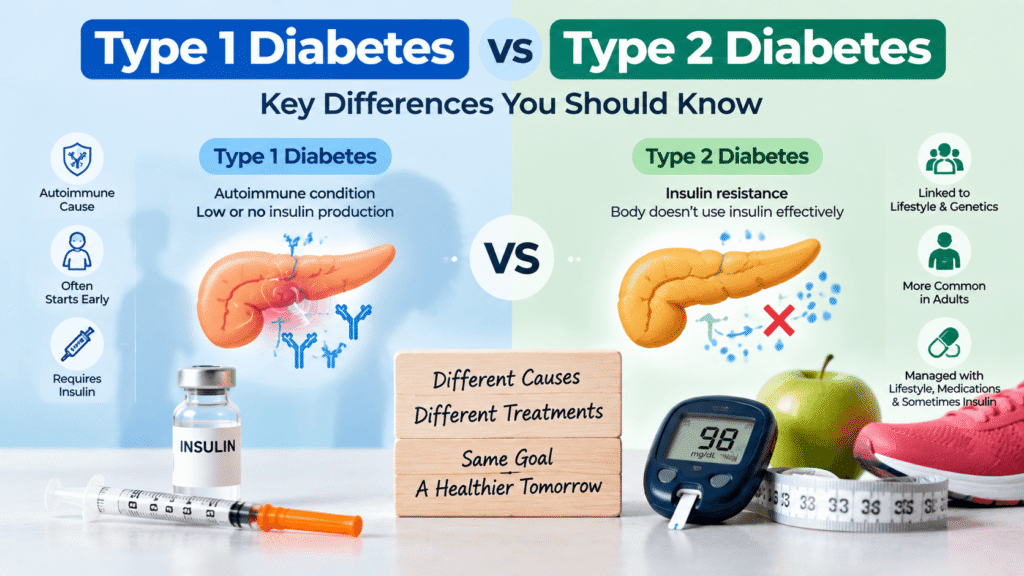
Type 1 Diabetes vs Type 2 Diabetes: Key Differences Explained
Type 1 Diabetes vs Type 2 Diabetes: What Is the Difference? Type 1 diabetes and type 2 diabetes are both conditions that cause high blood glucose (blood sugar), but they develop for different reasons and require different management approaches. The main difference is that type 1 diabetes is an autoimmune disease where the body stops producing insulin, while type 2 diabetes occurs when the body becomes resistant to insulin and gradually produces less insulin. Both types of diabetes affect how the body uses glucose for energy. However, their causes, symptoms, diagnosis methods, and treatments are not the same. Understanding the difference between type 1 diabetes and type 2 diabetes helps patients recognize symptoms, receive the correct diagnosis, and follow the right treatment plan. What Is the Main Difference Between Type 1 and Type 2 Diabetes? The main difference between type 1 and type 2 diabetes is how insulin problems develop. Type 1 diabetes causes the immune system to destroy insulin-producing cells, while type 2 diabetes happens when the body cannot use insulin effectively. Insulin is a hormone produced by the pancreas that helps glucose move from the blood into cells for energy. Without effective insulin action: Blood glucose levels rise Cells cannot get enough energy Diabetes symptoms develop Type 1 diabetes: The pancreas produces little or no insulin The immune system attacks pancreatic beta cells Insulin treatment is required Type 2 diabetes: The body becomes resistant to insulin The pancreas may produce less insulin over time Treatment may include lifestyle changes, medications, and sometimes insulin How Does Insulin Production Differ Between Type 1 and Type 2 Diabetes? Insulin production is usually much lower in type 1 diabetes compared with type 2 diabetes. Feature Type 1 Diabetes Type 2 Diabetes Insulin production Very low or absent Reduced over time Main problem Autoimmune destruction of beta cells Insulin resistance Insulin effectiveness Body lacks insulin Body cannot use insulin properly Long-term insulin need Usually lifelong May or may not be required What Causes Type 1 Diabetes and Type 2 Diabetes? Type 1 and type 2 diabetes have different causes. Type 1 diabetes is mainly caused by an autoimmune reaction, while type 2 diabetes develops from a combination of insulin resistance, genetics, and metabolic factors. Why Does Type 1 Diabetes Happen? Type 1 diabetes happens when the immune system mistakenly attacks and destroys pancreatic beta cells that produce insulin. The exact cause is not completely understood, but researchers believe it involves: Genetic factors Immune system changes Environmental triggers Important facts about type 1 diabetes: It is not caused by eating sugar It is not caused by lifestyle choices It can occur at any age Many cases develop during childhood or adolescence Why Does Type 2 Diabetes Develop? Type 2 diabetes develops when the body becomes resistant to insulin and the pancreas cannot produce enough insulin to maintain normal blood glucose levels. Risk factors include: Family history of diabetes Increasing age Excess body weight Physical inactivity History of prediabetes Certain genetic factors However, type 2 diabetes is a complex disease and is not caused by one single factor. How Are Type 1 and Type 2 Diabetes Symptoms Different? Type 1 and type 2 diabetes share many symptoms because both conditions cause high blood glucose levels. The main difference is that type 1 symptoms often appear suddenly, while type 2 symptoms may develop slowly over years. Common diabetes symptoms include: Increased thirst Frequent urination Fatigue Blurred vision Increased hunger Slow wound healing What Symptoms Are Common in Type 1 Diabetes? Type 1 diabetes symptoms often appear quickly because insulin production can decline rapidly. Common signs include: Sudden weight loss Extreme thirst Frequent urination Severe tiredness Increased hunger Nausea or vomiting Some people are diagnosed after developing diabetic ketoacidosis (DKA), a serious condition caused by severe insulin deficiency. DKA warning signs include: Abdominal pain Vomiting Rapid breathing Fruity-smelling breath Confusion What Symptoms Are Common in Type 2 Diabetes? Type 2 diabetes symptoms often develop gradually and may go unnoticed for years. Common symptoms include: Increased thirst Frequent urination Fatigue Tingling or numbness in hands and feet Slow-healing wounds Frequent infections Some people discover they have type 2 diabetes during routine blood testing before symptoms become obvious. How Are Type 1 and Type 2 Diabetes Diagnosed? Both type 1 and type 2 diabetes are diagnosed using blood glucose tests, but doctors use additional information to determine the diabetes type. Common diabetes tests include: A1C test Fasting plasma glucose test Random blood glucose test Oral glucose tolerance test Which Tests Diagnose Diabetes? Doctors use these blood glucose thresholds to diagnose diabetes: Test Diabetes Diagnosis Level A1C 6.5% or higher Fasting blood glucose 126 mg/dL or higher 2-hour glucose tolerance test 200 mg/dL or higher Random glucose with symptoms 200 mg/dL or higher How Do Doctors Determine Diabetes Type? Doctors determine whether someone has type 1 or type 2 diabetes by evaluating: Autoantibody tests Used to detect immune system activity against insulin-producing cells. Common antibodies include: GAD antibodies IA-2 antibodies Zinc transporter 8 antibodies Positive antibodies support a diagnosis of type 1 diabetes. C-peptide testing C-peptide measures how much insulin the pancreas is producing. Low C-peptide levels suggest reduced insulin production Higher levels may indicate insulin production is still present This test can help distinguish type 1 diabetes from type 2 diabetes. How Does Treatment Differ Between Type 1 and Type 2 Diabetes? Treatment differs because the underlying problems are different. Type 1 diabetes requires insulin replacement, while type 2 diabetes treatment focuses on improving insulin sensitivity and controlling blood glucose. Why Does Type 1 Diabetes Require Insulin? Type 1 diabetes requires insulin because the pancreas cannot produce enough insulin naturally. Treatment usually includes: Insulin injections Insulin pumps Continuous glucose monitoring (CGM) Blood glucose monitoring Carbohydrate management Insulin replaces the hormone the body is missing. How Is Type 2 Diabetes Managed? Type 2 diabetes management focuses on improving blood glucose control and reducing insulin resistance. Treatment may include: Healthy eating patterns Regular physical activity Weight management Diabetes medications Injectable
Type 1 Diabetes vs Type 2 Diabetes: Key Differences Explained Read More »